Baklava recipe: Gaziantep's pistachio pastry at home
Buttered filo, a thick layer of green pistachios and cold syrup poured over the tray straight from the oven: the Gaziantep way with baklava, adapted for a home kitchen.
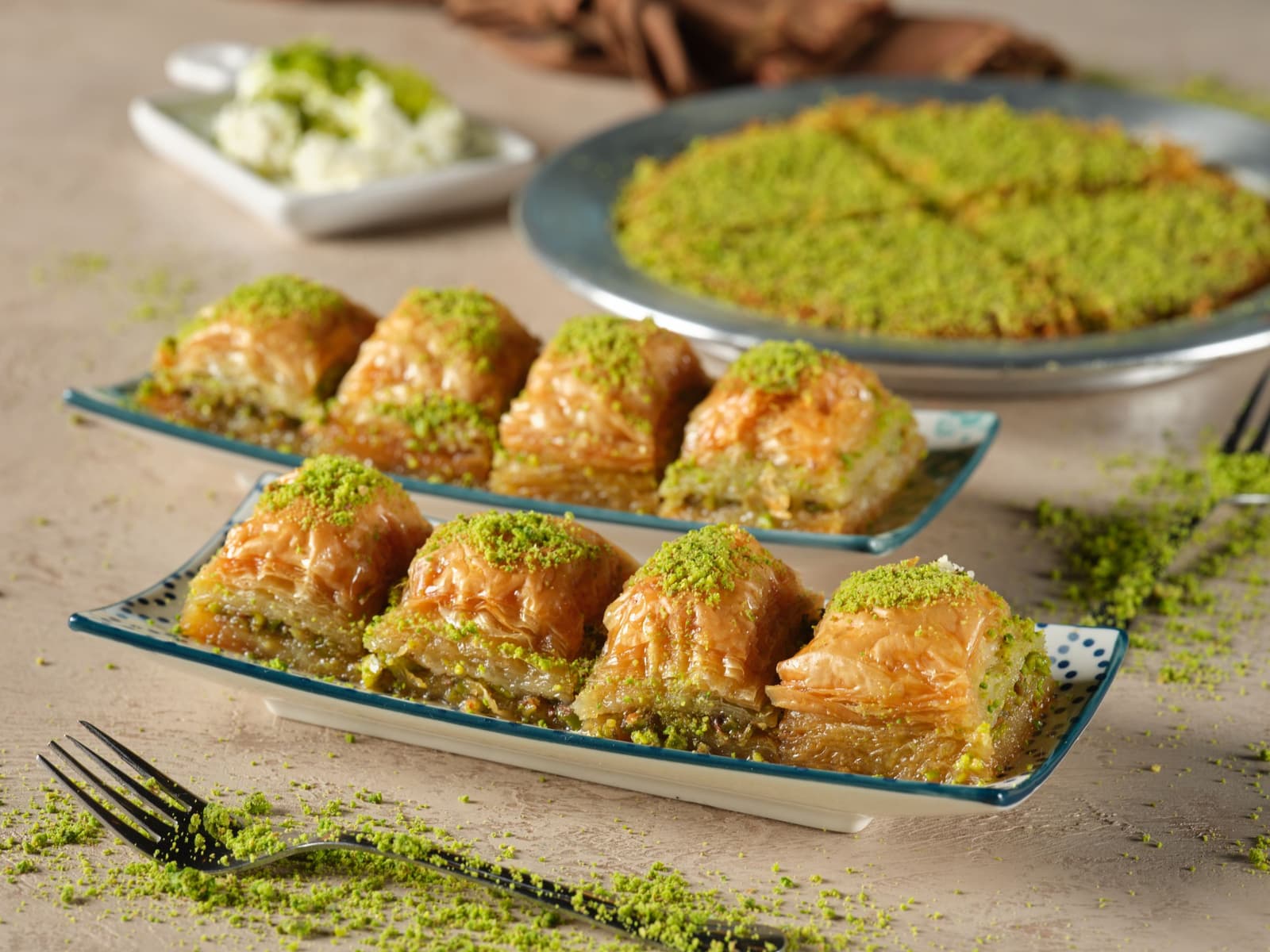
This baklava recipe follows the Gaziantep method: thin filo brushed with clarified butter, a generous layer of finely chopped pistachios, and cold syrup poured over the pastry the moment it leaves the oven. That temperature contrast is the technical key: the hot layers drink the syrup without collapsing, so the baklava stays crisp on top and moist underneath.
The Turkish version of baklava was probably refined in the kitchens of Topkapı Palace, where sultans sent trays to the Janissaries in a Ramadan procession known as the Baklava Alayı. Gaziantep, in south-eastern Turkey, made it its own after 1871, and in December 2013 Antep Baklavası became the first Turkish product entered in the EU register of protected geographical indications. The timing suits autumn: Gaziantep's pistachios are picked from late August into September, and those meant for baklava are harvested early, while the kernels are still bright green. In Istanbul, the benchmark is still the tray at Karaköy Güllüoğlu, one of the stops in our guide to what to eat in Istanbul.
Ingredients
Cold syrup on hot pastry: that contrast is what keeps every layer crisp.
- 500 g filo pastry (about 24 sheets), thawed in the fridge
- 300 g unsalted butter
- 300 g shelled unsalted pistachios
- 500 g caster sugar
- 350 ml water
- 1 tsp lemon juice
Method
- Make the syrup first: bring the sugar and water to the boil, simmer for 10 minutes, add the lemon juice for the last 2 minutes and leave it to cool completely. The acid stops the sugar from crystallising, and the syrup must be cold when it meets the hot pastry.
- Melt the butter over a low heat, skim off the foam and pour the clear fat away from the milky solids at the bottom. Clarified butter has no water to steam the layers soft and no milk solids to burn.
- Pulse the pistachios until finely chopped but not powdery, and set aside 2 tablespoons of the finest crumbs for the top. A paste would turn dense and oily in the oven.
- Heat the oven to 180 °C (160 °C fan) and brush a 25 x 35 cm tray with butter. Trim the filo to the size of the tray and keep it under a damp cloth, because the sheets dry out and crack within minutes.
- Lay down 12 sheets one at a time, brushing each with butter. Spread the pistachios in an even layer and press them down lightly so the top layers sit flat.
- Cover with the remaining 12 sheets, buttering each one, and brush the top generously.
- With a sharp knife, cut the tray into 24 squares or diamonds right down to the base. Baked filo shatters under the knife, and the cuts let the butter and later the syrup reach the bottom layers.
- Bake for 45 to 50 minutes, until deep golden all over. Pale baklava turns soggy once the syrup goes on.
- Straight out of the oven, ladle the cold syrup over the tray, running it along the cuts: it should sizzle. Leave it uncovered at room temperature for at least 4 hours, then scatter over the reserved pistachio crumbs.
Pistachios, butter and the Gaziantep standard
The quality of this baklava recipe rests on two ingredients. Buy the greenest pistachios you can find, ideally Turkish Antep nuts, and chop them yourself: pre-ground nuts lose aroma fast. Use good butter, clarified, rather than oil. Gaziantep's masters roll their own dough until it is almost transparent; shop-bought filo gives a sturdier but still crisp result.
Serve it at room temperature with Turkish tea or an unsweetened coffee, which balance the syrup.
Baklava recipe FAQ
Why did my baklava turn soggy? Usually the syrup and the pastry were both hot, or the baklava was underbaked. Keep one hot and one cold, and bake until deep golden.
Can I use walnuts instead of pistachios? Yes: walnut baklava is common across Turkey and the Balkans. Chop them the same way and add a pinch of cinnamon if you like.
How long does baklava keep? Up to five days at room temperature, loosely covered. Do not refrigerate it: the cold hardens the syrup and softens the filo.
Sources
- Hürriyet Daily News — Antep baklava first ever registered Turkish product in EU ·
- Gaziantep Chamber of Industry (GSO) — Antep Baklava, products with geographical indication ·
- Wikipedia — Baklava (Topkapı Palace, Baklava Alayı, Gaziantep since 1871) ·
- Turkey Travel Centre — Gaziantep pistachios (harvest timing, early picking for baklava) ·