Batata wa zahra harra recipe: Syria's spiced roast cauliflower
Imad Alarnab's roast potatoes and cauliflower, bound in a roasted garlic and harissa paste, then finished with tahini and pomegranate for sharpness.
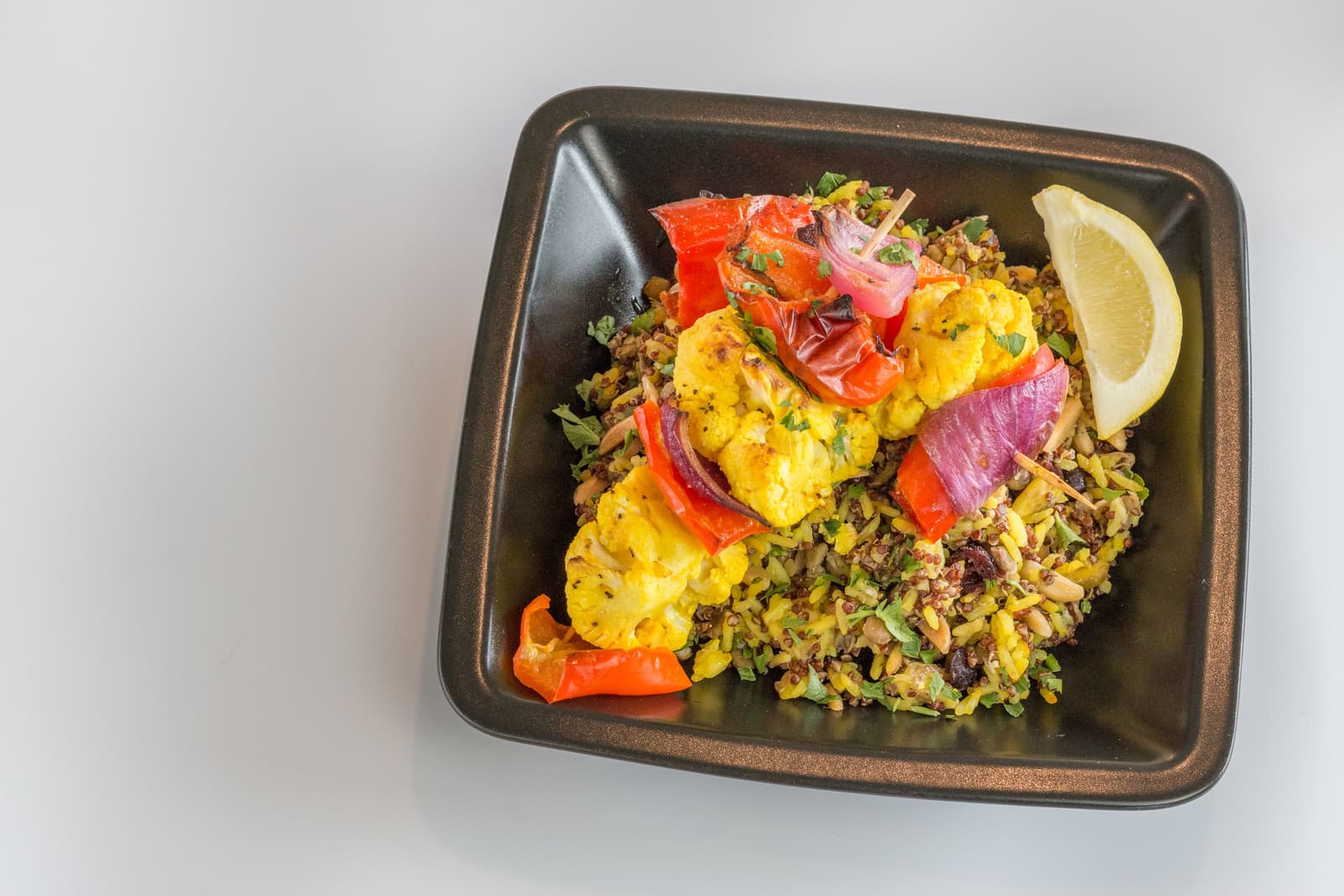
Batata wa zahra harra is a Syrian everyday dish of roast potatoes and cauliflower, bound in a roasted garlic and harissa paste, that chef Imad Alarnab cooks at home more often than almost anything else on his menus.
This version is adapted from Alarnab's cookbook Imad's Syrian Kitchen, with the garlic roasted whole before it goes into the paste, which takes the raw edge off the harissa without dulling its heat.
Ingredients
Roast the garlic whole first — it tames the harissa's heat without dulling it.
- 600g potatoes (Maris Piper or King Edward), cut into 3cm chunks
- 1 whole head garlic
- 5 tbsp olive oil, divided
- 2 tbsp tomato paste
- 1 tbsp harissa paste
- 1 cauliflower (about 800g), cut into large florets
- 2 red onions, cut into wedges
- 2 red peppers, sliced
- 1 tsp fresh thyme leaves
- 1 tsp ground sumac
- 3 tbsp tahini, loosened with 1 tbsp water
- Small bunch coriander, leaves picked
- 1/2 tsp Aleppo chilli flakes
- Seeds from 1/2 pomegranate
- Salt, to taste
Method
- Heat the oven to 200°C (180°C fan). Toss the potatoes with 2 tbsp olive oil and a good pinch of salt, then spread on a roasting tray. Wrap the whole garlic head in foil. Roast both for 30 minutes, until the potatoes are crisp outside and the garlic is soft — wrapping the garlic whole stops it burning before it turns sweet.
- Squeeze the softened garlic cloves from their skins into a bowl and mash with the tomato paste, harissa and remaining 3 tbsp olive oil. Roasting the garlic first rounds out the paste instead of leaving it sharp and raw.
- Toss the cauliflower florets with two-thirds of the garlic-harissa paste and spread on a tray. Roast for 15 minutes, until the edges start to char. Cauliflower's natural sugars caramelise fast at high heat, which is why it goes in before the more delicate peppers.
- Toss the onions and peppers with the remaining paste, the thyme and the sumac. Scatter over the cauliflower and return everything to the oven for 25 minutes, until the peppers have softened and the cauliflower is well charred.
- Tip the roasted cauliflower, onions and peppers into a serving dish with the potatoes and toss together.
- Finish with the loosened tahini drizzled over the top, the coriander leaves, Aleppo chilli flakes and pomegranate seeds. The tahini's bitterness and the pomegranate's sharpness cut through the richness of the harissa oil, which keeps the dish from tasting one-note.
A Damascus dish, not a side
Batata wa zahra harra is usually part of a wider mezze spread or served alongside grilled meat, rather than plated as a single side. It is a dish built for sharing from the middle of the table, eaten with flatbread rather than cutlery.
Alarnab fled Damascus in 2015 and has rebuilt his restaurants' repertoire around dishes like this one; he opened a second branch of Imad's Syrian Kitchen in Shoreditch this autumn.
Can I make this ahead? Yes — roast everything up to two hours ahead and keep it loosely covered at room temperature, then finish with the tahini, coriander and pomegranate just before serving so they stay fresh rather than going soggy.