Matsutake gohan recipe: Japan's wild autumn rice
The wild matsutake mushroom has a six-week season in Japan that starts this month. The classic technique: never wash the mushroom, never stir the rice, let the steam do the rest.
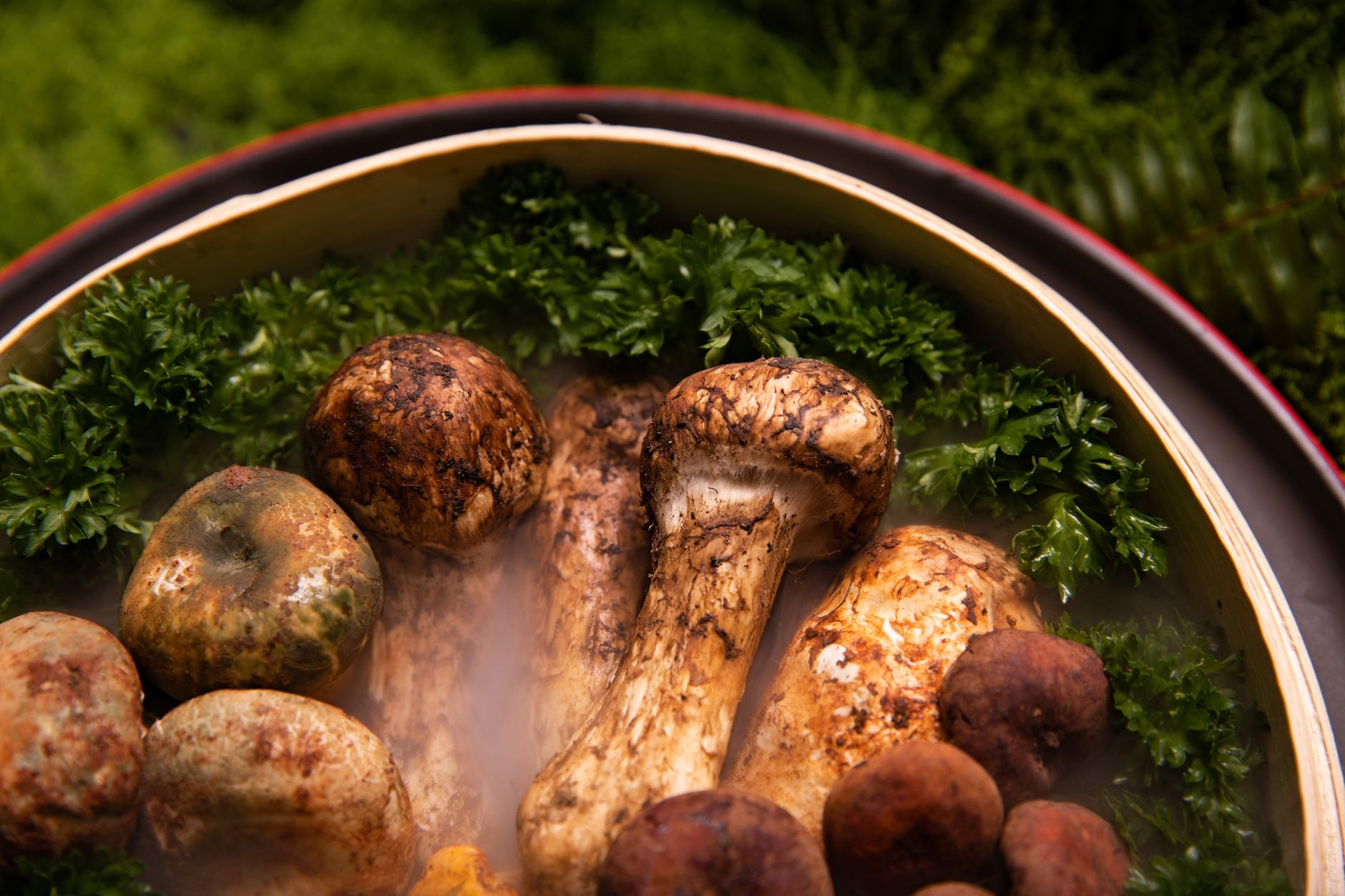
Matsutake gohan is Japan's one-mushroom rice, built around a wild pine mushroom that fruits for six to eight weeks each autumn and cannot be farmed. The technique is spare: season the liquid, lay the raw mushroom on raw rice, and let a covered pot do the rest without a single stir.
Matsutake grows in a mycorrhizal bond with red pine roots, trading sugar for minerals in soil too poor for most fungi, so it can't be farmed. Every matsutake on a Japanese stall this month was picked wild, mostly around Nagano and Tanba, and the first pickings can sell for hundreds of euros a kilo. The dish that shows it off best is plain, seasoned rice — the treatment washoku, Japan's food culture inscribed by Unesco in 2013, gives one ingredient instead of competing with it.
Ingredients
Never wash a matsutake. Its aroma sits in the skin, and water carries it straight down the drain.
- 300 g Japanese short-grain rice
- 400 ml kombu dashi (or water with a 5 g piece of kombu)
- 120 g fresh matsutake mushroom (1-2 mushrooms)
- 1 tbsp soy sauce
- 1 tbsp sake
- 1 tsp mirin
- 1/2 tsp salt
- 2 sprigs mitsuba or 2 spring onions, finely sliced
- 1 sudachi or yuzu, for juice and zest
Method
- Rinse the rice until the water runs clear, drain, then let it sit 20 minutes. Even hydration means every grain absorbs liquid at the same rate, so none stay hard while others turn mushy.
- Wipe the matsutake with a damp cloth; never rinse it. Its aroma sits just under the skin, and water carries it down the drain. Tear the stem into rough batons and slice the cap: tearing follows the fibres and opens more surface for scent to reach the rice.
- Whisk the dashi, soy sauce, sake, mirin and salt, then top up with water to 400 ml exactly. Matching that volume to a plain-rice measure keeps the starch-to-liquid ratio correct, so the rice doesn't cook undercooked or waterlogged.
- Put the rice and kombu in the pot, pour over the liquid, then lay the matsutake on top without stirring it in. Stirring buries the mushroom, so it steams unevenly and bleeds aroma into the liquid before the rice can absorb it.
- Cover, boil over high heat, then lower to a bare simmer for 12 minutes. Turn off the heat and rest, covered, for 10 minutes: residual steam finishes the centre of each grain, so the rice holds together instead of turning gluey.
- Remove the kombu, then fluff the rice with a cutting, folding motion rather than stirring, working the matsutake through evenly. Serve with mitsuba or spring onion and a few drops of sudachi or yuzu juice, whose acidity cuts the dashi's umami and sharpens the pine note.
One short season, no substitute
Matsutake fruits for barely six weeks in Japan, and importers fly in a parallel harvest from Oregon and British Columbia to stretch the window into October. When it ends, don't reach for shiitake or porcini: the point of the dish is that resinous, faintly spicy aroma, and no other mushroom reproduces it. Freeze extra matsutake whole and unwashed, and grate it frozen into the next pot of rice.
Pour a chilled junmai ginjo sake alongside, not wine: its light rice sweetness doesn't compete with the dashi, and it's the pairing kaiseki kitchens in Kyoto and Tokyo reach for when rice closes the meal.