Quince and Dolcelatte salad recipe, Ottolenghi's autumn starter
Ottolenghi's autumn starter poaches quince with its skin and core still on, which is what turns the fruit a deep amber-rose against bitter leaves and Dolcelatte.
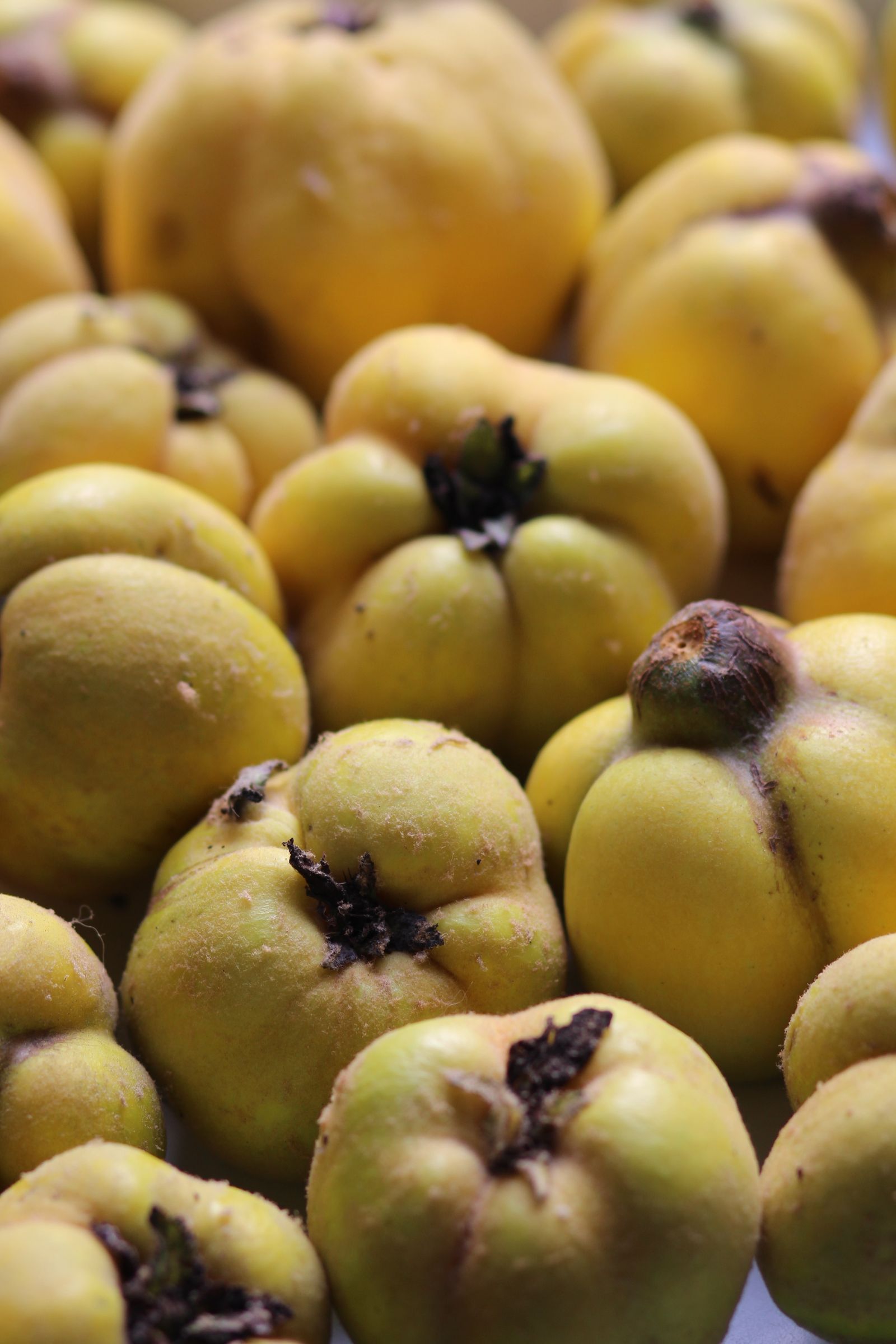
This quince and Dolcelatte salad recipe, adapted from Yotam Ottolenghi's cookbook Plenty, poaches whole quince skins and cores alongside the fruit — the tannin and pectin they release are what turn pale flesh a deep amber-rose and thicken the poaching liquid into the base of the dressing.
Quince reaches British greengrocers from September, too hard and astringent to eat raw, which is why it wants long, low cooking rather than a quick pan-fry. The finished plate sets sweet, spiced fruit against bitter leaves, pungent blue cheese and a mustard-sharpened dressing — a starter built to wake up the table rather than fill it.
Ingredients
Poaching the skin and core with the fruit is what turns a hard, bitter quince into both dinner and its own dressing.
- 400ml water
- 300g caster sugar
- 15 black peppercorns
- 4 strips unwaxed orange zest
- 2 bay leaves
- Juice of ½ lemon
- 200ml red wine
- 2 medium quinces, skins and cores reserved
- 1 tsp wholegrain mustard
- 2 tsp cider vinegar
- 4 tbsp olive oil
- ¼ tsp salt, plus black pepper to taste
- 80g bitter and peppery salad leaves (radicchio, watercress, rocket)
- 120g Dolcelatte, crumbled
- 60g walnuts, toasted and roughly chopped
Method
- Heat the oven to 140°C. In a heavy pan with a lid, bring the water, sugar, peppercorns, orange zest, bay leaves, lemon juice and red wine to the boil, stirring until the sugar dissolves — this syrup carries the poaching flavour and later the dressing.
- Peel the quinces, keeping the peel and cores rather than discarding them, then quarter, core and halve the quarters lengthways. The peel and pips are rich in tannin and pectin, which is what tints the pale flesh amber-rose as it cooks.
- Add the quince pieces to the pan with the reserved peel and cores, cover tightly and bake for about 1½ hours, until a knife slides through easily. The low, even oven heat keeps the fruit intact rather than collapsing it, the way a hard simmer would.
- Take the pan out of the oven and let the quince cool uncovered in its liquid; it keeps absorbing colour as it sits, so don't rush this step.
- Strain off 4 tablespoons of the poaching liquid and whisk it with the mustard, cider vinegar, olive oil, salt and pepper. The liquid does double duty, sweetening the sharp mustard and vinegar without extra sugar.
- Scatter the leaves on a platter, top with the cooled quince, crumble over the Dolcelatte and scatter the walnuts, then spoon over the dressing just before serving so the leaves stay crisp.
What to swap and what to drink
Gorgonzola dolce or a mild Cambozola work as well as Dolcelatte; keep to a blue that's creamy rather than crumbly, so it softens slightly against the warm fruit. The poaching liquid keeps in the fridge for a week, and is worth saving for glazing roast pork or spooning over yoghurt at breakfast.
Pour a dry oloroso sherry alongside — it has enough weight to stand up to the blue cheese without fighting the quince's sweetness. For more ways to cook the fruit in season, see Amuse's quince tarte Tatin recipe.
Sources
- Yotam Ottolenghi, Plenty (Ebury Press, 2010) · 2010-01-01
- ckbk cookbook database · 2026-09-01