White truffle risotto recipe with Castelmagno
Chef Alessandro Grano's risotto lets Piedmont's white truffle perfume the rice for days before it ever touches heat, then finishes the dish raw so nothing is cooked away.
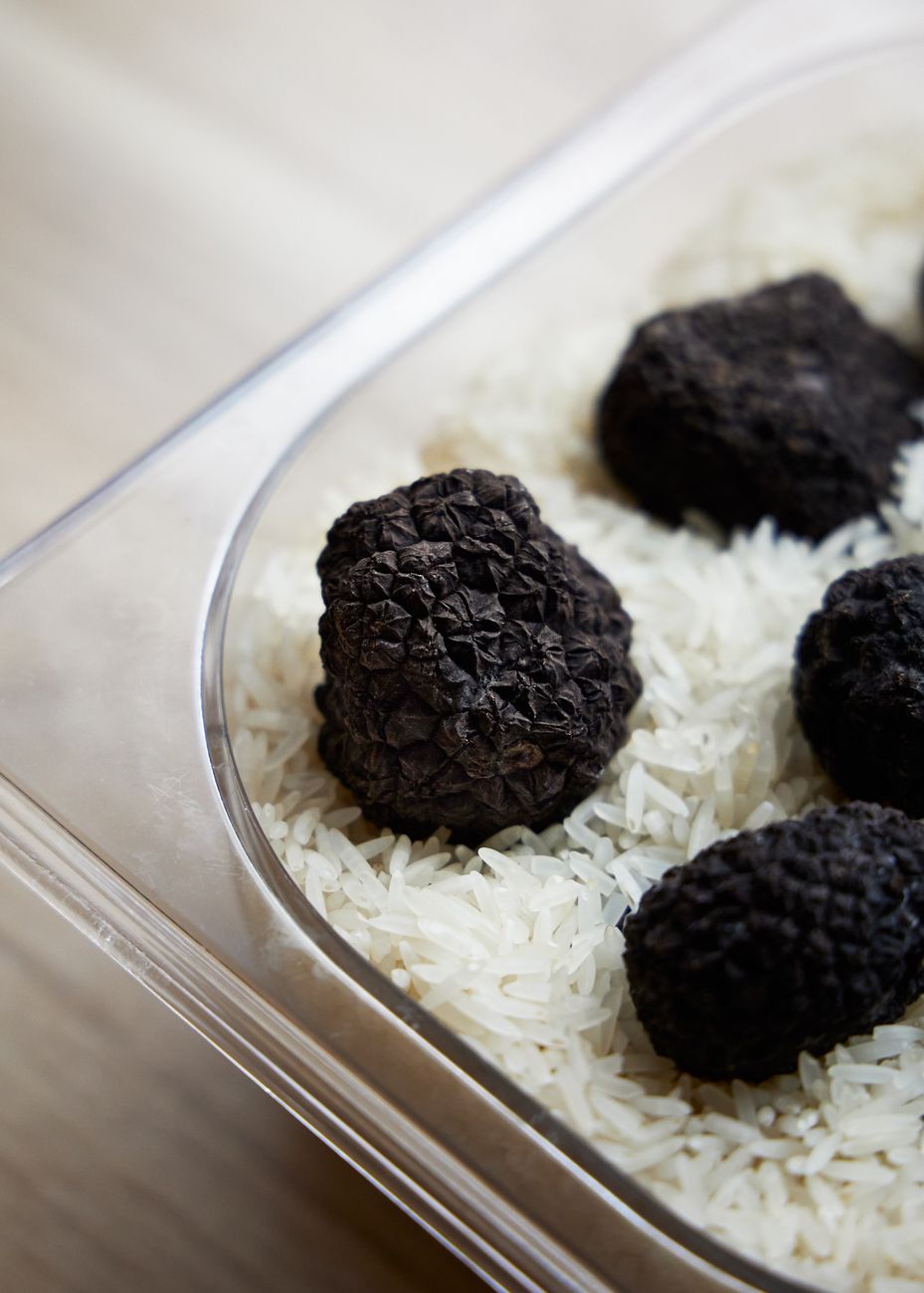
This white truffle risotto recipe treats the truffle as a two-stage ingredient: first as a scent that soaks into raw Carnaroli rice, then as a shaving added only at the very end, off the heat, where its aroma survives.
The technique comes from chef Alessandro Grano, who builds the dish around Castelmagno, a firm, tangy blue-veined cow's-milk cheese from the mountains above Cuneo, rather than the more familiar Parmigiano Reggiano. Its saltier, sharper edge is built to stand up to truffle rather than defer to it.
Ingredients
You need to be present and to take special care of the dish.
- 400g carnaroli rice
- 1 small white truffle, about 40g
- 2 litres chicken stock
- 125g unsalted butter, cold, cut into cubes
- 100g shallots, finely chopped
- 150ml dry white wine
- 100g Castelmagno cheese, grated
- Salt and white pepper
Method
- Two or three days before cooking, bury the truffle in the raw rice inside an airtight container and refrigerate. Rice is porous and absorbs aromatic compounds readily, so it picks up the truffle's scent long before it ever meets stock or heat.
- Pour the stock into a pan, bring to a boil, then hold it at a bare simmer. Lift the truffle out of the rice and set it aside; it now has one job left, which comes at the very end.
- Melt a third of the butter in a wide, heavy pan over medium heat and sweat the shallots for about 5 minutes, until soft and translucent but not browned, so they melt into the risotto rather than announcing themselves as a separate ingredient.
- Add the rice and stir to coat every grain in fat before it touches any liquid; this brief toasting step seals the surface of the grains, which helps them release starch gradually rather than all at once later on.
- Pour in the wine and stir until it has fully evaporated. The acidity deglazes the pan and balances the richness to come from the butter and cheese.
- Add the hot stock one ladle at a time, stirring often and waiting until each addition is nearly absorbed before adding the next. Ladling gradually, rather than flooding the pan, is what coaxes a slow, even release of starch into a creamy sauce around each grain. Continue for 16 to 18 minutes, until the rice is al dente and the risotto ripples, rather than sits stiffly, when the pan is shaken.
- Take the pan off the heat, let it rest for one minute, then beat in the remaining cold butter vigorously. This final beating, known in Italian kitchens as mantecatura, emulsifies fat into the starchy liquid and is what gives risotto its glossy, creamy finish rather than a merely wet one.
- Stir in the Castelmagno, season with salt and white pepper, and shave the reserved truffle generously over each plate as it is served, so its aroma reaches the table rather than the stove.
Why the truffle goes on raw
Heat destroys the volatile compounds that give white truffle its scent within minutes, which is why it is never cooked into a dish, only added at the end or, as here, allowed to perfume an ingredient from the outside first. Treat the truffle sparingly: a little shaved over a plain, well-made risotto carries further than a heavy hand ever could.
Pair the dish with a young, mineral white from the same hills, such as a Roero Arneis, or follow the same base risotto with the more accessible tajarin al tartufo bianco from the neighbouring Langhe when fresh truffle is out of budget.
Sources
- Wine Spectator · 2026-01-20