What to eat in Palermo: 10 dishes and where to find them
Palermo's cooking is built on frying and the market stall, not the tasting menu, and the dishes that define the city rarely cost more than a few euros each.
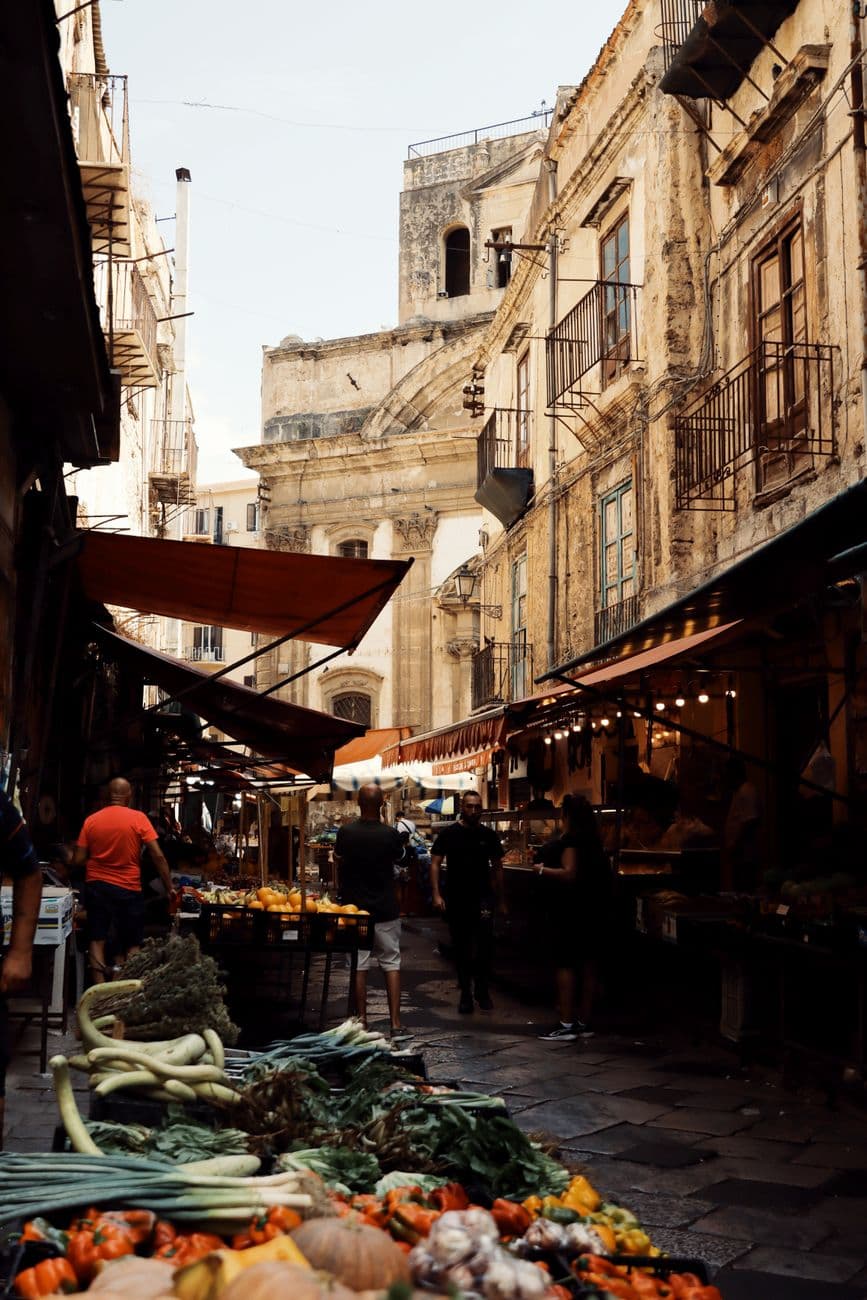
What to eat in Palermo starts standing up, plate in hand, at a market stall rather than a table: arancine, panelle and sfincione carry more of the city's identity than any sit-down dish, and skipping the markets means missing most of the point.
The cooking carries centuries of layered rule: Arab-introduced rice and citrus, Norman spice routes, Spanish frying technique, all filtered through a port city that fed dockworkers before it fed tourists. Forbes has ranked Palermo among the world's top ten street food cities, and the ranking tracks the markets, not the restaurants.
Ballarò, Capo and Vucciria are the three working markets that still double as the city's real kitchens, the kind of living food heritage that groups such as Slow Food Italy, now marking forty years of this work, try to document before it disappears, and each with its own specialities and its own crowd, and most of what to eat in Palermo is sold within a few hundred metres of one of them.
Correct a visitor who calls them arancini instead of arancine, and you have made at least one local friend.
Arancine at I Cuochini
Palermo calls them arancine, not arancini, and correcting a visitor on the point is a minor local sport. I Cuochini, a narrow hole-in-the-wall on Via Ruggiero Settimo open mornings only, fries them to order: a crisp rice shell around a ragù-and-saffron filling, each one a couple of euros and gone in four bites.
The classic filling is meat ragù with peas, but mushroom, seafood and pistachio versions circulate at other counters. What matters more than the filling is temperature: a good arancina is eaten within minutes of frying, while the shell still shatters.
Panelle at Friggitoria Chiluzzo
Panelle are chickpea-flour fritters, an Arab-era import turned permanent fixture, sold thin, golden and barely seasoned beyond parsley and black pepper. Friggitoria Chiluzzo, on Piazza della Kalsa, fries them fresh through the day and sells them loose or stuffed into a soft roll as a panelle panino, known locally as pane e panelle.
A portion costs a couple of euros and disappears before it has time to cool. Order it with a squeeze of lemon if the counter offers one; nobody will mind.
Sfincione at Panificio Graziano
Sfincione is Palermo's answer to pizza and nothing like it: a thick, spongy base under tomato, onion, oregano, anchovy and caciocavallo cheese, baked until the crust holds its shape under the weight of the topping. Panificio Graziano, a bakery rather than a pizzeria, sells it by the slab, cut to order, with a quattro gusti version adding prosciutto and mushroom for anyone who wants a second opinion on the classic.
Expect to pay a few euros for a slice generous enough to count as lunch.
Pani ca meusa at PortaCarbone
Pani ca meusa is veal spleen and lung, boiled then sautéed in lard, piled into a sesame roll and finished with lemon, with or without caciocavallo and ricotta on top. It is the dish most visitors need convincing to try and the one regulars insist on first. PortaCarbone, down by the port on Via Cala, has served it since long before food tourism discovered the city.
Order it “schietta” (plain, with just lemon) to taste the offal itself, or “maritata” (married, with cheese) if the straight version feels like too much on a first attempt.
Pasta con le sarde at Trattoria da Pino
Pasta con le sarde pairs sardines with wild fennel, pine nuts, sultanas and a hit of saffron, a sweet-savoury combination that reads strange on paper and makes complete sense on a plate. Trattoria da Pino, a small family-run room on Via dello Spezio, keeps it on the menu as a lunch staple rather than a special-occasion dish, the way most Palermo households still treat it.
A plate runs a modest sum by sit-down-restaurant standards, less than most capital-city pasta courses twice its size.
Caponata at Osteria Alivàru
Caponata is aubergine cooked until it collapses, bound with tomato, green olives, capers and a vinegar-sugar agrodolce that is meant to hit sour and sweet in the same bite. Osteria Alivàru, in the Kalsa district, makes a version locals describe as the benchmark rather than just a good one, served as an antipasto rather than a side.
It keeps well and is often better the next day, once the vinegar has had time to settle into the aubergine.
Stigghiola at Mercato Ballarò
Stigghiola is skewered lamb or veal intestine, grilled over charcoal until it crisps at the edges, sold from smoking grills that mark certain corners of Ballarò and Vucciria by smell alone, usually from early evening. It is the most polarising item on this list and the one that separates tourists from regulars within one bite.
Vendors salt it on the grill and sell it by the skewer rather than the portion; two is usually enough for a first try.
Spaghettone al ragù di pesce at Le Angeliche
Le Angeliche, a garden restaurant tucked away from the main tourist routes, runs a seafood pasta built on a slow fish ragù finished with wild fennel fronds, a dish that leans on the island's fishing tradition rather than its street-food reputation. It is the one sit-down recommendation on this list that rewards booking ahead.
Expect a mid-range restaurant bill rather than a street-food price, closer to what a proper seafood lunch costs anywhere on the Sicilian coast.
Granita at Q-Tuppo
Granita in Palermo is breakfast as much as dessert, traditionally eaten with a soft brioche bun for dipping rather than a spoon alone. Q-Tuppo, near Palazzo dei Normanni, makes almond and pistachio versions from paste rather than syrup, a distinction that separates a real Sicilian granita from the tourist-menu kind sold everywhere near the cathedral.
Go early. The best granita is made that morning and the good flavours sell out by mid-afternoon in summer.
Cannoli at Pasticceria Cappello
Cannoli are the dish every visitor already knows, which makes the version that matters harder to find: a shell fried and filled to order, not pre-filled hours earlier and left to go soft. Pasticceria Cappello, on Via Colonna Rotta, fills to order and finishes some versions with a pistachio crust, charging a premium over the tourist-strip stalls that cut corners on timing.
If the shell has gone soft by the time it reaches the table, it was filled too early; a good cannolo should still crack.
Markets, neighbourhoods and when to go
Palermo's food calendar runs on the markets rather than the seasons, though spring and autumn make for easier walking between stalls than August's heat.
- Mercato di Ballarò – Palermo's largest daily market, strongest in the morning, good for arancine and stigghiola by early evening
- Mercato del Capo – narrower and more residential, centred on Via Porta Carini, best for panelle
- Mercato della Vucciria – smaller by day, livelier after dark, when the grills and the bars both open up
- Kalsa – the neighbourhood for sit-down meals and dessert counters once the market stalls close
Common questions
Is Palermo expensive to eat in? Street food runs a few euros a dish, and a full afternoon moving between stalls rarely tops twenty euros a person. Sit-down restaurants such as Le Angeliche cost closer to what the same meal runs on the Italian mainland.
Is street food in Palermo safe to eat? The stalls and counters recommended here turn over high volumes daily, which keeps ingredients moving fast; the main risk is a quiet counter with food sitting rather than a busy one.
Do I need to book ahead? Market stalls take no reservations and close when the day's food runs out. Le Angeliche and other sit-down rooms do, especially on weekends.
What is the best time of year to go? Spring and autumn suit walking the markets; granita season runs hardest from late spring through summer, when the almond and pistachio flavours move fastest.
Where to book first
Le Angeliche, for the one seated meal on this list worth planning around. Trattoria da Pino, for pasta con le sarde without the tourist markup. Pasticceria Cappello, to pre-order cannoli if a specific flavour or finish matters. Sicily's wider table extends well past Palermo, from the island's white wines holding their ground in this year's Tre Bicchieri rankings to the different, denser street-food habits of Naples further up the coast.