What to eat in Madrid: 9 dishes and where to find them
From La Bola's charcoal-cooked cocido to San Ginés's churros, nine dishes that define Madrid, with tavern addresses, opening hours and prices in euros checked in 2026.
What to eat in Madrid is mostly answered in its old taverns: cocido madrileño, a bocadillo de calamares, callos, fried eggs over potatoes, grilled pig's ear and churros dipped in thick chocolate. Most of the addresses below are more than a century old and sit within a twenty-minute walk of Puerta del Sol; most charge under €30 a head.
Madrid is an inland capital, and its classic cooking shows it: slow stews of chickpeas and meat, offal that was once the cheap cut, salt cod and squid fried for the counter, and a vermut before lunch. Several of the houses that serve it opened in the 19th century and are still run by the same families.
Deciding what to eat in Madrid also means knowing when each place opens and which ones take bookings. Prices below are in euros and come from menus and listings checked in 2026; Spanish restaurant prices rose 4.4% year on year in August, so expect small changes.
In Madrid the best-known dishes are eaten standing at a counter that is older than a century.
What to eat in Madrid: start at the bar
The rule for eating well is simple: order at the counter, ask for what the house is named for, and share. Lunch starts around 2pm and dinner rarely before 9pm, and the famous bars near Sol fill up first.
Cocido madrileño at La Bola, Palacio
Cocido is Madrid's defining stew: chickpeas, vegetables, beef, chicken, pork belly, chorizo and morcilla cooked together, then served in three stages, the broth with fine noodles first, the chickpeas and vegetables next, the meats last.
La Bola, at Calle de la Bola 5 near the Royal Palace, has cooked it since 1870 and is in its fourth generation. Each cocido simmers in its own clay pot over holm-oak charcoal. It costs €26 on the menu; a set with cocido, dessert and house wine is €39.90.
Bocadillo de calamares at La Campana, Plaza Mayor
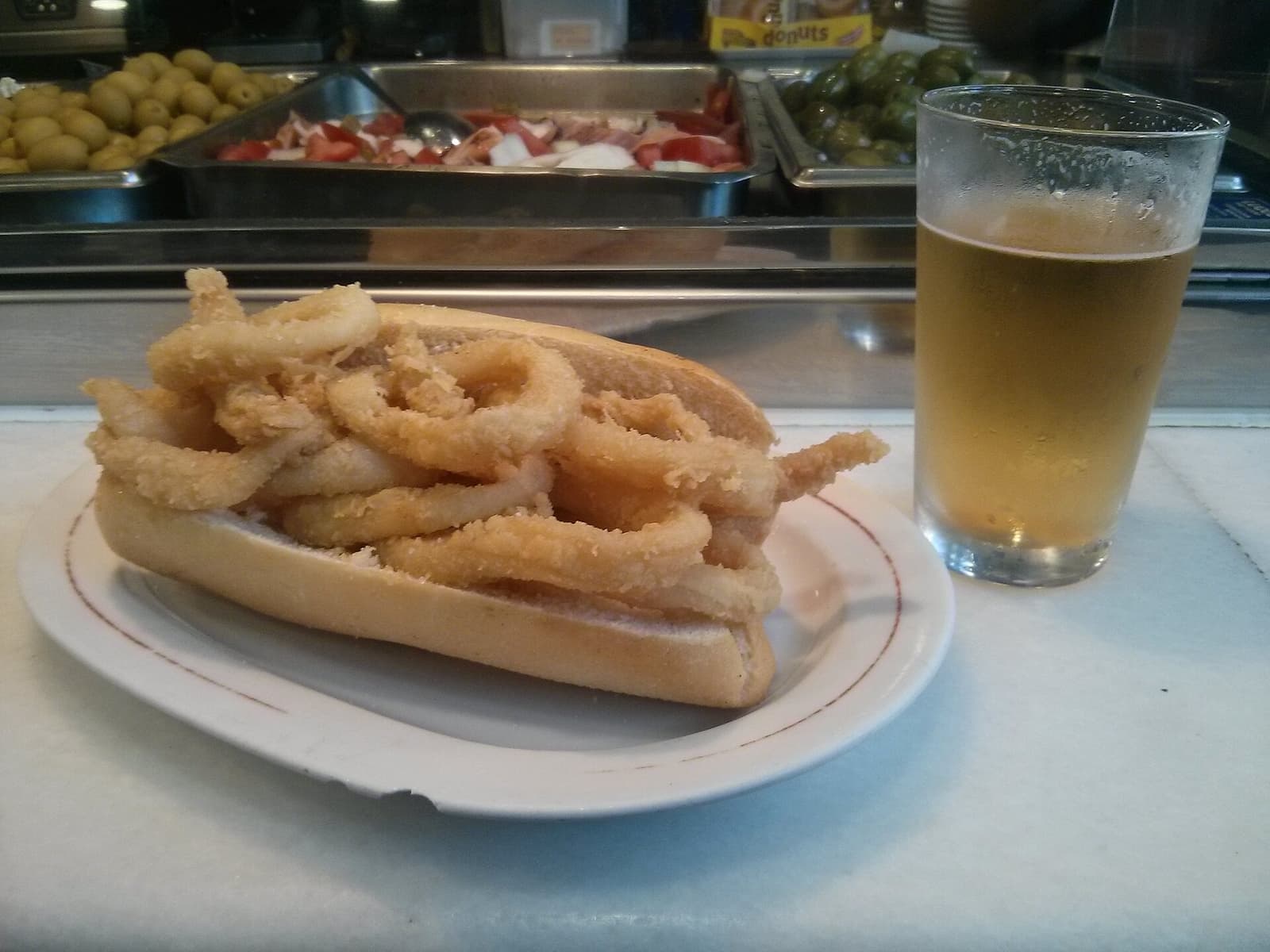
Battered squid rings fried to order and packed into a crusty white roll, with nothing else: an inland city's sandwich that has become its best-known street food.
La Campana, at Calle de Botoneras 6, a lane off Plaza Mayor, has served them since 1870. A bocadillo costs €4.50 in 2026; it is cash only and closed on Mondays. Next door, Bar La Ideal at number 4 charges about €4, and El Brillante, by Atocha station, sells them from €3.50 to €7 by size.
Callos a la madrileña at Casa Alberto, Barrio de las Letras
Beef tripe stewed for hours with chorizo, morcilla and paprika until the sauce turns sticky. It is the city's offal dish with the longest pedigree and a test of any traditional kitchen.
Casa Alberto has stood at Calle de las Huertas 18 since 1827. Its callos cost €25 a portion at the bar, €17 for a half. The tavern opens Tuesday to Saturday from noon to 11pm and on Sunday until 4pm; it closes on Mondays.
Huevos estrellados at Casa Lucio, La Latina
Fried eggs broken over a pile of potatoes at the table so the yolk runs into them. Casa Lucio's version is the one Madrid quotes: eggs from floor-raised hens in Ávila and Galician potatoes, peeled and cut daily and cooked slowly in oil rather than flash-fried.
Lucio Blázquez opened the restaurant at Cava Baja 35 on 4 November 1974; his children run it today. Madrid's tourism board puts the bill at €45 to €60 a head, and the house closes in August. For a cheaper, newer take, Caja de Huevos in Chueca serves six versions of broken eggs.
Oreja a la plancha at Casa Toni, Sol
Pig's ear, cooked until soft, then crisped on the griddle and dressed with paprika or a spicy sauce. It is eaten standing up, with a beer.
Casa Toni, at Calle de la Cruz 14, has run its griddle for more than 60 years and also serves sweetbreads, kidneys and zarajos. The Guía Repsol lists it with an average bill under €35.
Fried salt cod at Casa Labra, Sol
Tajadas de bacalao: pieces of desalted cod in a light batter, fried and eaten by hand, a close relative of the soldaditos de Pavía. The cod croquetas are the other order.
Casa Labra opened at Calle de Tetuán 12 in 1860, and the Spanish Socialist Workers' Party was founded there in 1879. The tavern opens daily from 11.30am to 3.30pm and 6.30pm to 10.30pm; Madrid's tourism board lists it at €16 to €30 a head.
Gambas al ajillo at La Casa del Abuelo, Sol
Prawns cooked in an earthenware dish of olive oil, sliced garlic and chilli, served still bubbling, with bread for the oil.
La Casa del Abuelo opened its first tavern at Calle Victoria 12 in 1906 and is run by the fourth generation of the same family. It opens daily from noon to 11pm and does not take bookings there; the branches at Calle de la Cruz 11 and Núñez de Arce 5 do. Plan on €16 to €30 a head.
Tortilla de patatas and vermut at Bodega de la Ardosa, Malasaña
Madrid likes its potato omelette thick and barely set in the middle. Before lunch it comes with a vermut from the tap, the city's Sunday habit.
La Ardosa, at Calle de Colón 13, dates from 1892 and makes its tortilla continuously through the day in four-portion rounds; it also pours Pilsner Urquell certified by the Czech brewery. A slice of tortilla with a croqueta or salmorejo comes to a little over €10 a head. Malasaña changes fast around it: in September Playing Solo closed its eight-seat counter a few streets away.
Churros con chocolate at Chocolatería San Ginés, Sol
Fried dough sticks, thin churros or thicker porras, dipped into hot chocolate thick enough to coat a spoon. Madrid eats them at breakfast and at the end of a long night.
San Ginés, at Pasadizo de San Ginés 5, has made churros since 1894. It opens every day, stays open into the early hours from Thursday to Saturday and does not take bookings. Six churros cost about €4.50 in 2026 listings.
Markets, neighbourhoods and when to go
If you plan your days around what to eat in Madrid, group them by district:
- Sol and Plaza Mayor: bocadillos, cod, gambas, oreja and churros, all within ten minutes on foot of each other.
- La Latina: Cava Baja for tapas and Casa Lucio; Malacatín, at Calle de la Ruda 5, serves its cocido at €28 per person, bread and drinks extra.
- Huertas and Carrera de San Jerónimo: Casa Alberto and Lhardy, whose shop sells consommé to take away at Carrera de San Jerónimo 8.
- Malasaña and Chueca: vermut, tortilla and newer counters.
- Mondays: La Campana and Casa Alberto are closed; in August, so is Casa Lucio.
Frequently asked questions about eating in Madrid
How much does eating in Madrid cost? A bocadillo de calamares is €4.50, a tavern meal €16 to €30 a head, a full cocido €26 to €28 in the classic houses and €68 at Lhardy.
When should I eat cocido? At lunch, and preferably from autumn to spring. The Palm Court at the Mandarin Oriental Ritz serves one only on Tuesdays and Thursdays in autumn and winter.
Do I need to book? Not for the bars: La Campana, Casa del Abuelo on Calle Victoria and San Ginés work on a first-come basis. Book La Bola, Casa Lucio and Lhardy.
Where can I still find gallinejas and entresijos? The fried lamb offal survives in very few bars; the best-known freiduría, at Calle de Embajadores 84, is listed as closed, so ask locally before crossing the city.
Where to book first
Lhardy, Carrera de San Jerónimo 8: open since 1839, it serves its cocido for €68 with a soufflé to finish; the dining room opens Monday to Saturday and on Sunday for lunch only.
Malacatín, Calle de la Ruda 5: a wine shop in 1895, a cocido house for four generations; the stew costs €28 and is not served to share.
Casa Lucio, Cava Baja 35: book for lunch or dinner and order the eggs. For the city's newer cooking, there is Sexto, a 20-seat tasting menu on the seventh floor of the Kapital building, but what to eat in Madrid is still decided in its taverns.