What to eat in Rome: 10 dishes and where to find them
Four pastas, one oxtail, a fried artichoke and a cream bun: the Roman canon is short and fixed, and the addresses that cook it best have barely moved in decades.
What to eat in Rome comes down to four pastas (carbonara, cacio e pepe, gricia and amatriciana), the offal-and-oxtail cooking of Testaccio and a street-food line of supplì, pizza by the slice and trapizzino. The ten addresses below serve each of them well, from a €2.50 supplì to a €19 plate of tonnarelli.
Roman cooking is a cuisine of few ingredients repeated with discipline: guanciale, pecorino romano, black pepper, eggs, tomato, artichokes and the cheap cuts once paid to slaughterhouse workers. That narrow palette is why the question of what to eat in Rome has a short answer and a long argument about where. Every address in this guide was checked as open in 2025 or 2026, and prices come from menus and recent reviews.
If you have already worked through our guides on what to eat in Naples and what to eat in Bologna, Rome is the third corner of the Italian triangle: less dough than Naples, less butter than Bologna, more pecorino than both.
In Rome the recipes are fixed; the only real choice is the address.
What to eat in Rome first: carbonara at Roscioli, Regola
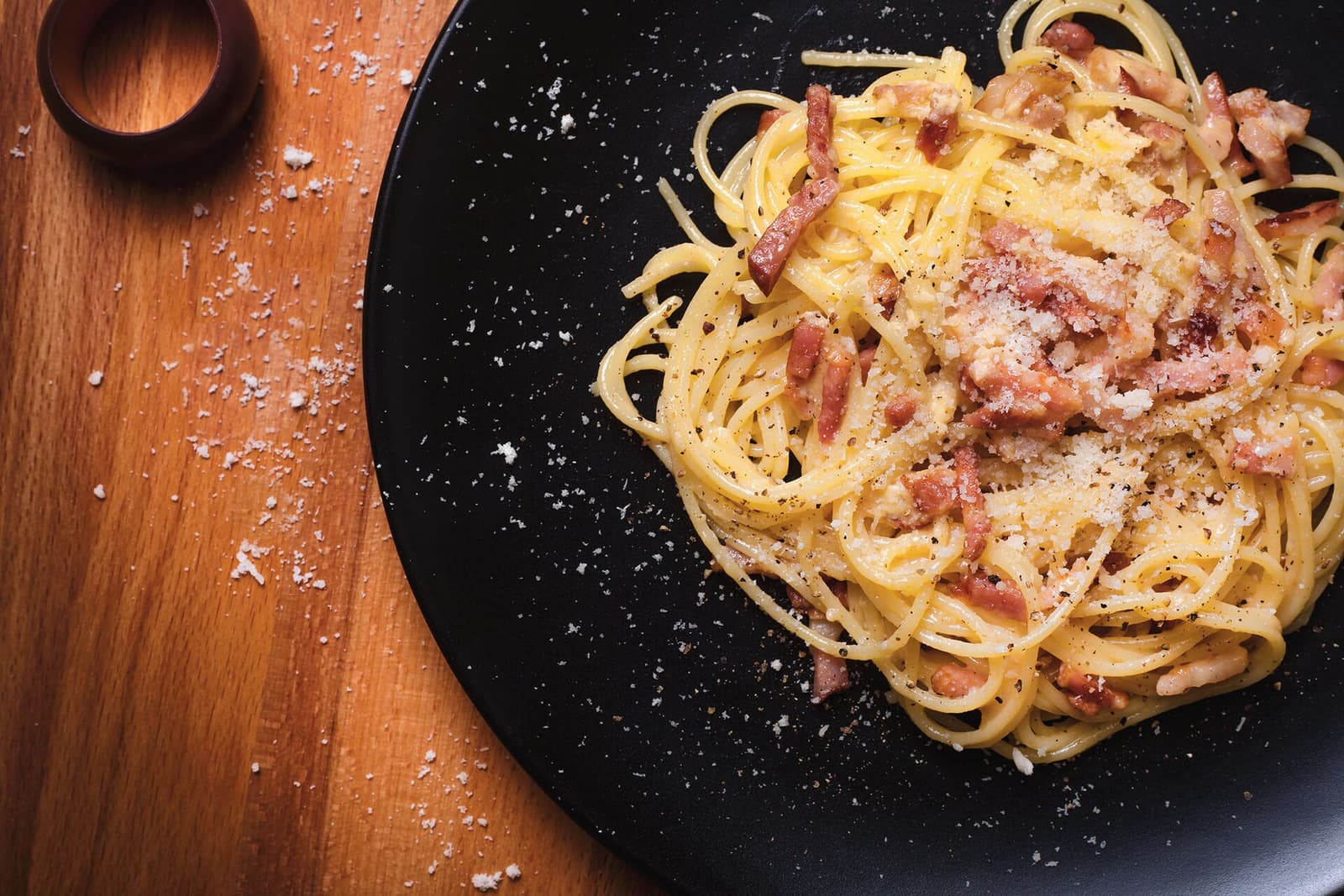
Carbonara is egg yolk, guanciale, pecorino romano and black pepper tossed off the heat until the sauce turns glossy rather than scrambled. There is no cream in the Roman version.
Salumeria Roscioli at Via dei Giubbonari 21, a few steps from Campo de' Fiori, is a delicatessen with tables and a cellar of more than 2,800 labels. Its carbonara uses guanciale from the Verrigni producer, deep-orange yolks and a blend of three pecorini. The plate costs around €17–18; a full meal with wine runs €60–85 per person. It serves daily from 12:30 to 15:30 and from 19:00 to 23:30; book online well ahead.
Cacio e pepe at Felice a Testaccio
Cacio e pepe is the simplest test of a Roman cook: pecorino, black pepper and starchy pasta water whisked into a cream with nothing else to hide behind.
Felice a Testaccio, at Via Mastro Giorgio 29, has been open since 1936 and is listed as a historic shop by the city. Its tonnarelli cacio e pepe are finished tableside and cost about €19; three courses come to roughly €40 per person. It opens every day for lunch and dinner, and reservations are taken only through its website.
Gricia and amatriciana at Armando al Pantheon, Centro Storico
Gricia is carbonara without egg: guanciale, pecorino and pepper. Add tomato and you have amatriciana, named after the town of Amatrice but claimed by Rome for more than a century.
Armando al Pantheon, at Salita de' Crescenzi 31, has been run by the Gargioli family since 1961 and appears in the Michelin Guide. The menu changes often but keeps spaghetti alla gricia, rigatoni all'amatriciana, tripe and pasta e ceci. Expect about €50 per person before wine, and book weeks ahead for dinner.
Coda alla vaccinara at Checchino dal 1887, Testaccio
Coda alla vaccinara is oxtail braised for hours with tomato, celery, pine nuts and raisins. It belongs to the quinto quarto, the offal and off-cuts that slaughterhouse workers in Testaccio took home as part of their pay.
Checchino dal 1887, at Via di Monte Testaccio 30, faces the former slaughterhouse and has been run by the Mariani family for more than a century; it claims to be where the dish took its modern form. Gambero Rosso named it a Champion of Tradition in 2024 for this oxtail. The average bill is around €60; it is closed on Sunday evening and Monday.
Carciofo alla giudia at Nonna Betta, Jewish Ghetto
The carciofo alla giudia is a whole artichoke pressed open and fried twice in olive oil until the outer leaves shatter like crisps and the heart stays soft. It comes from the Jewish community of Rome, which has cooked along the Tiber since antiquity.
Nonna Betta, at Via del Portico d'Ottavia 16, cooks Jewish-Roman dishes and uses the artichoke across the menu, from the fried starter to gricia and amatriciana topped with it. It opens on Saturdays and averages about €30 per person without wine. The romanesco artichoke is at its best from late winter to spring.
Supplì at Supplì Roma, Trastevere
A supplì is an oval of rice cooked in tomato sauce, stuffed with mozzarella, breaded and fried. Break it in half and the cheese stretches like a telephone cord, which is why Romans call the classic version supplì al telefono.
Supplì Roma, at Via di San Francesco a Ripa 137, has been frying in Trastevere since 1979 and also sells pizza by the slice. A supplì costs €2–3. It is open Monday to Saturday from 10:00 to 22:00 and closed on Sunday.
Pizza al taglio at Pizzarium, Trionfale
Pizza al taglio is baked in rectangular trays, cut with scissors and sold by weight. The best versions use high-hydration dough and long fermentation, which gives an airy, crackling base that holds heavy toppings.
Gabriele Bonci's Pizzarium, at Via della Meloria 43 near the Cipro metro stop, reopened on 13 September 2025 after works that doubled the counter and added seats. Recent prices run around €36 per kilo for ham and provola, with classic supplì at €2.50; a filling lunch comes to €12–20.
Pizza romana at Da Remo, Testaccio
Roman round pizza is the opposite of the Neapolitan kind: thin, rolled flat and baked until the edge is brittle. Romans call it scrocchiarella, from the sound it makes when you bite.
Pizzeria Da Remo, at Piazza di Santa Maria Liberatrice 44, has been baking since 1976 and serves fried starters such as salt-cod fillets and courgette flowers before the pizza. It opens Monday to Saturday from 19:00 to midnight, takes no reservations and costs €15–20 per person.
Trapizzino at Trapizzino, Testaccio
The trapizzino is a triangle of pizza bread cut open and filled with a Roman stew: chicken cacciatora, tongue in green sauce, meatballs, oxtail.
Stefano Callegari's first shop, at Via Giovanni Branca 88, is where the format started before it spread across Italy and to New York. A trapizzino costs €5 and a supplì €2. It opens at noon and stays open until 1:00 on Friday and Saturday.
Maritozzo at Pasticceria Regoli, Esquilino
The maritozzo is a soft, slightly sweet brioche bun split and packed with whipped cream. Romans eat it for breakfast with a cappuccino.
Pasticceria Regoli, at Via dello Statuto 60, has been baking since 1916. A maritozzo costs about €3, and the batch sells out by early afternoon. It opens from 7:00 to 19:00 and closes on Wednesday.
Markets, neighbourhoods and when to go
Knowing what to eat in Rome is half the job; timing is the other half.
- Mercato di Testaccio, Via Beniamino Franklin: Monday to Saturday, 7:00–15:30. Go to Mordi e Vai at box 15 for a boiled-beef panino for about €5–6.
- Testaccio: the densest block of Roman cooking, with Felice, Checchino, Da Remo, Trapizzino and the market within a ten-minute walk.
- Trastevere and the Ghetto: supplì, artichokes and Jewish-Roman cooking; busiest after 20:00.
- Lunch runs from 12:30 to 15:00 and dinner rarely starts before 19:30; many trattorias close one day a week, often Sunday evening or Monday.
- Season: romanesco artichokes from late winter to spring; carbonara and supplì all year.
Frequently asked questions
What is the most famous food in Rome? The four Roman pastas: carbonara, cacio e pepe, gricia and amatriciana. If you have one meal, order two of them to share and compare.
How much should I budget per day? Street food such as supplì, pizza al taglio and trapizzino keeps lunch at €5–20. A trattoria dinner costs €30–60 per person, and €60–85 with wine at the busiest addresses.
Do I need to book restaurants in Rome? For Roscioli, Armando al Pantheon and Felice, yes, often weeks ahead. Pizzerias such as Da Remo and street-food counters do not take bookings.
Where do new openings fit in? The classics above are the base, but the city keeps adding tables, such as Locanda Bucarelli, and a busy bar scene covered at the Roma Bar Show.
Where to book first
If you can only reserve three tables before you land, start with Salumeria Roscioli (Via dei Giubbonari 21) for carbonara, Armando al Pantheon (Salita de' Crescenzi 31) for gricia and amatriciana, and Felice a Testaccio (Via Mastro Giorgio 29) for cacio e pepe. Everything else on this list of what to eat in Rome can be done by walking in and waiting your turn.