Beef cheeks bourguignon recipe, Stéphane Reynaud's version
The Ardèche butcher's son builds his bourguignon around cheek instead of chuck, a cut that turns silky rather than stringy after two hours in red wine.
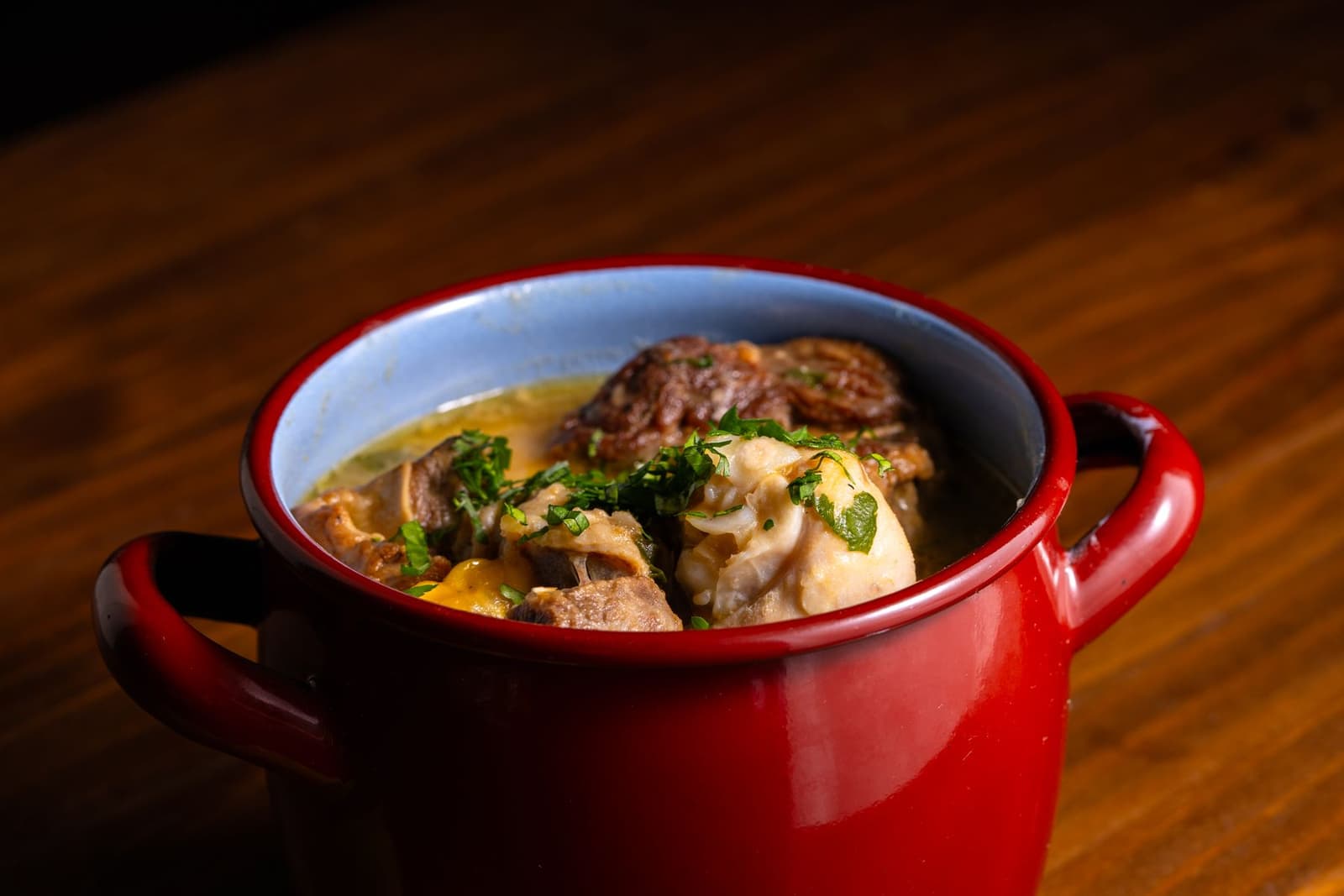
This beef cheeks bourguignon recipe comes from Stéphane Reynaud's cookbook Ripailles, where he swaps the usual chuck or shin for beef cheek, a working muscle laced with connective tissue that melts down to a natural gloss the sauce can't fake with flour alone.
Cheek needs the overnight marinade more than a leaner cut would: the wine and juniper start breaking down the tissue before the pot ever goes on the heat, so the braise itself can stay at a gentle simmer instead of a hard boil that would toughen the meat before it softens.
Ingredients
Cheek turns silky rather than stringy after two hours in red wine, a gloss flour alone can't fake.
- 1.2 kg beef cheek, trimmed and cut into large chunks
- 1 bottle (75 cl) red Burgundy wine
- 1 tbsp juniper berries, lightly crushed
- 3 tbsp cognac
- 3 bay leaves
- 8 baby onions, peeled
- 2 carrots, peeled and sliced
- 2 tbsp plain flour
- 3 tbsp sunflower oil
- Salt and black pepper
Method
- The day before, put the beef cheek in a large bowl with the wine, juniper berries, cognac and bay leaves. Cover and marinate in the fridge overnight; the alcohol and acidity start tenderising the meat before any heat is applied.
- Drain the meat, reserving the marinade, and pat it dry. Wet meat won't brown, and browning is what gives the sauce its base flavour.
- Heat the oil in a heavy casserole and brown the meat in batches over high heat, then set aside. Crowding the pot steams the meat instead of searing it, so work in batches even if it takes longer.
- In the same pot, soften the onions and carrots for 5 minutes, then return the meat, dust with the flour and cook, stirring, for 5 minutes. The flour toasts slightly and thickens the braise as it cooks rather than needing a separate roux later.
- Pour in the reserved marinade, season, bring to a bare simmer, cover and cook for around 2 hours, until the cheek is tender enough to break apart with a spoon. Check the liquid level occasionally and top up with water if the pot runs dry.
- Taste and adjust the seasoning before serving; the sauce should coat the back of a spoon without needing to be reduced further.
What to serve alongside
Reynaud serves this with boiled or mashed potatoes to soak up the sauce, though buttered tagliatelle works as well. A young Burgundy from the same vintage the harvest that opened early this year will produce is the obvious pour, close enough to what's in the pot that neither fights the other.