Ube halaya recipe: the Filipino purple yam classic
This slow-stirred purple yam jam turns from grated root to glossy, spoonable dessert through patience at the stove, not a long ingredient list.
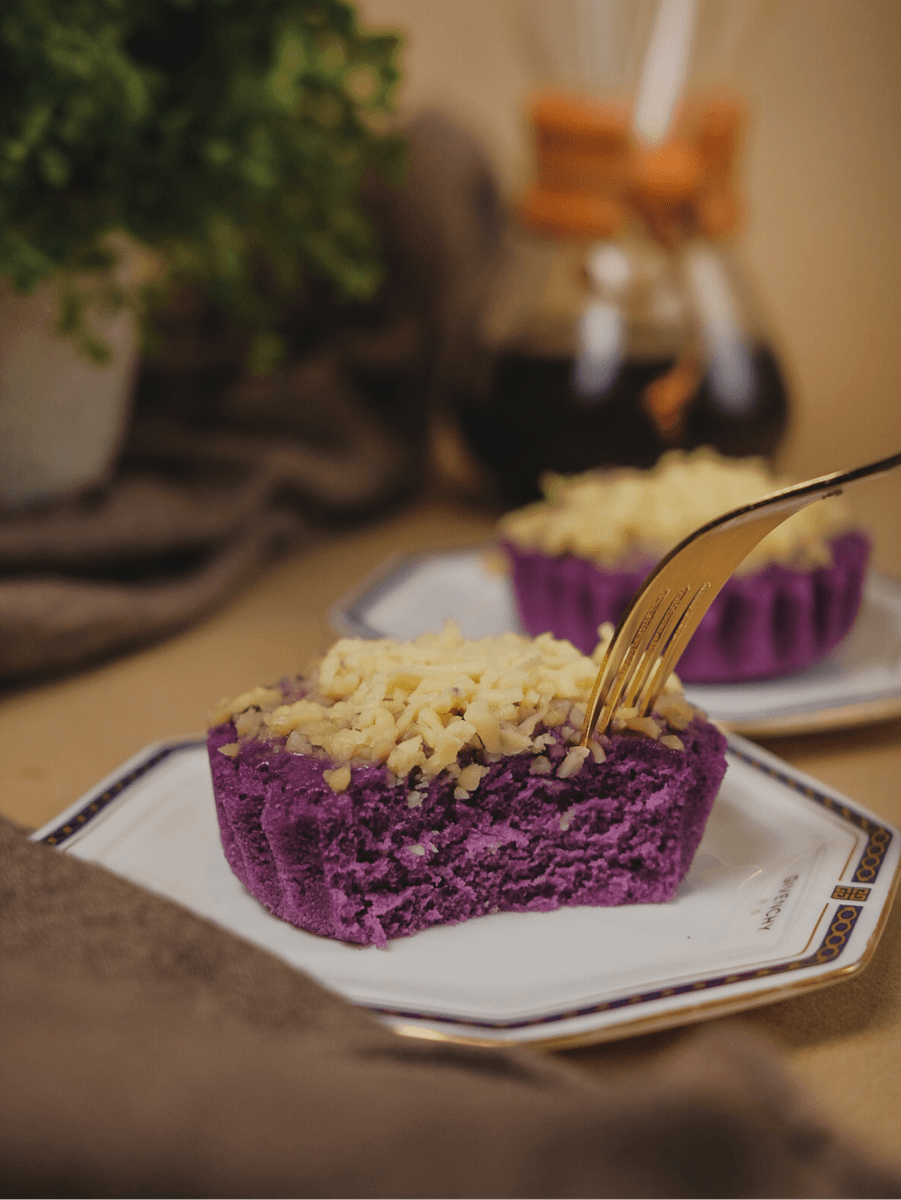
Ube halaya is a Filipino purple yam jam cooked down with coconut and milk until it turns thick, glossy and deep violet, and this ube halaya recipe uses frozen grated ube rather than fresh tubers.
The dish predates the current ube boom by generations; it is a fixture at Filipino gatherings and the base for ube cake and ice cream, not a recent invention. With the Philippines now restricting exports of fresh ube and planting material, frozen grated ube, already the standard for most cooks outside the Philippines, is the practical way in. It is unaffected by the ban and sold in most Filipino and East and Southeast Asian grocers.
Ingredients
The colour looks like a shortcut. The texture is thirty-five minutes of stirring that cannot be rushed.
- 900 g frozen grated ube, thawed
- 400 ml full-fat coconut milk
- 400 g condensed milk
- 170 g evaporated milk
- 60 g unsalted butter, plus extra for the dish
- 100 g caster sugar
- 1/2 tsp fine salt
- 40 g grated mild cheddar or toasted coconut flakes, to finish
Method
- Put the thawed ube in a wide, heavy-based pan with the coconut milk, condensed milk and evaporated milk. A wide pan matters here: more surface area means the mixture reduces faster and is less likely to scorch on the bottom before it thickens.
- Stir in the sugar and salt, then set the pan over medium-low heat. Purple yam has almost no pectin of its own, so the jam-like texture comes entirely from reducing the liquid, not from the fruit setting on its own.
- Stir constantly with a wooden spoon for 35-40 minutes. Constant stirring stops the thick puree catching on the base, where scorched starch would turn the whole batch bitter.
- Add the butter in two batches partway through, folding each in fully before adding the next. Adding it gradually keeps the fat emulsified into the puree rather than splitting out on the surface.
- The halaya is ready when it thickens enough to pull cleanly away from the sides of the pan and holds a ridge when you drag the spoon through it.
- Spoon into a buttered dish, smooth the top, and scatter over the cheese or coconut while it is still warm, so it sets into the surface as the halaya cools.
- Chill for at least 2 hours before serving, so the jam firms up enough to hold a clean slice.
Serve it the way Filipino cooks actually do
Grated cheese on a purple dessert reads strangely outside the Philippines, but the salt cuts the sweetness in the same way a cheese course follows a rich meal elsewhere. If you prefer it without, toasted coconut flakes do similar work with less contrast.
Leftover halaya keeps for a week chilled and works as a ready-made filling for buns, crepes or a simple sponge, no extra cooking required.