Gravlax Recipe: The Nordic Salt-Cure Technique for Salmon
A step-by-step gravlax recipe from Sweden: how salt, sugar and time cure raw salmon into silky, sliceable slices, with no smoke and no heat at all.
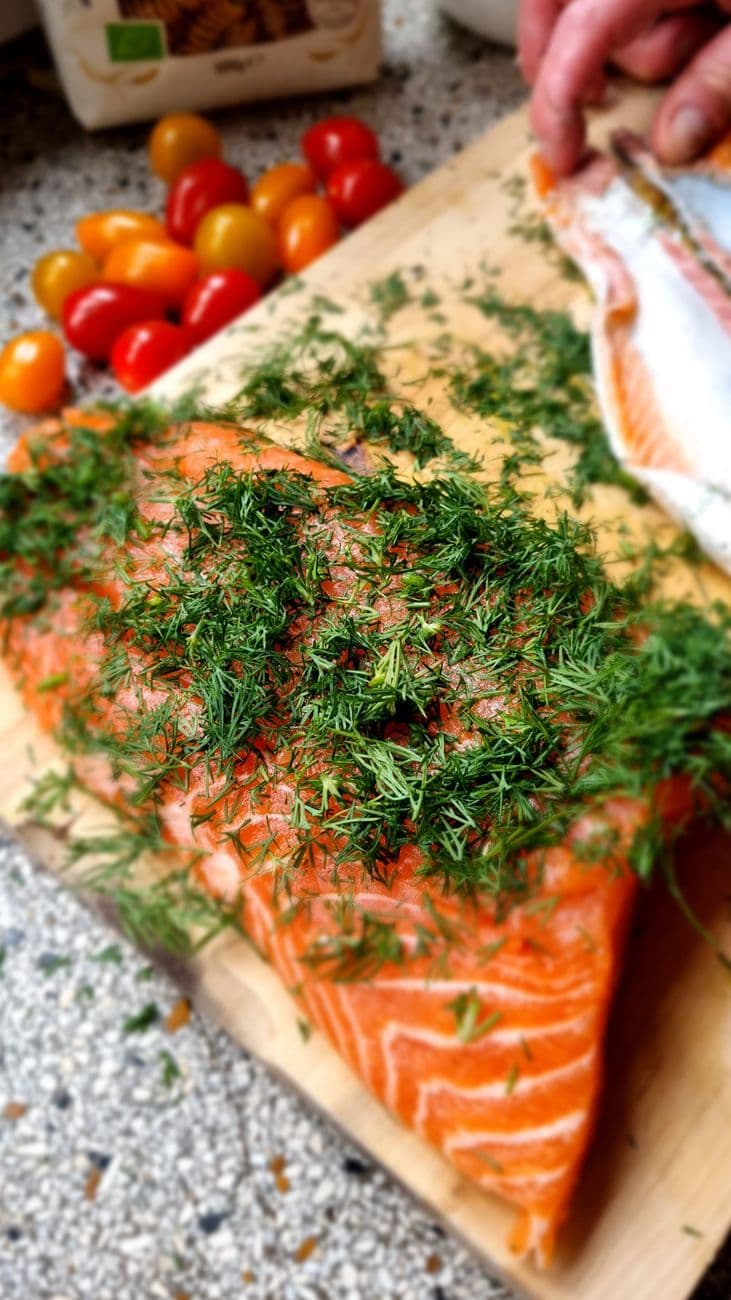
This gravlax recipe turns raw salmon into something sliceable and clean, using nothing but salt, sugar and time. The technique comes from Jämtland, in northern Sweden, and rests on one idea: salt and sugar pull water out of raw fish by osmosis, firming the flesh without ever putting it near heat.
Gravlax comes from burying salted salmon in snow to slow-ferment it. Chef Magnus Nilsson, who ran the restaurant Fäviken in that region, wrote a cleaner version in his book The Nordic Cookbook — a plain 1:1 salt-to-sugar ratio that keeps this gravlax recipe consistent at any weight.
Norway's salmon exports just hit a new August record, so more fish is landing firm enough for a clean cure. Ask for a centre-cut, skin-on fillet: the thin tail cures faster than the middle, so it over-salts before the rest is ready.
Ingredients
- 600g salmon fillet, skin on, centre-cut, pin-boned
- 45g coarse sea salt
- 45g caster sugar
- 1 tsp white peppercorns, cracked
- 30g fresh dill, chopped, plus extra sprigs to serve
- 2 tbsp Dijon mustard
- 1 tbsp clear honey
- 1 tbsp white wine vinegar
- 100ml neutral oil (rapeseed or sunflower)
- 1 tbsp fresh dill, chopped, for the sauce
Method
- Run a fingertip along the flesh and pull out any pin bones with tweezers. A bone left in traps moisture, so the cure sets unevenly right there.
- Crack the peppercorns and mix with the salt, sugar and 30g of dill. Sugar softens the salt's pull, so the flesh firms up silky instead of turning tough and dry.
- Spread half the cure in a dish, lay the salmon skin-side down, then pack the rest over the flesh in one even layer. An uneven layer draws out moisture at different speeds and leaves soft, under-cured patches.
- Wrap tightly in film, weigh down with a board and two tins, and refrigerate 24 hours, turning once at the halfway point. The weight presses out surface liquid so the fish firms instead of just marinating.
- Unwrap, tip away the pooled liquid, and scrape off the wet cure with a knife rather than rinsing it under the tap. Rinsing carries off the seasoning the salt and sugar just built into the flesh.
- Slice on a long diagonal, blade almost flat against the skin, to cut wide, thin sheets across the grain. That angle gives gravlax its silky bite instead of a chewy one.
Serving this gravlax recipe
Whisk the mustard, honey and vinegar, then trickle in the oil while whisking until it thickens and turns pale; stir in the last spoon of dill. This is hovmästarsås, the mustard-dill sauce Sweden serves with gravlax instead of anything creamy — it cuts the fish's saltiness rather than adding more fat.
Serve cold, straight from the fridge, on dark rye or with boiled new potatoes. This gravlax recipe also takes well to variation: swap half the dill for fennel fronds, or work in a splash of aquavit for a caraway note against the salmon's fat. Wrapped tight, it keeps three days.