Hand-raised pork pie recipe: Franklin's hot water crust
A home-scale version of the hot water crust technique behind Calum Franklin's pies, the same method he just put into wholesale production this week.
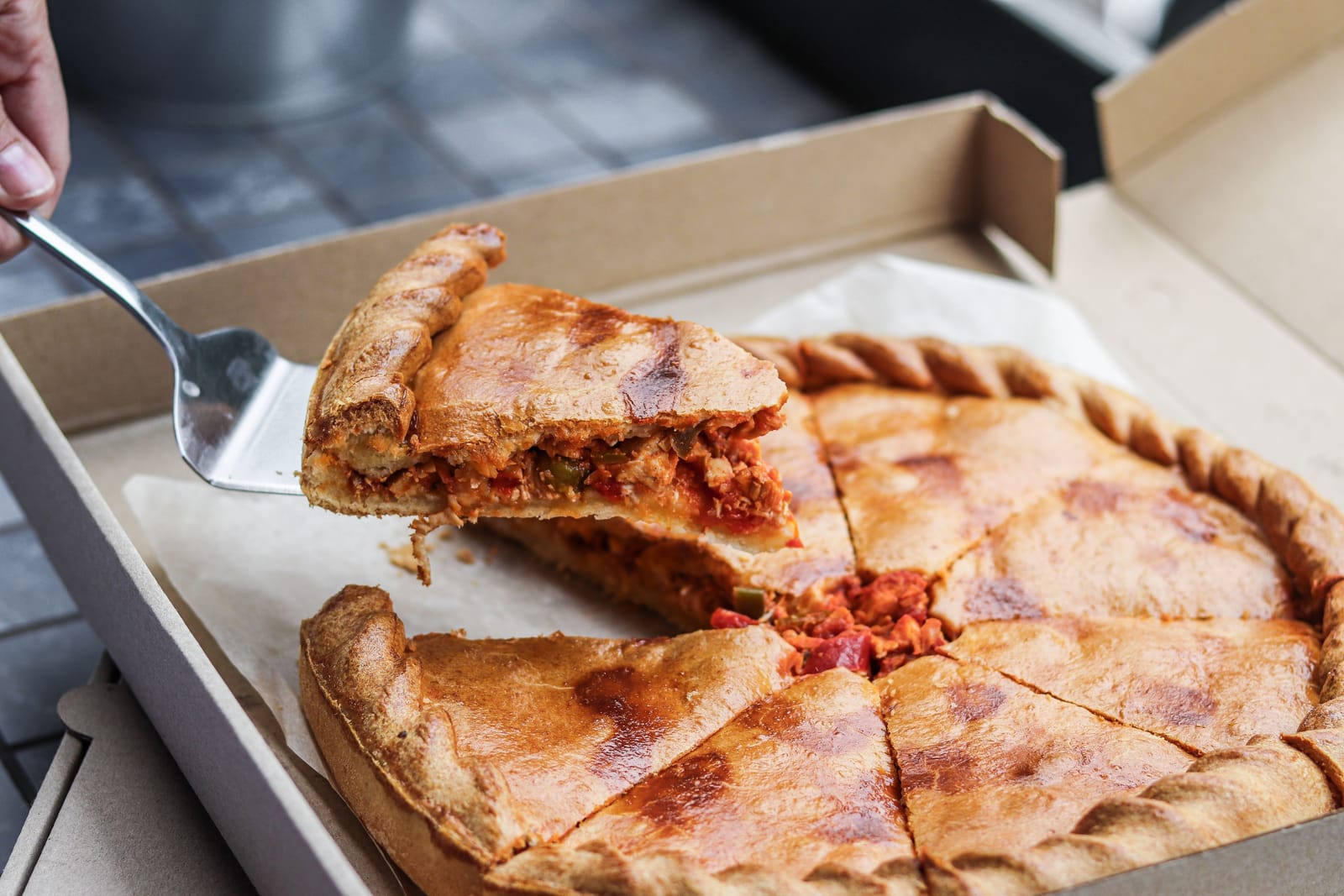
This hand-raised pork pie follows the hot water crust technique Calum Franklin set out in his 2020 book The Pie Room, scaled down from his restaurant version to four pies baked in an ordinary home oven.
The method, not any single ingredient, is what makes a hand-raised pie hold its wall without a tin: the pastry is built while the fat inside it is still hot and pliable, then left to firm up just enough to stand on its own before the filling goes in.
Ingredients
Shape it while the fat is warm, let it firm up, then fill it — the whole trick is in the timing.
- 500g plain flour
- 2 eggs, beaten
- 200ml water
- 190g lard
- 10g salt
- 1 sprig rosemary
- 400g pork shoulder, diced and chilled
- 150g smoked back bacon, half minced and half chopped
- 100g cooked ham hock, shredded
- 75g lardo or pork back fat, diced
- 1 egg yolk, beaten with a splash of water, for the glaze
- 2 gelatine leaves and 200ml pork or chicken stock, for the jelly (optional)
Method
- Heat the water, lard, rosemary and salt together until melted and just simmering, then discard the rosemary. Work the hot liquid into the flour and egg until it forms a dough — doing this hot is what lets the pastry hold its own walls once shaped.
- Wrap the dough and let it cool for a few minutes, just until it's warm rather than hot. Fully cold pastry cracks when you try to raise it by hand; fully hot pastry won't hold a shape at all.
- Freeze the diced pork shoulder and bacon for 15–20 minutes before mincing coarsely, then fold through the ham hock, lardo, salt and a few chopped sage leaves. Cold fat stays in distinct pieces through baking instead of turning the filling dense.
- Press two-thirds of the pastry into four pie moulds, building the wall up from the base in one piece so there's no seam for the filling to escape through. Pack the filling in tightly to avoid air pockets.
- Roll the remaining pastry for the lids, seal the edges by pinching them together, and cut a small steam hole in the centre of each pie.
- Brush with the egg yolk glaze and bake at 200°C for 40–45 minutes, until deep gold and a thermometer through the steam hole reads at least 70°C.
- For a cold pie, make the jelly while the pies cool: soak the gelatine, dissolve it into warm stock, and pour it through the steam hole once the pie reaches room temperature. Chill overnight so the jelly sets into clean, sliceable layers.
Hot from the oven, or cold and sliced
Can the pies be made a day ahead? Yes — in fact a cold pie slices more cleanly than a hot one, which is why the optional jelly step exists: it sets the filling into neat layers overnight.
Serve warm with a sharp pickle to cut the fat, or chill overnight under the jelly and slice cold. The same hot water crust just went wholesale: Franklin launched The House of Pies this week, built on raising a pastry wall while the fat is still warm — the same instinct behind Amuse's sweet Nantucket cranberry pie.