Horiatiki recipe: Greece's village salad, done right
Tomatoes, cucumber and a whole block of feta, dressed with nothing but oil and oregano: the salad behind Estiatorio Milos, now hunting funding for its next stage of growth.
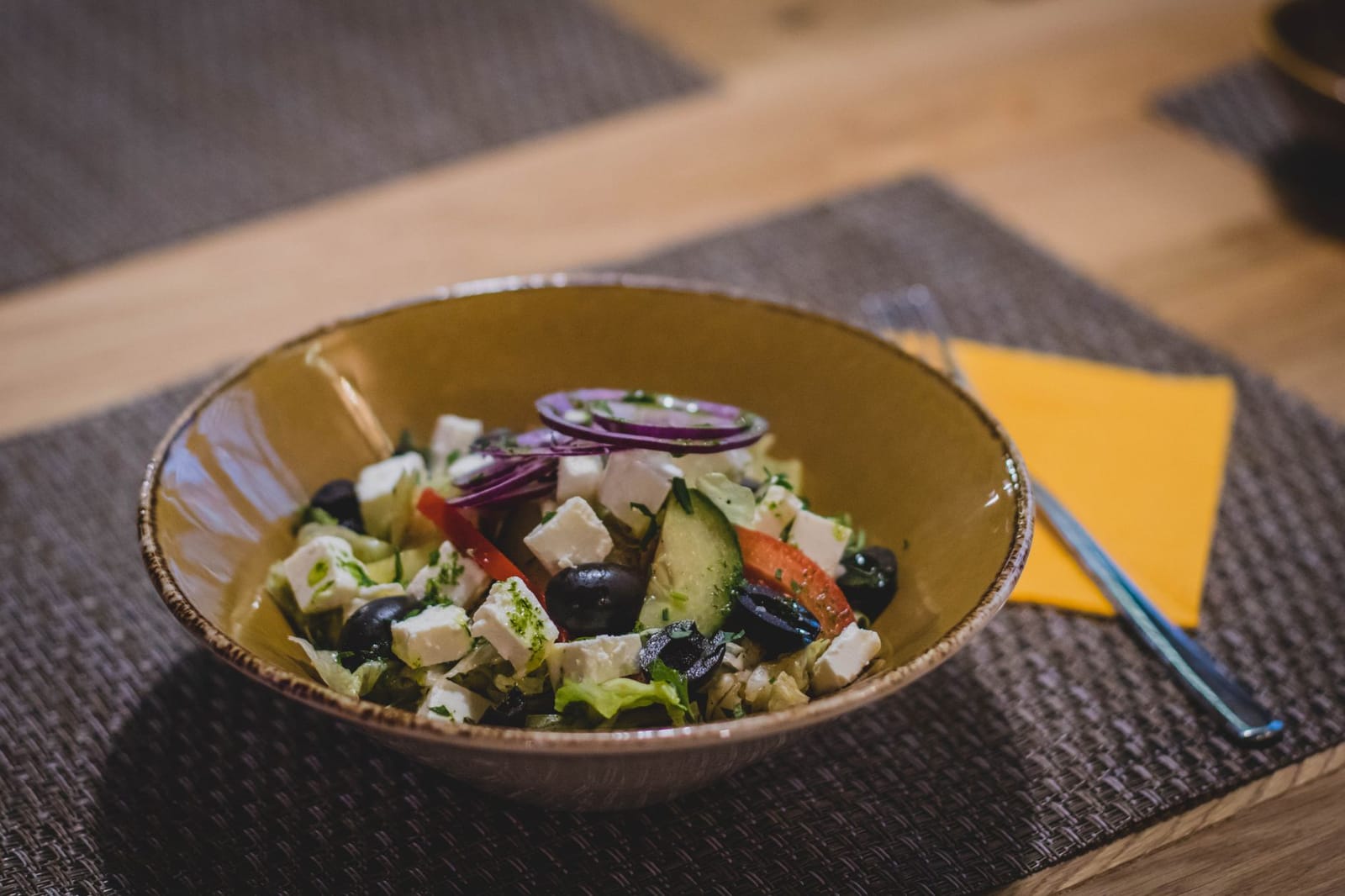
Horiatiki is tomatoes, cucumber, onion, olives and a whole slab of feta dressed with oil and oregano, nothing diced too fine, nothing composed to look clever.
It is the salad Costas Spiliadis built his menus around at Estiatorio Milos, the Greek seafood group he founded in Montreal and took to New York, Las Vegas, London, Dubai and Athens. Milos is back in the news this week, with its owners seeking a strategic partner to fund the group's next stage of growth.
Horiatiki means village-style, and the name is the point. Every household made its own version with whatever vegetables were ripe, no two identical, no lettuce and no recipe book involved. What gets served as "Greek salad" outside Greece, padded out with lettuce and crumbled feta, is a different, blander dish.
Horiatiki was never meant to stretch further than what a family had on hand.
Ingredients
- 4 ripe tomatoes (about 800g), cut into wedges
- 1 cucumber (about 300g), halved lengthways and sliced
- 1 green bell pepper, sliced into rings
- 1 small red onion, thinly sliced
- 16 Kalamata olives
- 200g block Greek feta, left whole
- 2 tsp dried oregano
- 60ml extra-virgin olive oil
- Sea salt, to taste
Method
- Cut the tomatoes into wedges directly over the serving bowl, not on a board, so the juice that collects becomes part of the dressing instead of running down a drain.
- Add the cucumber, pepper and onion to the same wide, shallow bowl. A deep bowl traps the vegetables under their own liquid and wilts them within minutes; a shallow platter lets the juices pool at the bottom instead.
- Season with salt, toss gently, and let the salad sit for five minutes. The salt draws out enough liquid from the tomatoes and cucumber to build the dressing on its own — horiatiki takes no vinegar and no lemon.
- Scatter the olives through the vegetables, then set the whole block of feta on top rather than crumbling it. Crumbled feta turns grainy and sinks to the bottom; a slab keeps its texture, and diners break it apart themselves at the table, which is the custom the dish is named for.
- Rub the dried oregano between your palms as you sprinkle it over the feta. The friction releases its oil, which a pinch straight from the jar does not.
- Finish with the olive oil, poured generously over the feta first and then the rest of the salad. Serve immediately: dressed horiatiki left in the fridge turns watery within the hour.
Why no lettuce ever goes in
Why does horiatiki recipe tradition skip lettuce? Lettuce is a filler, and horiatiki was never meant to stretch further than the vegetables a family had on hand. Milos keeps that logic at restaurant scale too: a low, wide mound rather than a tall toss, so nothing gets buried under the dressing. Serve it before grilled fish, with a cold glass of assyrtiko; the acidity does the job a squeeze of lemon would on the fish itself. For a sharper starter from the same pantry, see our taramasalata recipe.