Vincisgrassi recipe: the Marche's EU-protected lasagna
Hand-chopped chicken giblets, cloves and nutmeg set this Macerata classic apart from ordinary lasagna — and earned it EU protected status in 2022.
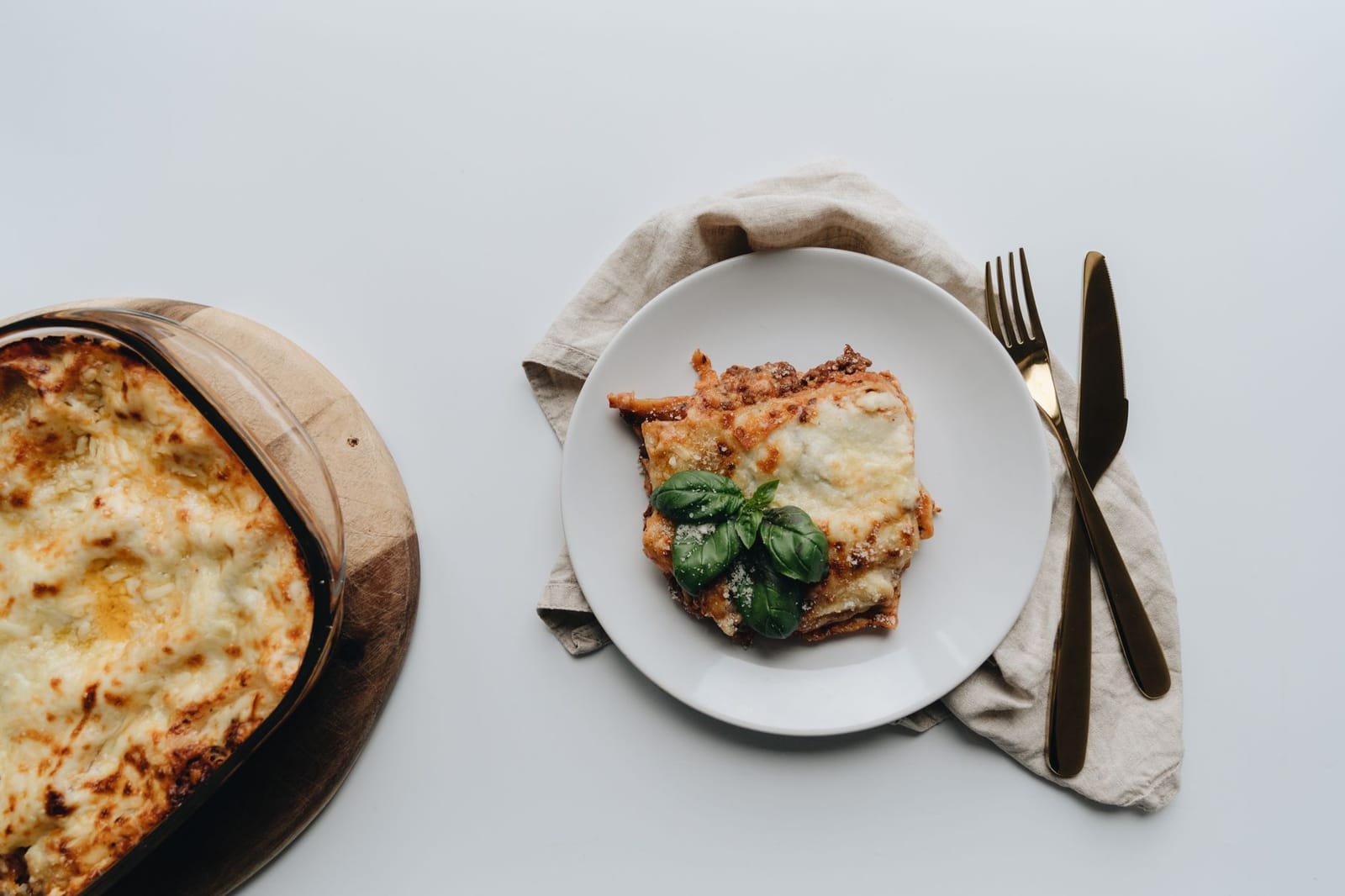
Vincisgrassi is the Marche's answer to lasagna: pasta sheets layered with a chopped, not minced, giblet ragù and a nutmeg-scented béchamel, baked until the top turns gold.
The Macerata version has carried EU Traditional Speciality Guaranteed status since 2022, making it one of the clearest gastronomic emblems the Marche has. Its name is usually traced to Austrian general Alfred von Windisch-Grätz, supposedly honoured by a local cook after an 1799 battle near Ancona. The story has a problem: Antonio Nebbia's 1779 cookbook already describes a near-identical dish called "princisgrass", two decades before the general arrived.
Ingredients
The long, slow cook is what breaks the giblets down into the sauce; rushed, it stays grainy.
- 300g chicken livers and hearts, finely chopped by hand
- 200g pork shoulder, finely chopped by hand
- 1 small onion, 1 carrot, 1 celery stalk, finely chopped
- 100ml dry white wine
- 400g tomato passata
- 1/4 tsp ground cloves
- Fresh nutmeg, for grating
- 60g butter
- 60g plain flour
- 700ml whole milk
- 400g fresh egg lasagna sheets
- 100g Parmesan, grated
- Olive oil, salt and pepper
Method
- Chop the chicken livers, hearts and pork by hand rather than mincing them. Minced meat turns the ragù pasty; hand-chopped meat keeps the distinct bite that separates vincisgrassi from an ordinary lasagna.
- Soften the onion, carrot and celery in olive oil, add the chopped meat and brown it well, then deglaze with the wine and let it evaporate completely.
- Stir in the passata, cloves and a generous grating of nutmeg. Simmer uncovered on low heat for 1.5–2 hours. The long, slow cook is what breaks the giblets down into the sauce; rushed, it stays grainy.
- For the béchamel, melt the butter, whisk in the flour and cook the roux for a minute before adding the milk gradually, warm, whisking constantly. Warm milk added slowly is what keeps the sauce smooth; cold milk poured in fast is what causes lumps.
- Layer pasta sheets, ragù, béchamel and Parmesan in a baking dish, repeating until both are used up, finishing with béchamel and a final layer of Parmesan on top.
- Bake at 180°C for 30–35 minutes until the top is golden, then rest for 10 minutes before cutting. Resting lets the layers set, so the slices hold together instead of sliding apart.
Why Macerata's version is EU-protected
What makes this vincisgrassi recipe different from standard lasagna? The chopped-not-minced offal ragù and the clove-and-nutmeg spicing, a combination recorded in the Marche since at least 1779, decades before the dish got its current name. Vincisgrassi is what Marche households cook through the same late-autumn weeks when the region's white truffle fairs, including Amandola's Diamanti a Tavola, fill trattoria calendars further south in the hills.