Hoshigaki recipe: Japan's hand-massaged dried persimmons
Astringent persimmons, peeled, strung and massaged by hand for weeks until their own sugar rises to the skin: the traditional Japanese way to turn an unripe fruit into a concentrated autumn sweet.
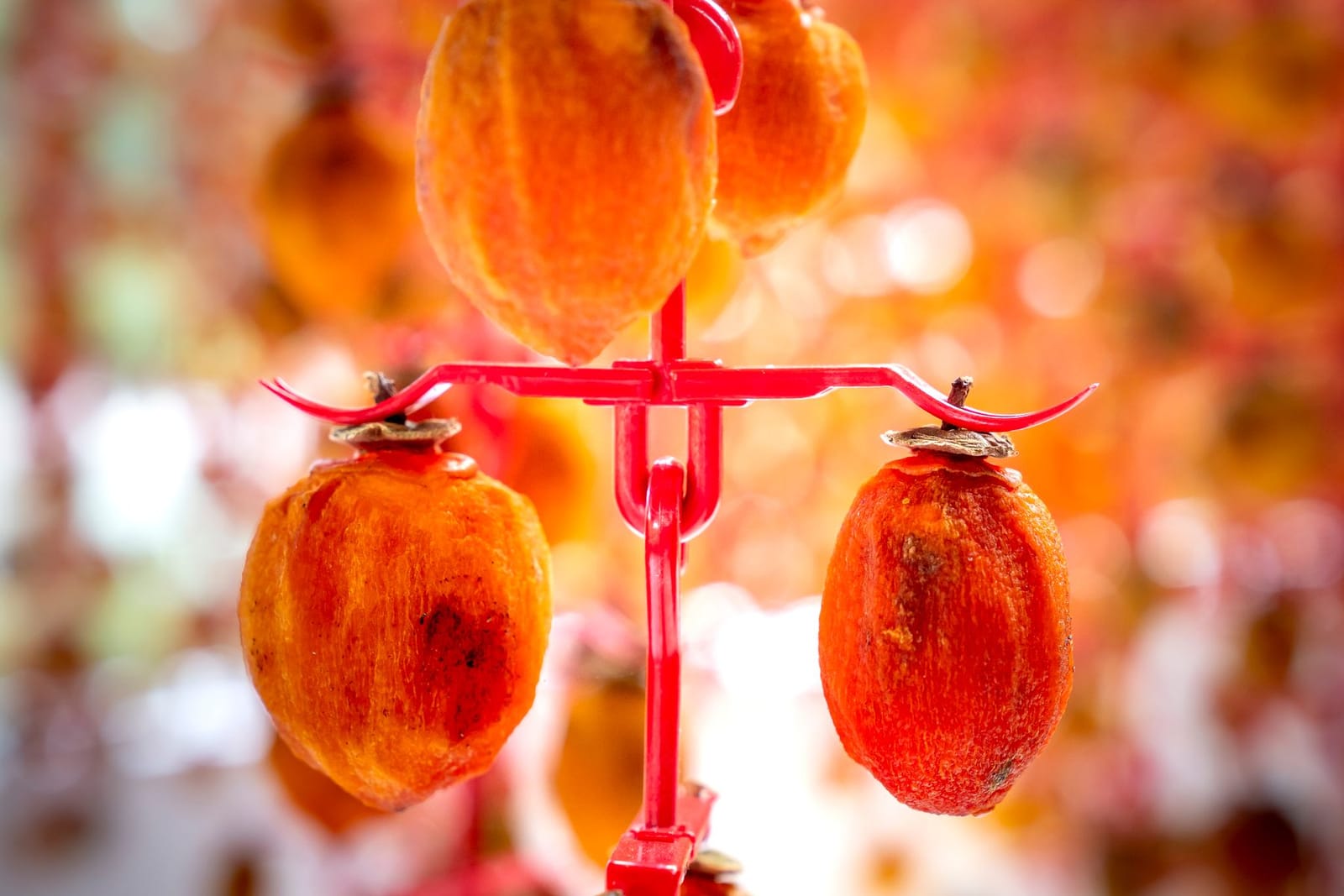
Hoshigaki is Japan's astringent persimmon, peeled and hung by its stem, then massaged by hand for weeks until the fruit's own sugar rises to the skin as a fine white bloom.
The technique turns a fruit too puckering to eat fresh into one of the most concentrated, naturally sweet dried fruits made anywhere, with no added sugar and no dehydrator. It depends on hachiya-type astringent persimmons, picked while still firm, and on a cool, airy place to hang them as autumn turns to winter.
Done right, a hoshigaki batch takes over a month of small, repeated attention rather than one long process, which is why households that make it tend to keep doing it every year once the rhythm sets in. Japan's kitchen hands down other such slow techniques, gyoza folding among them.
No dehydrator, no added sugar, just a month of small daily attention.
Ingredients
- 8 firm astringent persimmons (hachiya or a similar variety), stems and calyx intact
- String or garden twine, about 30cm per persimmon
Method
- Peel each persimmon with a vegetable peeler, leaving the stem and the woody calyx at the top untouched; the stem is what the string holds, and the calyx keeps the top from splitting as the fruit shrinks.
- Tie a length of string around the stem of each persimmon and knot the other end to a dowel, rod or hanger, spacing the fruit so no two touch; touching fruit traps moisture between them and is the main cause of mould.
- Hang the persimmons somewhere cool, dry and airy, out of direct sun and rain; a covered porch or an airy garage works better than a closed kitchen, where still, humid air slows drying unevenly.
- Once the skin has dried to the touch, usually a day or two in, begin massaging each persimmon gently for about 15-30 seconds, pressing and rolling the fruit between your fingers without breaking the skin.
- Repeat the massage every two to three days for the first two weeks, then less often as the fruit firms up. The pressure breaks down the pulp inside the skin and pushes the fruit's sugar toward the surface, which also keeps the inside from hardening into a solid, dry lump.
- After three to six weeks, depending on humidity and the size of the fruit, the surface turns matte and develops a fine white, powdery bloom; that is crystallised sugar, not mould, and it signals the persimmon is ready. The fruit should feel set and leathery, with no soft or squishy give left.
How to serve hoshigaki
Hoshigaki is eaten on its own, sliced thin, the way other kitchens treat a good dried fig: alongside hard cheese, with green tea, or with a glass of sake, whose dryness cuts through the fruit's concentrated sweetness.
Kept in an airtight container in the fridge, it holds for months; frozen, it keeps for closer to a year, which is rather the point of the whole exercise.
Can ordinary persimmons be used instead? No — only astringent, hachiya-type persimmons work. The common, non-astringent fuyu kind lack the tannins hoshigaki is built to tame, and they turn mushy rather than leathery as they dry.