Khachapuri recipe: Imereti's cheese bread, done right
A pan-cooked, egg-yolk-finished take on Imeruli khachapuri, the everyday cheese bread of western Georgia, with the technique a Georgian kitchen in London keeps on its menu.
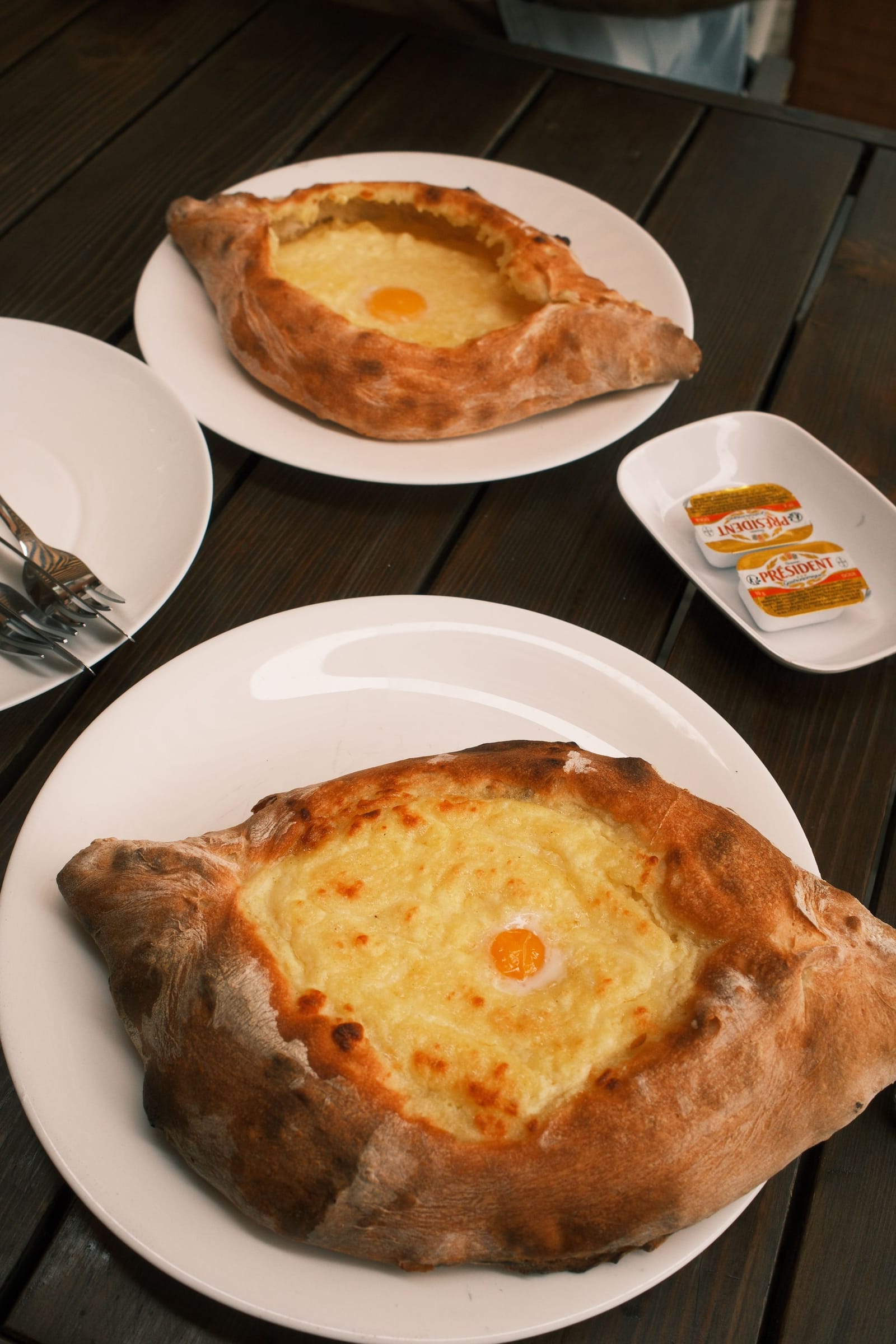
Khachapuri is Georgia's cheese-filled bread, and the Imeruli version, named for the western region of Imereti, is the one eaten daily rather than saved for celebrations: a yeasted dough sealed around a salty, stretchy cheese filling and seared on a dry pan until the crust blisters.
Tbilisi khinkali get more attention abroad, but khachapuri is the dish Georgians actually eat for breakfast, lunch and the odd 2am snack. The Imeruli shape, round and flat rather than the boat-shaped Adjaruli version, is the easiest to make at home: no raw egg baked into an open crust, just a sealed parcel finished with butter and a stirred-in yolk at the table.
Ingredients
A dry, very hot pan stands in for the clay tone oven khachapuri is traditionally baked in.
- 500 g strong white bread flour
- 7 g fast-action dried yeast
- 1 tsp caster sugar
- 1½ tsp fine salt
- 300 ml warm water
- 2 tbsp sunflower oil
- 400 g Imeretian cheese, or a mix of low-moisture mozzarella and feta, grated and crumbled
- 2 tbsp melted butter, for brushing
- 2 egg yolks, to finish
Method
- Stir the yeast and sugar into the warm water and leave for 10 minutes, until foamy. A dead yeast mix stays flat, so this step checks the dough will actually rise before you commit the flour.
- Mix the flour and salt in a large bowl, add the yeast mixture and oil, and knead for 8-10 minutes until smooth and elastic. A well-developed gluten network is what lets the dough stretch thin without tearing once it is loaded with cheese.
- Cover and prove in a warm place for an hour, until doubled.
- Knock the dough back, divide in two, and rest for 10 minutes. The rest relaxes the gluten so the dough rolls out without springing back.
- Roll each piece into a 25 cm round. Pile half the cheese in the centre of each, leaving a 5 cm border, then gather the edges up and over the filling, pinching them together to seal, before turning the parcel over and flattening it gently into an oval.
- Heat a dry, heavy-based pan over medium-high heat and cook each khachapuri for 3-4 minutes a side, pressing down gently. The dry, very hot pan stands in for the clay tone oven khachapuri is traditionally baked in, blistering and charring the crust rather than just drying it out.
- Brush with melted butter as it comes off the pan, then crack a yolk into the centre of the hot cheese. Stir it through at the table before the first bite, so it cooks in the residual heat rather than setting hard.
Cheese, substitutes and what to drink
Proper Imeretian cheese is a young, brined cow's milk cheese that melts stretchy rather than oily; outside Georgia, a mix of low-moisture mozzarella for pull and feta for salt gets close, a substitution chefs from the diaspora have relied on for decades when the real thing isn't available.
Khachapuri is built to go with wine rather than beer, and London's Georgian restaurants are increasingly pouring the qvevri-aged amber wines that make the pairing work: the wine's tannic grip cuts through the cheese in a way a crisp white rarely manages.
Can you make khachapuri ahead? Shape and fill the parcels up to a day ahead and keep them chilled, then bring to room temperature before cooking; the dough is far less forgiving once it has been pan-cooked and reheated, since the crust turns tough and the cheese loses its pull.