Plankton rice recipe: Ángel León's briny risotto
The Aponiente chef built his reputation on the sea's smallest ingredient; this home version builds the same flavour with a risotto technique and a jar of marine plankton.
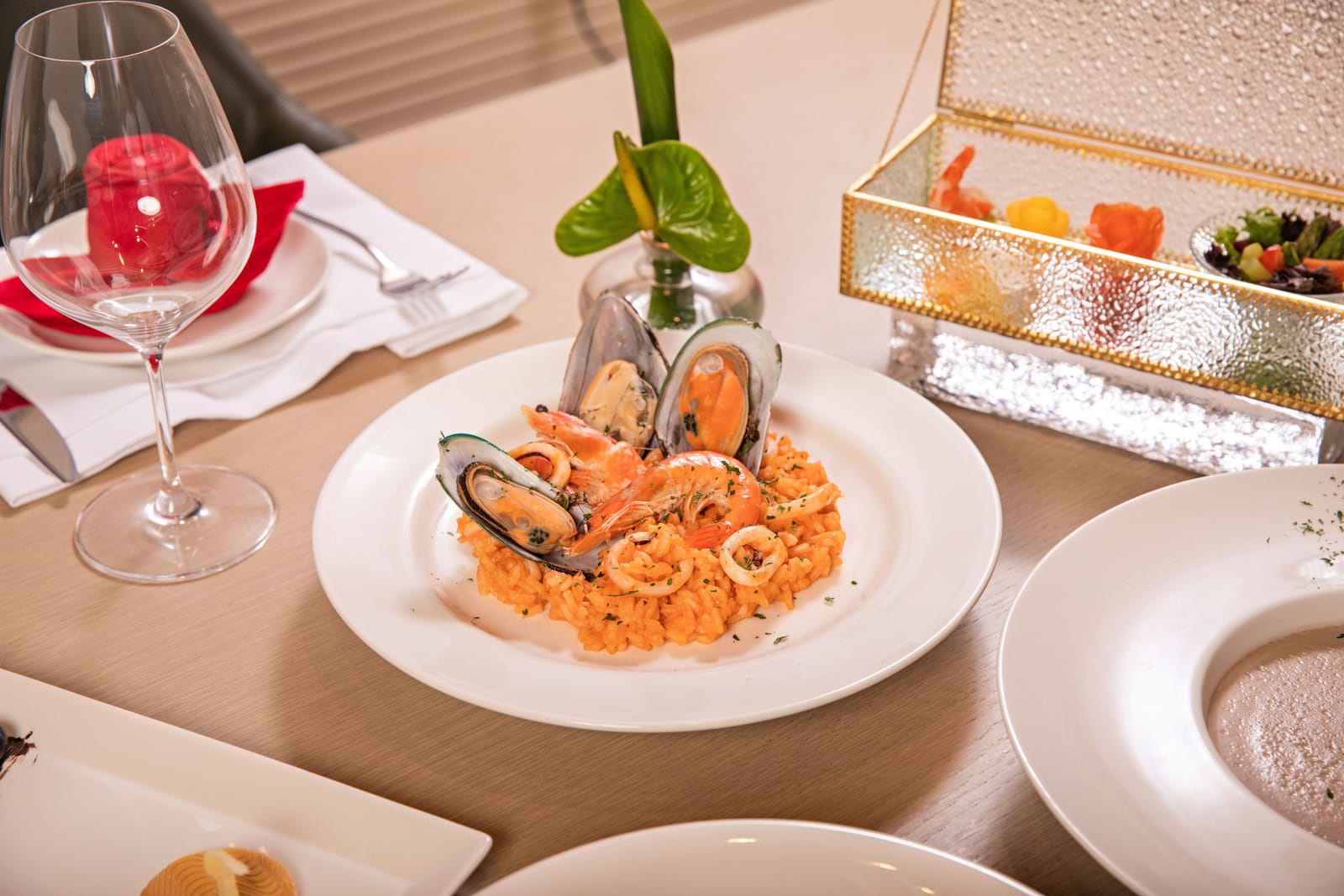
Plankton rice is the dish that made Ángel León's name before his restaurant, Aponiente, held three Michelin stars: a risotto finished with marine phytoplankton, the ingredient he spent years learning to farm and cook with.
León calls himself the "chef of the sea" for a reason. Most of his signature dishes replace a land ingredient with something plankton, algae or fish by-products can do instead, and this one is the clearest example: a classic Italian technique carrying a flavour that exists nowhere on a farm.
Ingredients
Added off the heat, the plankton's colour and aroma both survive.
- 1 tbsp olive oil
- 1 small onion, finely diced
- 150 g cuttlefish or squid, cleaned and cut into 5mm dice
- 300 g carnaroli or other risotto rice
- 100 ml dry white wine
- About 1.2 litres hot fish stock
- 40 g cold butter, cubed
- 2 tsp marine phytoplankton paste (sold online as a speciality ingredient; 1 tsp spirulina works as a milder stand-in)
- Salt, to taste
- 8 small cooked prawns, for serving
- A handful of cooked, shelled cockles or clams, for serving
- 1 tbsp garlic aioli mixed with ½ tsp squid ink, for serving
Method
- Keep the fish stock at a bare simmer throughout. Rice should always take on hot liquid, or the starch stops releasing evenly and the dish turns gluey instead of creamy.
- Soften the onion in the olive oil over low heat for 8-10 minutes without letting it colour, so it sweetens rather than browns.
- Add the cuttlefish and cook until its liquid evaporates. This concentrates its flavour into the base before the rice goes in, instead of diluting it later.
- Raise the heat, add the rice and stir for 1-2 minutes until the grains turn glossy. This toasts the outside of each grain just enough to seal in the starch that will later make the dish creamy.
- Pour in the wine and let it reduce completely before adding any stock.
- Add the hot stock a ladle at a time, stirring often and waiting for each addition to nearly absorb before adding the next, for about 16-18 minutes total.
- Once the rice is al dente, take the pan off the heat and beat in the cold butter. Mounting off the heat with cold butter is what gives the dish its shine and body, without needing extra stock.
- Stir in the plankton paste once the pan is off the heat. Added hot, its colour dulls and its aroma collapses; added off the heat, both survive.
- Season with salt, plate, and top with the prawns, cockles and a swirl of the squid-ink aioli.
Where to find marine plankton
León co-founded a company that farms edible phytoplankton for sale in small jars, which is how a technique built for a three-star kitchen ended up within reach of a home cook. It tastes of the sea at low tide: briny, faintly sweet, with none of the iodine heaviness of seaweed.
Serve it the way Aponiente does, with a chilled glass of manzanilla sherry, and alongside it, nothing more ambitious than good bread. For a different route into the same part of Spain's coast, the monkfish saffron broth and the current French oyster season both draw on the same cold-water, low-intervention cooking that made León's name.
Can regular rice replace carnaroli? It will cook faster and lose the risotto's structure, so stick to a short-grain Italian variety such as carnaroli, arborio or vialone nano if the same creaminess matters to you.