Tarte Tatin recipe: the Sologne upside-down apple tart
Apples cooked to amber in butter and sugar, a pastry lid, one quick flip: the method from the Hôtel Tatin in Lamotte-Beuvron, explained step by step.
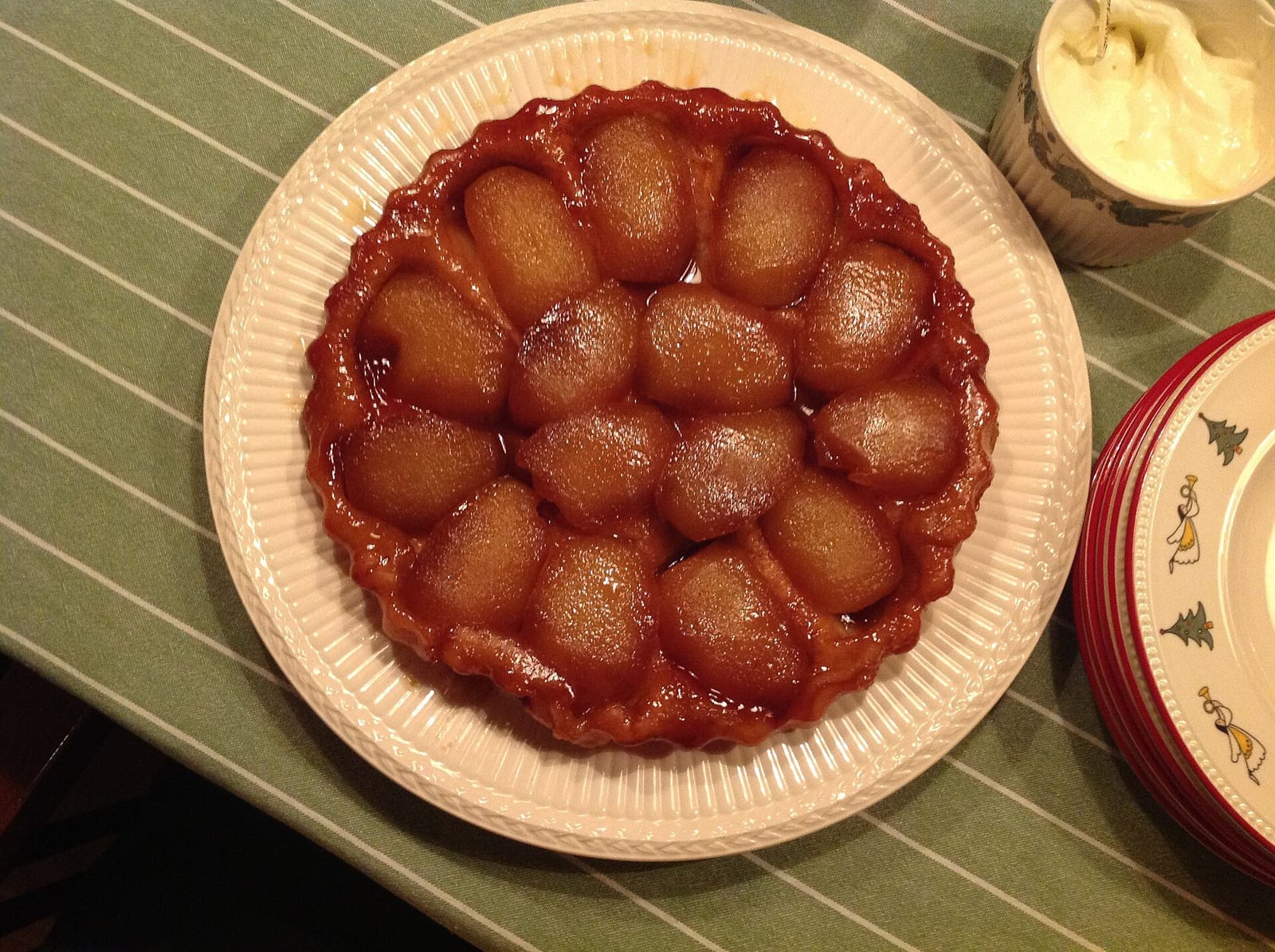
This tarte Tatin recipe follows the method that made the Hôtel Tatin in Lamotte-Beuvron famous: apples cooked in butter and sugar until amber, a lid of pastry baked on top, and the tart flipped over while the caramel is still liquid.
Stéphanie and Caroline Tatin ran the hotel in the Sologne, south of Orléans, from 1894 to 1906. The tale of a cook who forgot the pastry is a legend; historians point to an older Sologne tart the sisters perfected. A warm apple tart at the hotel appears in print in 1903, the first written recipe in 1921, and the critic Curnonsky made it a national dessert in 1926. The hotel still serves it, and Paris bistros keep it on the menu, as our guide to what to eat in Paris shows.
Ingredients
The caramel decides everything: take it to deep amber, then let the apples drink it.
- 1.3 kg firm apples (7-8 Reine des Reinettes, Boskoop or Golden Delicious)
- 150 g caster sugar
- 90 g unsalted butter, cubed
- 1 pinch fleur de sel
- 250 g all-butter puff pastry
- 200 g crème fraîche, to serve
Method
- Peel, halve and core the apples. Leave them uncovered for 30 minutes so the cut surfaces dry and release less juice.
- Melt the butter in a 24 cm heavy ovenproof pan, add the sugar and salt and cook over medium heat for 6-8 minutes, without stirring, until deep amber. Paler caramel only tastes sweet.
- Off the heat, stand the apple halves on their sides, rounded side down, packed as tightly as possible. They shrink by about a third, so gaps now become holes later.
- Return to medium heat for 20 minutes, basting, until the juices reduce to a thick syrup. This is what stops the tart turning out watery.
- Heat the oven to 200°C. Roll the pastry to 3 mm, cut a disc 2 cm wider than the pan and prick it all over so steam can escape.
- Let the apples cool for 5 minutes, lay the pastry on top and tuck the edge down inside the pan; the tucked rim becomes the crust that holds the fruit.
- Bake for 25-30 minutes, until the pastry is puffed and deep golden.
- Rest for 10 minutes, cover with a plate larger than the pan and turn it out in one quick movement. Serve warm with crème fraîche.
Tips for this tarte Tatin recipe: apples and pan
Avoid apples that collapse into purée, such as Bramley; the old Sologne choice was Reine des Reinettes or Calville. The pan must go from hob to oven, and a heavy one (copper, cast iron, thick steel) spreads heat so the caramel does not burn at the edges. For another autumn apple classic, try our Viennese apple strudel.
Tarte Tatin: frequently asked questions
Puff pastry or shortcrust? Both are traditional. Puff gives a lighter, flakier base; shortcrust is sturdier and soaks up more caramel.
Can I make it ahead? Yes. Bake it up to six hours ahead and leave it in the pan, then warm it on the hob for 5 minutes so the caramel loosens before you turn it out.
Why is my caramel bitter or runny? Bitter means it went well past amber before the apples went in; runny means the apples were not reduced long enough on the stove. Shorten the first stage and lengthen the second.