Tortelli di zucca recipe: Mantua's pumpkin and amaretti pasta
The dish Mantua builds its Christmas Eve table around pairs roasted pumpkin with crushed amaretti and mostarda, folded into egg pasta and finished in sage butter.
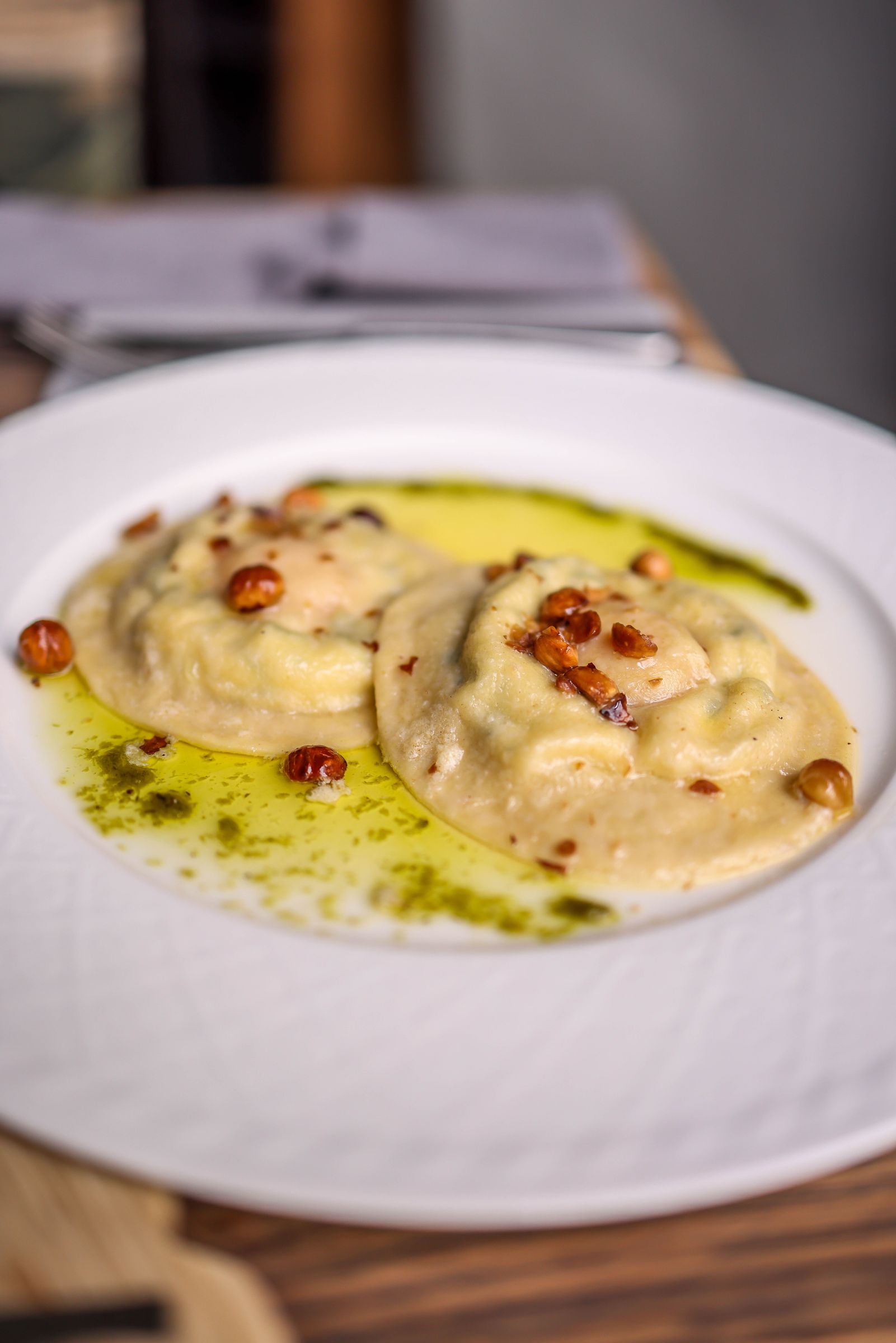
This tortelli di zucca recipe is Mantua's filled pasta, roasted pumpkin and crushed amaretti biscuits sealed into egg pasta, and the amaretti are not a mistake: the dish leans sweet on purpose, built to sit against savoury sage butter.
The filling gets its character from mostarda di Cremona, fruit candied in mustard syrup, paired with pumpkin in Mantua for generations. Roasting the pumpkin, not boiling it, is the other non-negotiable step: boiling adds water and loosens the filling, while roasting concentrates it and keeps the tortelli from bursting.
Ingredients
Roasted pumpkin and amaretti, sealed in egg pasta and finished in sage butter, built to taste a little too sweet on its own.
- 300 g 00 flour, plus extra for dusting
- 3 large eggs
- 600 g pumpkin or butternut squash, peeled and cubed
- 100 g amaretti biscuits, crushed
- 80 g mostarda di Cremona, finely chopped (or candied orange peel)
- 100 g Parmigiano Reggiano, grated, plus extra to serve
- 1 pinch grated nutmeg
- Zest of 1 lemon
- 80 g butter
- A small handful of fresh sage leaves
- Salt, to taste
Method
- Roast the pumpkin cubes at 200°C, 35-40 minutes, until soft and caramelised at the edges, so the flesh dries out rather than turning watery.
- Mash the warm pumpkin, then mix in the amaretti, mostarda, Parmigiano, nutmeg, lemon zest and salt. Taste: the filling should read sweet-savoury, not just cheesy.
- Cover and rest in the fridge for at least an hour, until firm enough to fill without spreading.
- Knead the flour and eggs into a smooth dough, about 10 minutes by hand, then wrap and rest 30 minutes so it rolls out without springing back.
- Roll the dough thin, just short of translucent, since a thick casing throws off the balance between pasta and filling that defines the dish.
- Cut into squares or rounds, spoon on small mounds of filling, fold into half-moons and press the edges firmly, pushing out trapped air so they don't split as they cook.
- Cook in salted boiling water 3-4 minutes, until they float, the clearest sign the pasta is done.
- Brown the butter with the sage leaves, toss the drained tortelli through it and serve with extra Parmigiano, inside a repertoire of pasta built around what autumn in Italy produces.
A sweeter filling, and what to pour
Where mostarda is hard to find, Mantuan cooks often swap in quince jam for a similar sweet-sharp edge without the mustard heat; the filling should taste a touch too sweet alone, before the sage butter balances it.
The traditional pour is Lambrusco Mantovano, a dry, lightly sparkling red whose acidity cuts the butter and sweetness better than any still red.
Can the filling be made ahead? Yes, it keeps covered in the fridge for up to two days and firms up further, which makes it easier to pipe.