What to eat in Seville: 10 dishes and where to find them
Ten plates that define the city, from jamon at a bodega dating to 1850 to a Michelin tasting menu, with addresses, prices and timing.
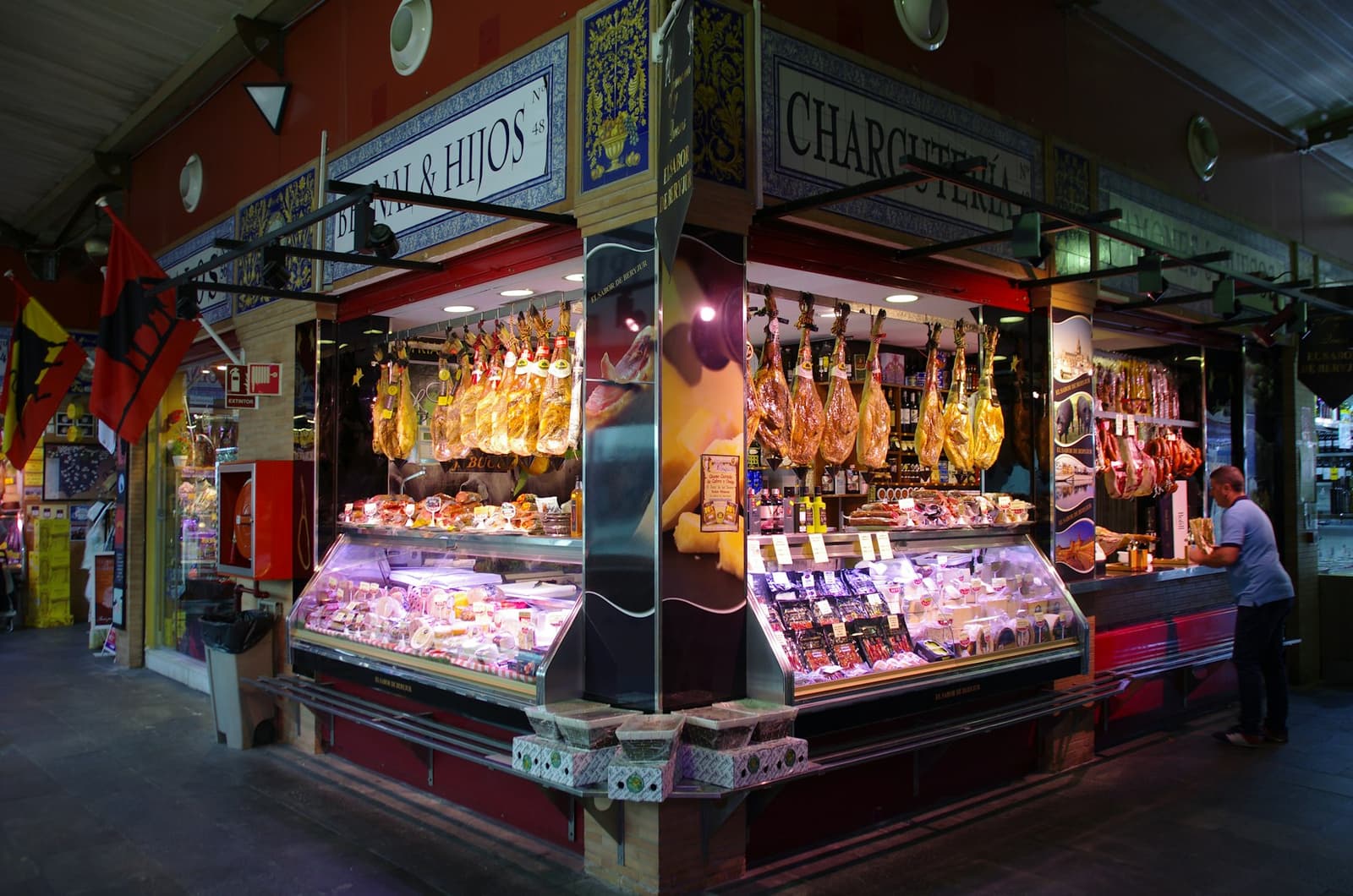
What to eat in Seville starts with the tapeo: small plates, standing at a zinc bar, moving on after two or three. The city's cooking runs on jamon iberico, fried fish and sherry from nearby Jerez, with almost nothing served that cannot be eaten in three bites.
Seville sits inland from the sherry triangle and the Guadalquivir still carries boats to the Atlantic, which explains a menu built on cured pork from the dehesa, fried small fish from the gulf, and vegetables from the Aljarafe hills. Moorish Andalusia left orange trees on every street and a taste for sweet-and-sour combinations that still turns up in old recipes.
Tapas here were never a tourist format. Bars built them to sell more sherry, and the custom still shapes how the city eats: nobody sits down for a full meal before ten at night, and nobody expects a menu printed on anything bigger than a chalkboard. What to eat in Seville is mostly a question of which bar, not which dish.
Nobody in Seville expects a menu bigger than a chalkboard, and nobody sits down before ten.
Espinacas con garbanzos at El Rinconcillo, Casco Antiguo
Spinach stewed with chickpeas, cumin and a little vinegar is Seville's oldest tapa, with roots traced to Moorish and Sephardic cooking. It is cheap, filling and appears on nearly every bar menu in some form.
El Rinconcillo, trading on Calle Gerona since 1670 and widely cited as the city's oldest bar, still serves the dish at the counter rather than a table. A plate runs about EUR 6-7, with chalk tallies still used to track the bill for regulars.
Jamon iberico and manzanilla at Casa Morales, Centro
Jamon iberico de bellota, from acorn-fed pigs raised on the dehesa, needs nothing beyond a knife and good bread. The fat should be glossy and give at room temperature.
Casa Morales, on Calle Garcia de Vinuesa since 1850 and now run by the founder's great-granddaughter, pours chilled manzanilla from old terracotta urns in the back room. A ration of jamon and a glass of sherry costs around EUR 12-16.
Pescaito frito at Mercado de Triana
Small fried fish, pescaito frito, is Seville's other backbone dish: boquerones, puntillitas and cazon, floured and dropped into hot oil for less than a minute so the coating stays thin and dry rather than battered.
The market occupies the site of the old Castillo de San Jorge on the Triana riverbank, with bars on the upper level serving straight from the fryers below. A paper cone of mixed fish costs EUR 7-10 and is built for standing, not sitting.
Vino de naranja at the same market bars
Vino de naranja, orange wine, is not the skin-contact white wine the term means elsewhere. It is a fortified wine made in nearby Huelva, with dried bitter-orange peel macerated into alcohol and added to sweet moscatel.
It is poured cold, in small glasses, alongside fried fish at the same Mercado de Triana bars, for EUR 2-3 a glass. It tastes closer to a digestif than a table wine, and locals treat it that way.
Huevo a baja temperatura at Eslava, San Lorenzo
A slow-cooked egg at 63 degrees, served over a mushroom base with a caramelised wine reduction, is the dish that put Eslava on the modern tapas map after it won Seville's tapas competition in 2010.
The bar, on Calle Eslava near Plaza de San Lorenzo, takes no bookings for its tapas counter; regulars queue from 12.30pm. A portion costs about EUR 5-6.
Carrillada iberica and codorniz frita at Casa Ruperto, Triana
Pork cheek braised until it falls apart, and whole quail fried to a dark crust, are the two dishes Casa Ruperto has built its name on since 1970, in a Triana side street away from the river.
Both run EUR 8-11 a portion. The quail is eaten with the fingers, bones included, which tells you how fresh and how hot it needs to arrive at the table.
Rabo de toro at Vega 10, Triana
Bull's tail, braised for hours in wine and vegetables until the meat separates from the bone, is a dish with roots in Cordoba's bullring kitchens that Seville claims just as firmly.
Vega 10, on Calle Rosario Vega, serves it as canelones de rabo de toro, bull's tail folded into pasta rather than left as a stew. At EUR 16-20 it is one of the pricier plates in this guide, in a restaurant open since 2014.
Caracoles at Casa Antonio, Plaza de la Alfalfa
Snails simmered in a spiced broth with bay, fennel and chilli are a Seville spring dish rather than a year-round one: the season runs roughly from mid-April to mid-June, tied to when the snails themselves are at their best.
Casa Antonio, known locally as Bar Los Caracoles and trading for more than 50 years near Plaza de la Alfalfa, fills up at lunch during that window. A bowl costs EUR 4-6. Outside the season, the bar still serves its other tapas.
Churros con chocolate at Bar El Comercio, Centro
Thin, ridged churros fried to order and dunked in thick drinking chocolate are breakfast in Seville, not dessert, and the version at Bar El Comercio has stayed close to what the Rivera family served when they opened in 1904.
The bar, on Calle Lineros near the cathedral, fills with workers before 9am. A portion with chocolate costs around EUR 4-5.
Tasting menu at Abantal, Nervion
For a counterpoint to the bar crawl, Abantal has held a Michelin star since 2009, the longest continuous run in the city, under chef Julio Fernandez Quintero.
The kitchen builds seasonal tasting menus around Andalusian ingredients treated with technique rather than nostalgia. The shorter menu runs EUR 80-100 without wine, dinner only, Thursday to Tuesday, booked online roughly three weeks ahead.
Markets, neighbourhoods and when to go
Seville rewards a route rather than a single stop. Anyone working out what to eat in Seville over a long weekend should plan by neighbourhood, not by restaurant list:
- Mercado de Triana: fresh produce downstairs, bar stools upstairs over the river, open mornings into early afternoon.
- Casco Antiguo and Calle Gerona: the oldest tapas route, best from 1pm or after 8.30pm.
- Plaza de la Alfalfa: dense with small bars, loudest on weekend evenings.
- Best months: March to June and September to November, avoiding the worst of the summer heat for anyone sitting outside.
Is Seville expensive to eat in?
Is Seville expensive to eat in? No. A round of tapas and a drink at a traditional bar rarely passes EUR 15 a head; the cost climbs only at tasting-menu restaurants like Abantal.
Do I need to book ahead? Rarely for tapas bars, which operate on a first-come basis at the counter. Sit-down restaurants such as Vega 10 and Abantal take reservations and expect them in high season.
Is tap water safe, and is bottled water expected? Tap water is safe across the city; bars will bring it free if asked, though most visitors order sherry or beer instead.
What should vegetarians order? Espinacas con garbanzos and salmorejo, the thick cold tomato soup found on most menus, cover the gap, though pork fat flavours many otherwise vegetable dishes, so it is worth asking.
Where to book first
Abantal, Calle Alcalde Jose de la Bandera 7-9, for the one sit-down tasting menu worth planning around. Vega 10, Calle Rosario Vega, Triana, for rabo de toro without the queue. El Rinconcillo, Calle Gerona 40, for the dish that answers what to eat in Seville better than any other.
Seville's tortilla tradition runs deeper still in the national tortilla title held outside Andalusia, and the same technique shows up in a runny-centre tortilla recipe. For another Spanish city built on small plates, see what to eat in Valencia.