What to eat in Valencia: 10 dishes and where to find them
From paella valenciana at a third-generation rice kitchen to an eel stew from the Albufera lagoon, here is what to eat in Valencia and exactly where to order it.
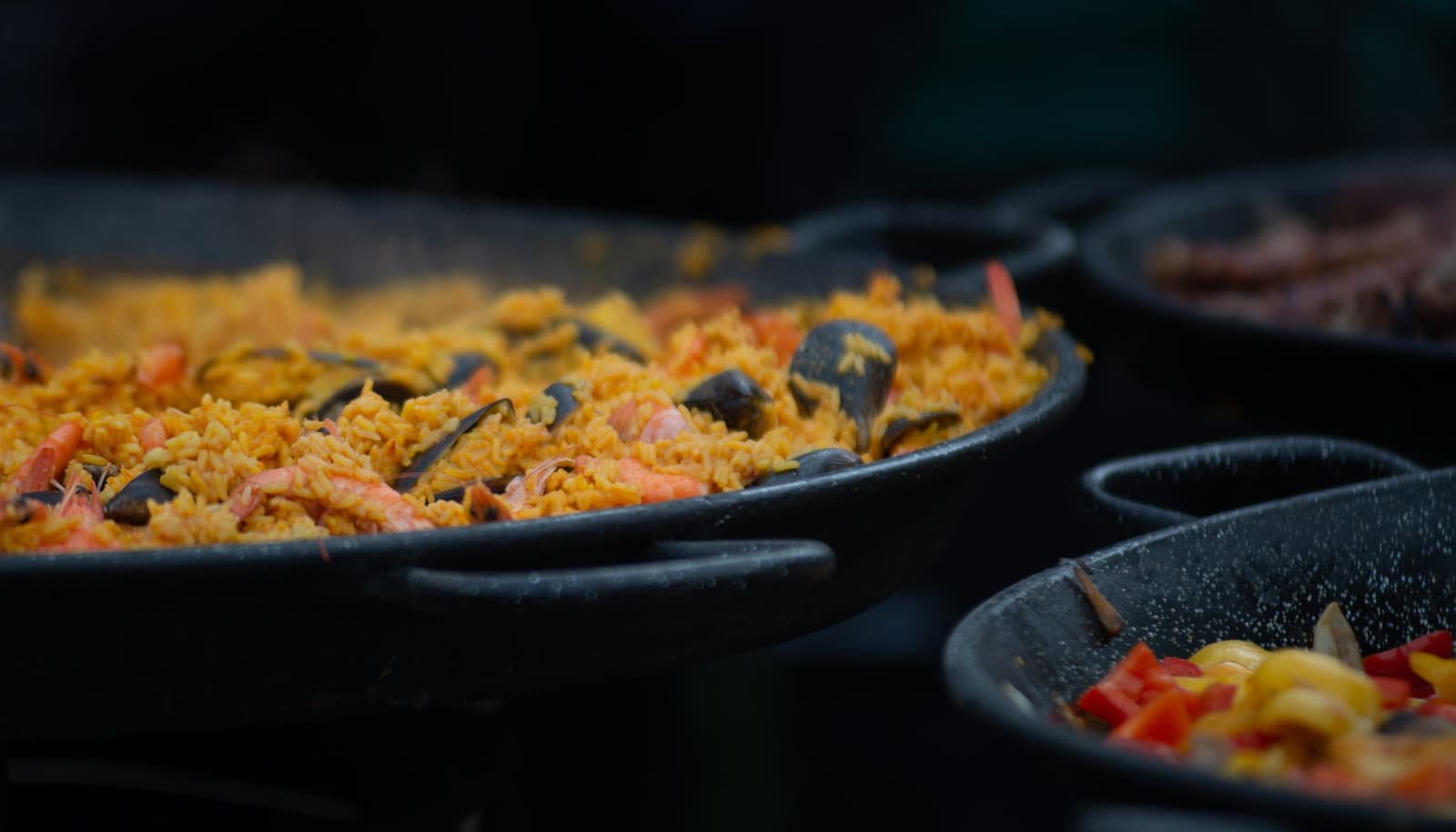
What to eat in Valencia starts with rice, not just paella: the city that invented it also cooks a dozen other versions, alongside a eel stew from the lagoon south of town and a tiger-nut drink found nowhere else at this scale.
Valencia's food identity runs on what the huerta, the market-garden belt ringing the city, and the Albufera lagoon produce: short-grain rice, saffron, snails, eel, citrus, and the chufa that makes horchata. The result is a kitchen that reads as simple until you taste how specific each rice dish is to its ingredients and its pan. This guide to what to eat in Valencia covers ten dishes and the rooms that cook them properly, from a 1836 bodega to a two-Michelin-star dining room, plus the markets that hold the scene together.
Paella valenciana at La Riua
The original paella, and the version still cooked in most family kitchens, uses chicken, rabbit and beans, not seafood.
The dish Valencia is known for everywhere else is not the seafood version tourists often expect. Authentic paella valenciana carries chicken, rabbit, snails when in season, flat green beans and garrofón beans, built on short-grain rice cooked in a wide, shallow pan over direct heat until the bottom forms a crust, the socarrat.
La Riua has run its family rice kitchen on Carrer del Mar in Ciutat Vella since 1978, now in its third generation, with a dozen paellas on the card. The dining room fills with locals by 2pm, so book ahead. Expect to pay around €18-22 per person for a full rice course. Closed Sundays and Mondays.
Fideuà and wood-fired rices at Casa Carmela
Fideuà swaps rice for short noodles, cooked the same way as paella in stock built from monkfish, cuttlefish and prawns, with a squeeze of lemon to finish. Casa Carmela has cooked both fideuà and a twenty-strong rice repertoire to order over a wood fire on the Malvarrosa beachfront since 1922.
It is lunch only, Tuesday to Saturday, 1pm to 4pm, and the kitchen asks for three weeks' notice for a weekend table. A rice or fideuà course runs €20-28 per person, cooked to order rather than held warm.
All i pebre at Mornell, El Palmar
All i pebre is Valencia's other rice-region classic, and it has no rice in it: eel, potato, garlic and paprika simmered into a dark, slightly spicy stew. The dish comes from El Palmar, a fishing village on the Albufera lagoon ten kilometres south of the city, where eel has been caught since before paella existed.
Mornell has won local competitions for its version more than once. Purists time a visit to the wild eel season, October to February, when the lagoon's own catch replaces farmed eel. A bowl runs about €15-18.
Esgarraet at Casa Montaña
Esgarraet is simpler than anything else on this list: salt cod torn into strips, laid over roasted red peppers, dressed in olive oil and garlic. Casa Montaña has served it since 1836 in El Cabanyal, Valencia's old fishing quarter, from a bodega lined with roughly 600 wine references.
Order it as one of several small plates with a glass of Valencian wine. Expect around €35-40 per person across a full tapas round.
Clotxines at La Pilareta, El Carmen
Clotxines are Valencia's small, intensely flavoured mussels, steamed simply and eaten by the bowlful with bread to mop the broth. La Pilareta has run on Carrer del Moro Zeid in El Carmen since 1917, cash preferred, and clochinas remain the dish diners order first.
A bowl costs around €7-8, with other seafood tapas priced similarly. Fresh clochinas run roughly May to September; outside that, the kitchen serves standard mussels.
Horchata and fartons at Horchatería Santa Catalina
Horchata, a cold, faintly sweet drink pressed from chufa tubers grown in nearby Alboraya, is Valencia's signature non-alcoholic order, traditionally dunked with a farton, a soft, sugar-glazed finger of sweet bread made for exactly this purpose.
Horchatería Santa Catalina has poured it from Plaza Santa Catalina since around 1820, its tiled entrance barely changed in two centuries. A horchata and farton together cost around €4-5, daily, 8.15am to 9.30pm.
Agua de Valencia at Café de las Horas
Agua de Valencia mixes fresh orange juice with cava, vodka and gin, served by the glass or pitcher, and despite the name it was invented in a Valencia bar in the 1950s, not drawn from any local water source.
Café de las Horas pours it inside a neo-baroque room on Conde de Almodóvar, near the cathedral. A glass runs about €12, a pitcher closer to €18, enough for two or three, open daily until 1.30am.
Market tapas at Central Bar, Mercado Central
Central Bar sits inside the Art Nouveau Mercado Central, the produce market on Plaça de la Ciutat de Bruges, run by chef Ricard Camarena on ingredients bought from the stalls around it that morning. The format is standing-room tapas rather than a sit-down menu.
Arrive before 10am for a counter seat. A tapas round runs €10-20 per person, Monday to Saturday, 8am to 3pm, closed Sundays.
Tasting menu at Ricard Camarena Restaurant
Ricard Camarena's flagship restaurant holds two Michelin stars and a Green Star inside Bombas Gens, a former hydraulic pump factory turned art and gastronomy centre. The kitchen builds menus around vegetables from the chef's own market relationships before it builds around protein.
The Camino Oxalis tasting menu runs €165 per person, the longer Recorrido Ricard Camarena at €210; wine pairings add €115-145. Closed Sundays and Mondays; book weeks out.
Rice-free modern plates at Canalla Bistro
For Camarena's cooking without the tasting-menu price, Canalla Bistro on Calle Maestro José Serrano in Ruzafa serves small, shareable plates mixing Valencian produce with Asian and Mediterranean technique, priced for a casual dinner rather than an occasion. Ruzafa itself has become Valencia's densest restaurant neighbourhood over the past decade, and Canalla is one of the names that pulled the crowd there first.
Markets, neighbourhoods and when to go
- Mercado Central: Plaça de la Ciutat de Bruges, Ciutat Vella. Open Monday to Saturday, mornings best for produce and seafood.
- Mercado de Ruzafa: Carrer Baró de Petrés, in the Ruzafa district, smaller and more neighbourhood-focused than Central.
- El Carmen: old town tapas bars and late bodegas, walkable from the cathedral.
- El Cabanyal: the former fishing quarter, home to Casa Montaña and much of Valencia's seafood tradition.
- Ruzafa: the newer restaurant district, dense with wine bars and small-plates kitchens.
- Best time to visit: year-round for rice and tapas; October to February for wild Albufera eel; March for Fallas, when the city's food calendar runs on bunyols and street stalls.
Frequently asked questions
Is Valencia expensive to eat in? Not by the standards of Barcelona or Madrid. A sit-down rice lunch runs €18-28 per person, tapas rounds €10-20, and even Ricard Camarena's tasting menu undercuts comparable two-star rooms elsewhere in Spain.
Do I need to book ahead for paella? For the well-known rice kitchens, yes, especially for weekend lunch, which is when Valencians eat paella themselves. Casa Carmela asks for three weeks' notice; La Riua fills by early afternoon without one.
Is seafood paella more authentic than paella valenciana? No. The original, and the version still cooked in most family kitchens, uses chicken, rabbit and beans. Seafood rice exists and is good, but it is a variation, not the base recipe.
When is the best time for all i pebre? Between October and February, when El Palmar's restaurants can use wild eel from the Albufera lagoon instead of farmed eel, though the dish is served year-round.
Where to book first
Three reservations to make before anything else: La Riua for a Sunday-lunch paella done the way Valencians order it, Casa Montaña for an evening of wine and esgarraet in a room that has barely changed since the 19th century, and Ricard Camarena Restaurant for the one meal in Valencia built entirely around the huerta rather than the coast.
Between those three, and the markets that feed them, the city's rice-first identity holds together without needing a single tourist paella pan to prove it. Valencia's own hospitality sector has had a harder year than its kitchens suggest, with flood-hit towns outside the city still working through recovery vouchers, a reminder that the huerta behind these plates sits close to where last year's storms did the most damage. For a rice-region comparison elsewhere on the coast, Sueca's paella contest, held in the rice-growing heart of the region, draws cooks from well beyond Spain, and for a different Spanish port city's food scene, see what to eat in Barcelona.