Burrata recipe: Andria's roasted grape and hazelnut starter
Puglia's cream-filled cheese meets warm roasted grapes, toasted hazelnuts and a balsamic reduction, built on the method Andria's dairies have used since before caprese took over the plate.
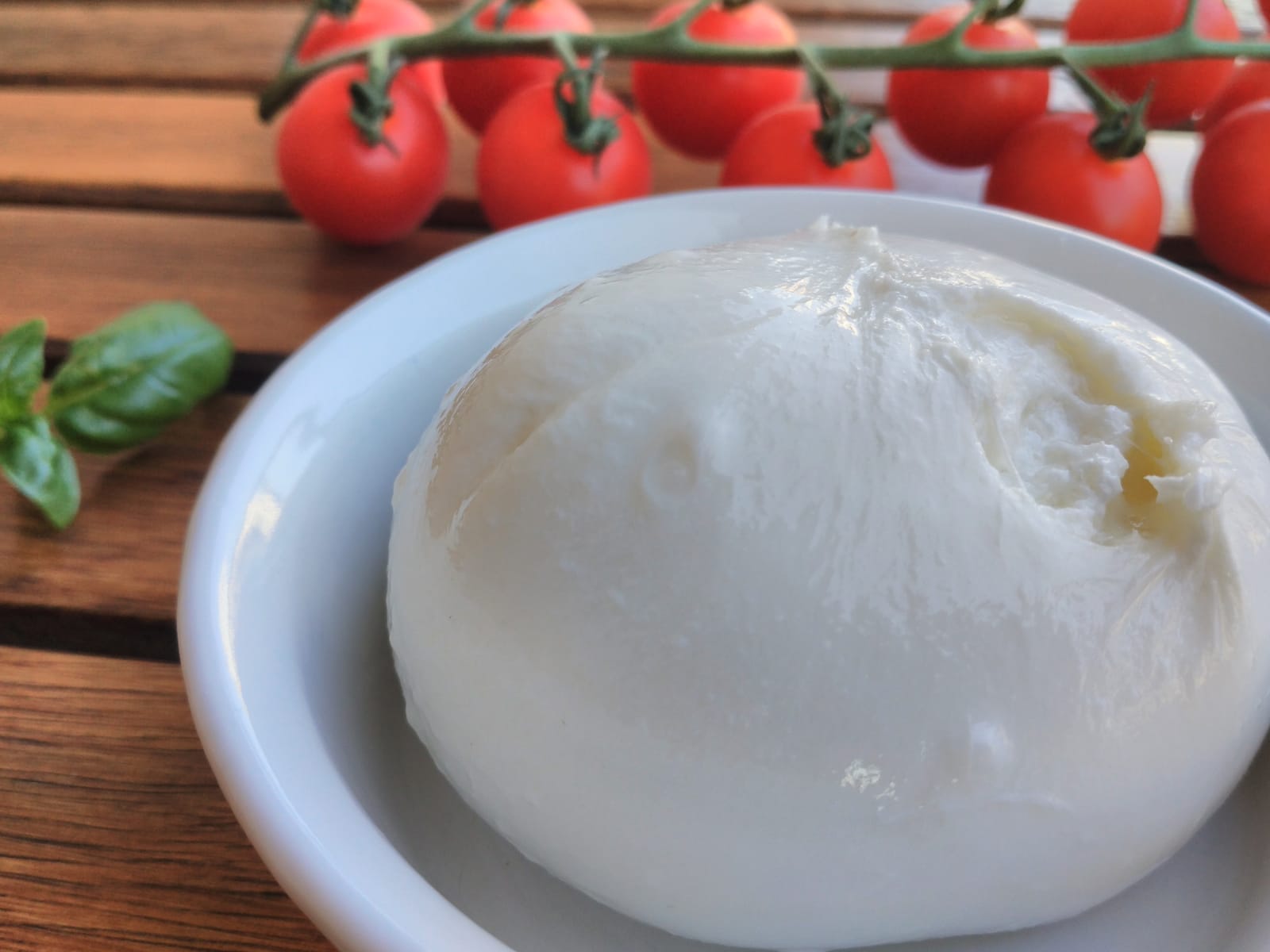
This burrata recipe pairs Puglia's cream-filled cheese with grapes roasted hot and fast, so their skins split and the sugars run warm into the curd instead of sitting cold beside it.
Burrata comes from Andria, a market town inland from Bari where dairies first sold it in the early twentieth century: a mozzarella shell pulled thin and knotted shut around a filling of cream and curd shreds called stracciatella. Cheesemaker Lorenzo Bianchino Chieppa is the name local historians attach to it, working from a farm outside town; the earliest written record is a 1931 guide to Italian regional cooking that already calls it typical of Andria. The cheese now carries IGP status, which protects the name for cheese made in Puglia.
Most plates put it next to raw tomatoes and call it done. This burrata recipe skips that reflex for warm fruit instead: the juice loosens the cream on contact, and the caramelized edges give the hazelnuts something to work against. It is still a five-minute cook once the oven is hot.
Warm fruit does what cold tomatoes never will: it melts the cream on contact.
Ingredients
- 2 burrata balls (about 125 g each), at room temperature
- 400 g black seedless grapes, stemmed or in small clusters
- 2 tablespoons extra-virgin olive oil, plus more to finish
- 1 tablespoon honey (wildflower or chestnut honey)
- 1 sprig fresh rosemary
- 50 g whole hazelnuts
- 2 teaspoons aged balsamic vinegar, or a thin balsamic reduction
- Flaky sea salt
- Black pepper, cracked
- 4 thick slices coarse bread, for serving
Method
- Take the burrata out of the fridge 20–30 minutes before you start cooking. Cold curd stays tight and rubbery; at room temperature the shell relaxes enough to spill properly when you cut it.
- Heat the oven to 200°C (180°C fan). Toss the grapes on a tray with the olive oil, honey, rosemary and a pinch of salt, and roast for 15–18 minutes, until the skins split and the tray fills with juice but the fruit still holds its shape. Past that point the grapes turn to jam and lose the pop of a whole roasted grape.
- While the grapes roast, toast the hazelnuts in a dry pan over medium heat for 5–6 minutes, shaking often, until the skins blister and the nuts smell toasted rather than raw. Tip them onto a tea towel, rub off most of the skin, then crush roughly with the flat of a knife.
- If your balsamic is thin rather than already syrupy, reduce it in a small pan over low heat for about 5 minutes, watching closely: it goes from glossy to scorched fast once most of the water has cooked off.
- Set each burrata on a plate and cut it open only now. The shell holds the stracciatella together under a kind of light vacuum, and the moment air gets in, the cream starts to flatten and spread — you want that to happen at the table, not on the counter.
- Spoon the warm grapes and their roasting juices over and around the cheese, scatter the hazelnuts, then drizzle with the balsamic and a little more raw olive oil.
- Finish this burrata recipe with flaky salt and a crack of pepper and serve at once, with the bread, while the grapes are still warm enough to soften the cream where they touch it.
Why this burrata recipe works warm
Cold tomatoes are the default because they are fast, not because they suit this cheese best. Warm fruit does something raw fruit cannot: it melts the top layer of cream on contact, so each spoonful carries both temperatures at once. Swap the grapes for halved figs in late summer, or blood orange segments in January — the roasting time changes, the logic does not.
For the bread, follow the same olive oil instinct as Tuscany's fettunta: grill it, rub it, oil it while it is still hot, so it drinks in the plate's juices instead of just mopping them up after the fact. A chilled Puglian white, Verdeca or Fiano, cuts the cream without fighting the roasted fruit.
Can I make this ahead? Roast the grapes and toast the hazelnuts up to a day ahead, then reheat the grapes gently in a low oven for five minutes before plating — the burrata itself should stay chilled and unopened until the last moment.