Castagnaccio recipe: Tuscany's chestnut flour cake, Artusi's way
Chestnut flour, water, olive oil, pine nuts and rosemary: the Tuscan autumn cake Artusi listed as recipe 240, baked thin so the top cracks and the centre stays soft.
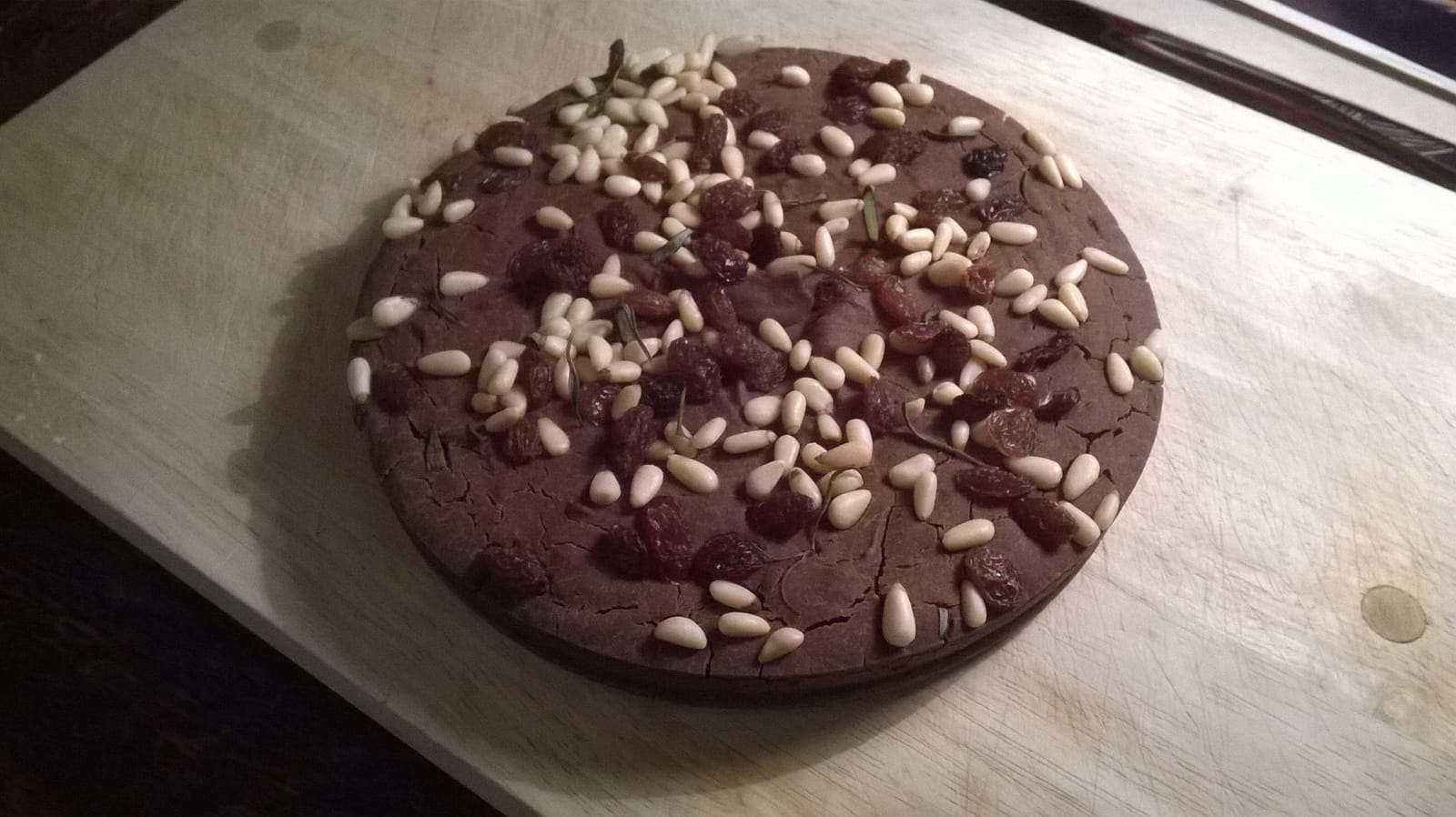
This castagnaccio recipe makes Tuscany's oldest autumn cake: chestnut flour, water, olive oil, pine nuts and rosemary, with no sugar, egg or raising agent. The key is a lump-free, pourable batter and a hot oven that cracks the top before the inside dries.
A book by Ortensio Lando printed in Venice in 1553 credits Pilade of Lucca as the first maker of “castagnazzi”. Along the Apennines the cake is also called baldino, migliaccio or, when it comes out thick and heavy, toppone. Pellegrino Artusi listed it as recipe 240 in La scienza in cucina: 500 g of chestnut flour to eight decilitres of cold water.
This castagnaccio recipe keeps Artusi's ratio but bakes the cake thinner, as Tuscan bakeries do, so the edges crisp. New-harvest flour reaches shops from late November, after a season in which the Ardèche chestnut harvest fell to 2,000 tonnes.
No sugar, no egg, no butter: the sweetness has to come from the flour.
Ingredients
- 250 g chestnut flour
- 400 ml cold water
- 2 g fine salt
- 50 g raisins
- 40 g pine nuts
- 30 g walnuts, roughly chopped (optional)
- 1 sprig fresh rosemary
- 45 ml extra virgin olive oil
Method
- Soak the raisins in warm water for 15 minutes, then drain. Plump raisins stay soft instead of burning on top.
- Heat the oven to 190°C (conventional) and oil a 26 cm round metal tin with 15 ml of the oil. Thin metal passes heat fast and crisps the edges.
- Sift the flour with the salt into a bowl. Chestnut flour clumps, and dry lumps will not dissolve once the water goes in.
- Whisk in a third of the water to a smooth paste, then the rest gradually, until the batter pours like thick cream. A thick start lets the whisk break every lump; rest it 10 minutes so the flour hydrates.
- Stir in 15 ml of oil, half the raisins and pine nuts and the walnuts, and pour into the tin about 1.5 cm deep. Any deeper and the middle stays gummy.
- Top with the remaining raisins, pine nuts and rosemary needles and drizzle with the last 15 ml of oil, which fries the surface and stops the toppings scorching.
- Bake for 30 to 35 minutes, until the top is cracked all over, the pine nuts are golden and the edges pull away. The centre should still feel soft.
- Rest 15 minutes in the tin before cutting: the chestnut starch sets as it cools.
Flour, serving and variations
The flour decides the cake. Taste a pinch first: it should be sweet and faintly smoky; bitter flour is old and gives a bitter castagnaccio. Keep it in the fridge once opened. Farina di Neccio della Garfagnana, a DOP chestnut flour, is the Tuscan benchmark.
Serve warm or at room temperature with fresh ricotta or chestnut honey and a glass of vin santo. Some local versions add orange zest or fennel seeds; a teaspoon is enough.
Castagnaccio recipe questions
Does castagnaccio need sugar? No. Chestnut flour is naturally sweet and the raisins add more; the traditional castagnaccio recipe has none.
Is castagnaccio gluten-free? Chestnuts contain no gluten, but check the packet: some flours are milled alongside wheat.
How long does castagnaccio keep? Two days covered at room temperature, up to four in the fridge. Warm cold slices briefly in the oven to soften them.