Galbi-jjim recipe: Korean braised short ribs for Chuseok
Korea's harvest festival falls on 25 September, and its centrepiece is galbi-jjim: beef short ribs braised in soy, pear and garlic, following Maangchi's method.
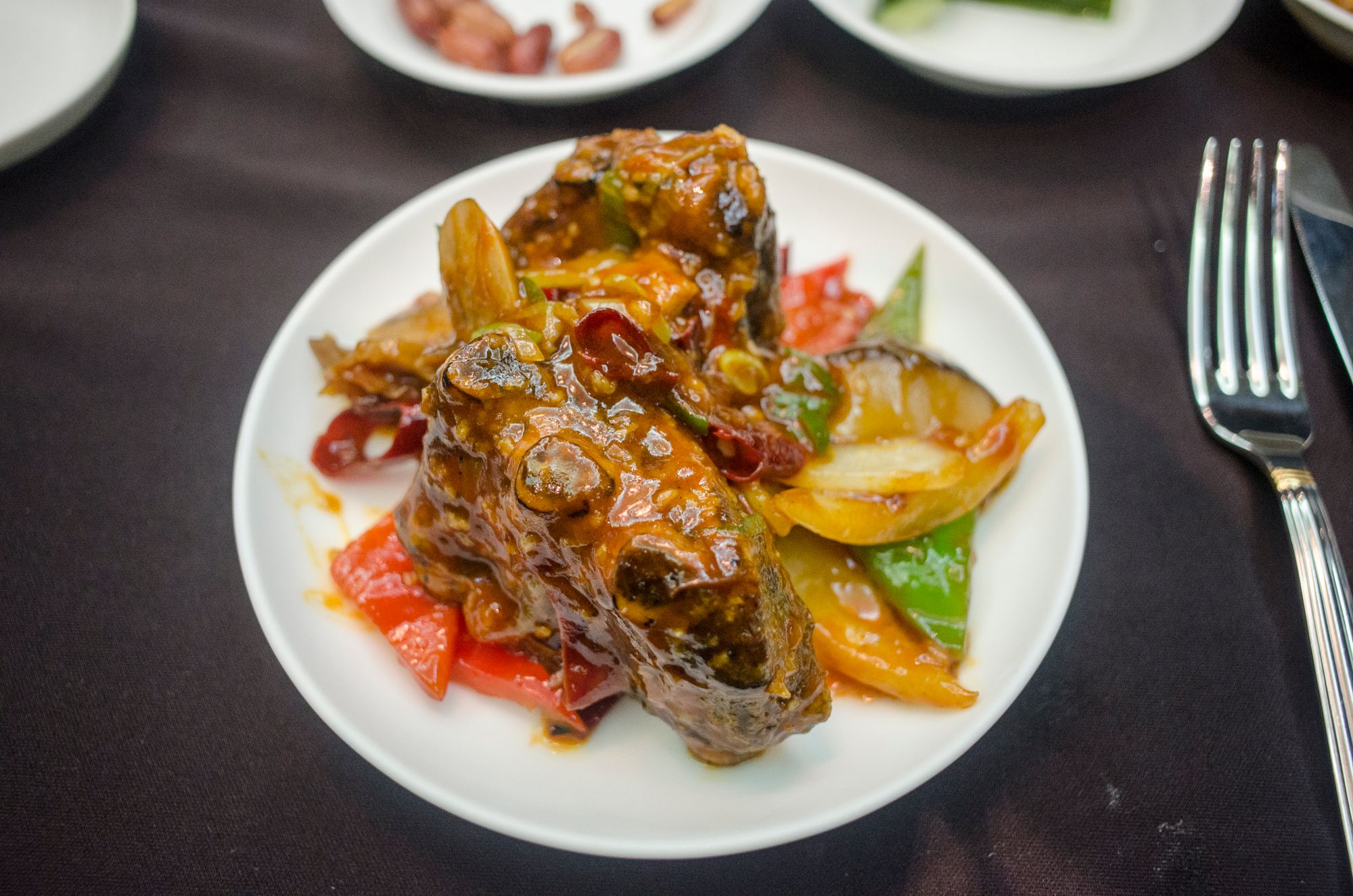
This galbi-jjim recipe braises beef short ribs slowly in soy sauce, grated pear and garlic until the meat slips off the bone, with the step Korean cooks never skip: soaking and blanching the ribs first so the sauce stays clean.
Galbi-jjim is the centrepiece of the table at Chuseok, Korea's harvest festival, which falls on Friday 25 September in 2026. Maangchi, the Korean-American YouTube cook, makes it for birthdays, Seollal and Chuseok; her current version, posted in January 2020, comes from Maangchi's Big Book of Korean Cooking. This galbi-jjim recipe follows her method with Amuse Kitchen quantities.
Like the Catalan fricandó, another braise that rewards patience, it tastes better a day ahead. Choose ribs with plenty of meat on the bone.
Galbi-jjim rewards patience: an hour of soaking, a gentle braise and a glaze reduced at the very end.
Ingredients
- 1.5 kg English-cut beef short ribs, 5-6 cm long
- 90 ml soy sauce
- 60 ml rice wine (cheongju or dry sake)
- 2 tbsp brown sugar
- 2 tbsp honey
- ½ Asian pear, grated
- 1 small onion, grated
- 6 garlic cloves, crushed
- 15 g fresh ginger, grated
- 1 tbsp toasted sesame oil
- ½ tsp ground black pepper
- 700 ml water
- 300 g Korean radish (mu) or daikon, in 4 cm chunks
- 2 carrots, in 4 cm chunks
- 6 dried shiitake, soaked for 30 minutes and halved
- 12 peeled chestnuts
- 8 dried jujubes
- 1 tbsp pine nuts
- 2 spring onions, sliced
Method
- Trim the hard fat, score the meat down to the bone and soak the ribs in cold water for 1 hour, changing it twice: this draws out blood that would cloud and darken the sauce.
- Blanch the ribs in boiling water for 5 minutes, then rinse under cold water. The boil sets leftover proteins as grey scum that you wash off rather than skim for an hour.
- Mix the soy sauce, rice wine, sugar, honey, pear, onion, garlic, ginger, sesame oil and pepper. Pear and onion add sweetness and body; the pear's enzymes also soften the meat's surface.
- Put the ribs, sauce and water in a heavy pot, bring to the boil, cover and simmer gently for 1 hour. Keep it at a lazy bubble: a hard boil tightens the muscle fibres before the collagen can melt into gelatin.
- Add the radish, carrots, shiitake, chestnuts and jujubes and simmer, covered, for 30 minutes more; added late, they absorb the sauce without collapsing.
- Uncover and cook for 10-15 minutes, basting the ribs, until the sauce reduces to a glossy glaze. Salt only now: reduction concentrates the soy.
- Scatter with pine nuts and spring onion and serve with steamed white rice.
Make this galbi-jjim recipe a day ahead
Refrigerate the pot overnight: the fat sets into a layer you lift off whole, and the ribs reheat gently in 15 minutes with a splash of water. For a festive plate, top with strips of thin omelette made separately from yolks and whites, the jidan garnish of Korean special occasions.
A lightly off-dry riesling or chilled barley tea balances the sweet, savoury glaze.
Sources
- Maangchi — Braised beef short ribs (Galbi-jjim) · 2020-01-05
- Korean Bapsang — Galbijjim (Braised Beef Short Ribs) · 2021-06-11
- PublicHolidays.co.kr — Chuseok 2026 · 2026-09-16