Pajeon recipe: Korea's crispy scallion pancake
Seoul's everyday street-food pancake gets its crunch from rice flour, not wheat, as the city's restaurant scene draws new international attention this month.
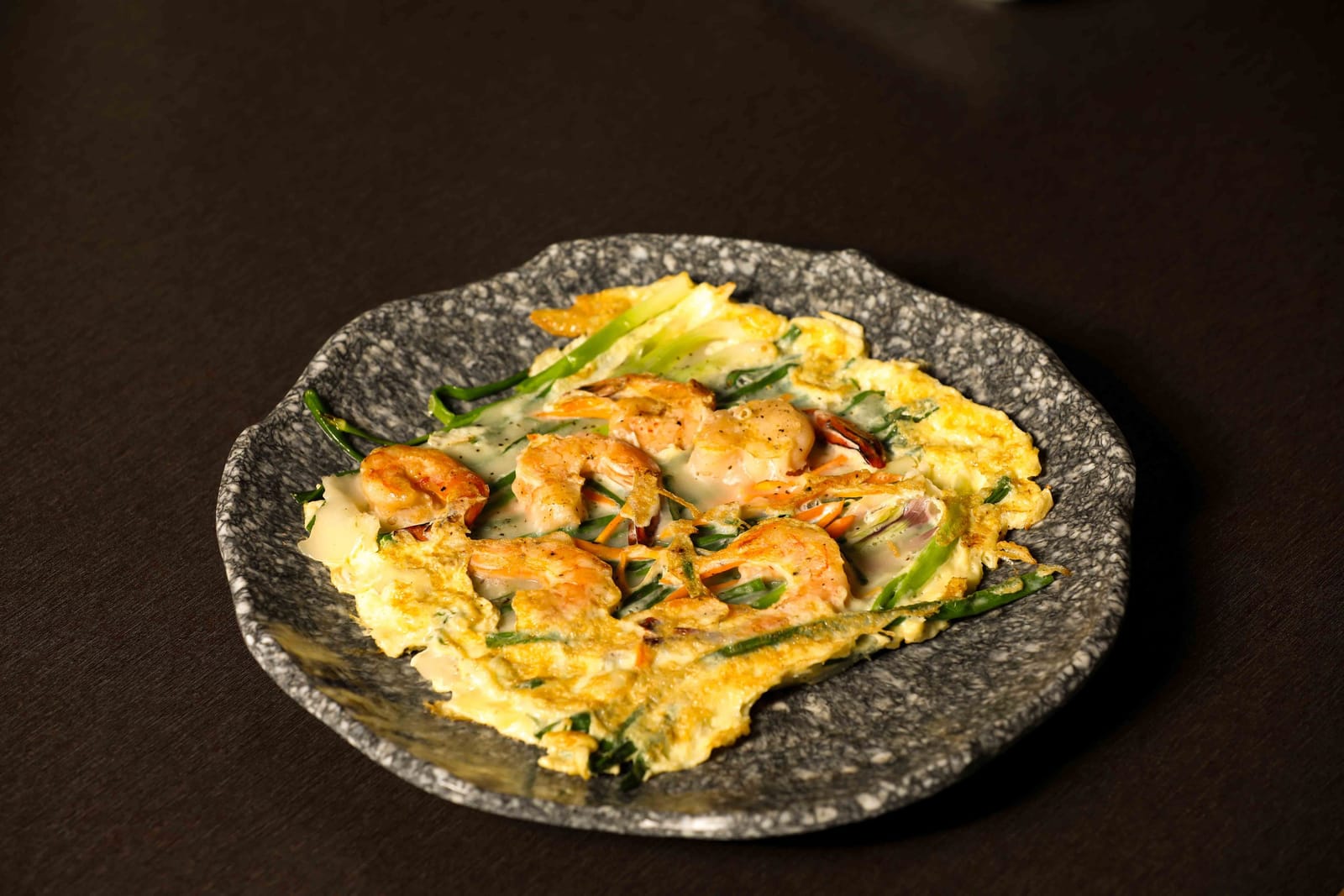
Pajeon is Seoul's everyday pancake: scallions set into a thin egg-and-flour batter, fried until the edges go lacy, and torn by hand with a sharp dipping sauce. The technical point that separates a good one from a soft, bready one is the flour: wheat alone turns chewy, while cutting in gluten-free rice flour lets the batter set brittle and shatter at the edge instead.
Seoul is having a food-tourism moment: the city's new "Seoul Gourmet 100" list and the first Seoul Gourmet Week, running 23-29 October 2026, have put its restaurant scene under an international spotlight built, ultimately, on dishes like this one, sold at street stalls and in market halls like Gwangjang, not served under any single name on that list. This is AMUSE's own kitchen version, meant to explain the technique, not attributed to a chef.
Ingredients
Rice flour has no gluten, so the batter sets brittle instead of bready.
- 100 g plain flour
- 50 g rice flour
- 1/2 tsp fine salt
- 200 ml ice-cold water
- 1 egg
- 150 g scallions, trimmed to pan length
- 100 g squid, cleaned and sliced into rings
- 100 g shrimp, peeled and deveined
- 1 red chilli, thinly sliced
- 5 tbsp neutral oil, for frying
- 3 tbsp soy sauce (dipping sauce)
- 1 tbsp rice vinegar (dipping sauce)
- 1 tsp toasted sesame oil (dipping sauce)
- 1 tsp toasted sesame seeds (dipping sauce)
- 1 scallion, finely chopped (dipping sauce)
- 1/2 tsp gochugaru, Korean chilli flakes (dipping sauce)
Method
- Whisk the flours and salt, then whisk in the ice-cold water and egg and chill 10 minutes. Cold batter and gluten-free rice flour both slow gluten formation, so the crust sets brittle, not elastic.
- Lay the scallions in a single layer in a hot, oiled pan, then ladle the batter over. Laying them first, not stirring them in, keeps them straight under one even sheet of batter.
- Scatter the squid, shrimp and chilli on top and press gently. On top, rather than folded in, the seafood cooks through without sinking and steaming the underside.
- Fry over medium-high heat, undisturbed, 3-4 minutes until golden and lacy at the edge. Moving it early tears the batter before the crust has fused into one piece.
- Flip, press down firmly with a spatula, adding a little oil at the edge. The pressure forces full contact with the pan, giving both sides the same fried, not baked, crust.
- Cook the second side 3-4 minutes, then slide onto a wire rack, not a plate, which traps steam underneath and softens the crust within minutes.
- Whisk the dipping sauce ingredients. The vinegar cuts the pancake's oil rather than sweetening it, so taste before adding anything else.
Variation and pairing
For a plainer, market-stall version, drop the squid and shrimp and double the scallions, pressed in so the batter barely shows: Seoul calls this version pa-jeon without the haemul (seafood) prefix. For more on the dishes behind the city's current food-tourism wave, see AMUSE's guide to what to eat in Seoul.
Cut into wide strips, not neat wedges, so each piece keeps both crisp edge and soft centre, and serve straight from the pan: pajeon left sitting loses its crust within ten minutes. In Seoul it usually arrives with makgeolli, the cloudy, faintly fizzy rice wine, whose mild sourness does the same work as the vinegar in the sauce.
Can you make this pajeon recipe without seafood? Yes: drop the squid and shrimp, double the scallions, and press them in so the batter barely shows.