What to eat in Seoul: 10 dishes and where to find them
Pyongyang cold noodles in Jung-gu, a beef soup served since 1939 in Myeongdong and tteokbokki hotpot in Sindang-dong: what to eat in Seoul before Chuseok closes many of the city's kitchens.
What to eat in Seoul comes down to broth, noodles and fire: clear beef soups simmered since the 1930s, buckwheat cold noodles, pork belly grilled at the table and the mung bean pancakes of Gwangjang Market. Don't leave without a bowl of Pyongyang naengmyeon and a pan of tteokbokki cooked in front of you in Sindang-dong.
The capital eats in layers: royal court cooking, noodle and dumpling houses opened by cooks from the North in the 1940s, and markets that feed the city from breakfast until after midnight. Most addresses below are family businesses with short menus. Timing matters this month. Chuseok, the harvest festival, runs from Thursday 24 to Saturday 26 September 2026, and according to the Korea Tourism Organization many restaurants close on Chuseok Day or for part of the holiday. For another Asian capital where the best meals come in bowls, compare our guide to what to eat in Tokyo.
What to eat in Seoul first: Pyongyang naengmyeon at Woo Lae Oak, Jung-gu
Seoul's best bowls still cost under KRW 20,000, and the queue is part of the price.
Pyongyang naengmyeon is buckwheat noodles in a cold, clear beef broth, topped with sliced beef and pickled vegetables. It divides first-timers because it tastes of very little until the third mouthful, and then of nothing else. Woo Lae Oak has served it since 1946 at 62-29 Changgyeonggung-ro, with a broth built on long-simmered Hanwoo beef and seasoned with a light hand.
It is a Bib Gourmand, and its menu tracks the city's noodle inflation: according to Cook&Chef, Woo Lae Oak raised its naengmyeon from KRW 16,000 to KRW 18,000 ahead of summer 2026, against a Seoul average of KRW 12,615 in April. It opens from 11:30am to 9pm and closes on Mondays.
Gomtang at Hadongkwan, Myeongdong
Gomtang is a clear soup of beef simmered for hours, served with the rice already in the bowl and spring onions to add at the table. Hadongkwan has made it since 1939 and now pours it at 12 Myeongdong 9-gil, where the menu is essentially one soup in different sizes, plus boiled brisket.
Recent listings put a standard bowl at KRW 16,000–18,000. Regulars order the "25-gong", a KRW 25,000 bowl with more meat. It opens at 7am, closes at 4pm and shuts on Sundays, so treat it as breakfast or an early lunch.
Kalguksu and dumplings at Myeongdong Kyoja, Myeongdong
Kalguksu means knife-cut noodles, and Myeongdong Kyoja serves them in a thick chicken broth with minced meat and small dumplings on top. The family business has cooked at 29 Myeongdong 10-gil since 1966, keeps a four-item menu and has been listed by the Michelin Guide every year since 2017.
Dishes cost KRW 11,000–13,000 in summer 2026. The kimchi, loaded with raw garlic, is made in-house and is half the reason people come back.
Bindaetteok and yukhoe at Gwangjang Market, Jongno
Gwangjang Market, founded in 1905, is where Seoul's street food keeps its address. Bindaetteok is a thick pancake of ground mung beans fried crisp in oil, and Soonhee-ne Bindaetteok at 5 Jong-ro 32-gil grinds and fries in full view from 10am to 9pm, at about KRW 5,000 a pancake.
For yukhoe, raw beef seasoned with sesame oil and pear, sit down at Buchon Yukhoe, 200-12 Jong-ro, a Bib Gourmand run by the same family since 1965. Recent visitors report KRW 10,000–15,000 for yukhoe bibimbap and around KRW 20,000 for a plate. The market is also moving upmarket: in June, the Korea JoongAng Daily reported a KRW 31,000 caviar-topped yukhoe gimbap at Parkganae Bindaetteok.
Dakhanmari at Jinokhwa Halmae Wonjo Dakhanmari, Jongno 5-ga
Dakhanmari, literally "one whole chicken", arrives in a basin of broth with rice cakes and cooks on a burner at the table. Jinokhwa has served nothing else since 1978, in the alley at 18 Jong-ro 40ga-gil near Dongdaemun.
The order matters: taste the broth, add the kimchi, mix a dipping sauce of soy sauce, chilli paste, mustard and vinegar, eat the chicken, then finish with kalguksu noodles in the reduced broth. A whole chicken cost KRW 33,000 after the last price rise in 2025 and feeds two or three. It opens from 10:30am until 1am.
Samgyetang at Tosokchon, Seochon
Samgyetang is a young chicken stuffed with glutinous rice, ginseng, jujube and garlic, served boiling in an earthenware bowl. Tosokchon fills a rambling hanok at 5 Jahamun-ro 5-gil, a two-minute walk from exit 2 of Gyeongbokgung Station, and is the best-known address for it in the city.
A standard bowl costs KRW 20,000–22,000 and the black chicken version about KRW 28,000. It opens daily from 10am to 10pm, does not take bookings for small groups, but tables turn fast.
Samgyeopsal at Geumdwaeji Sikdang, Yaksu
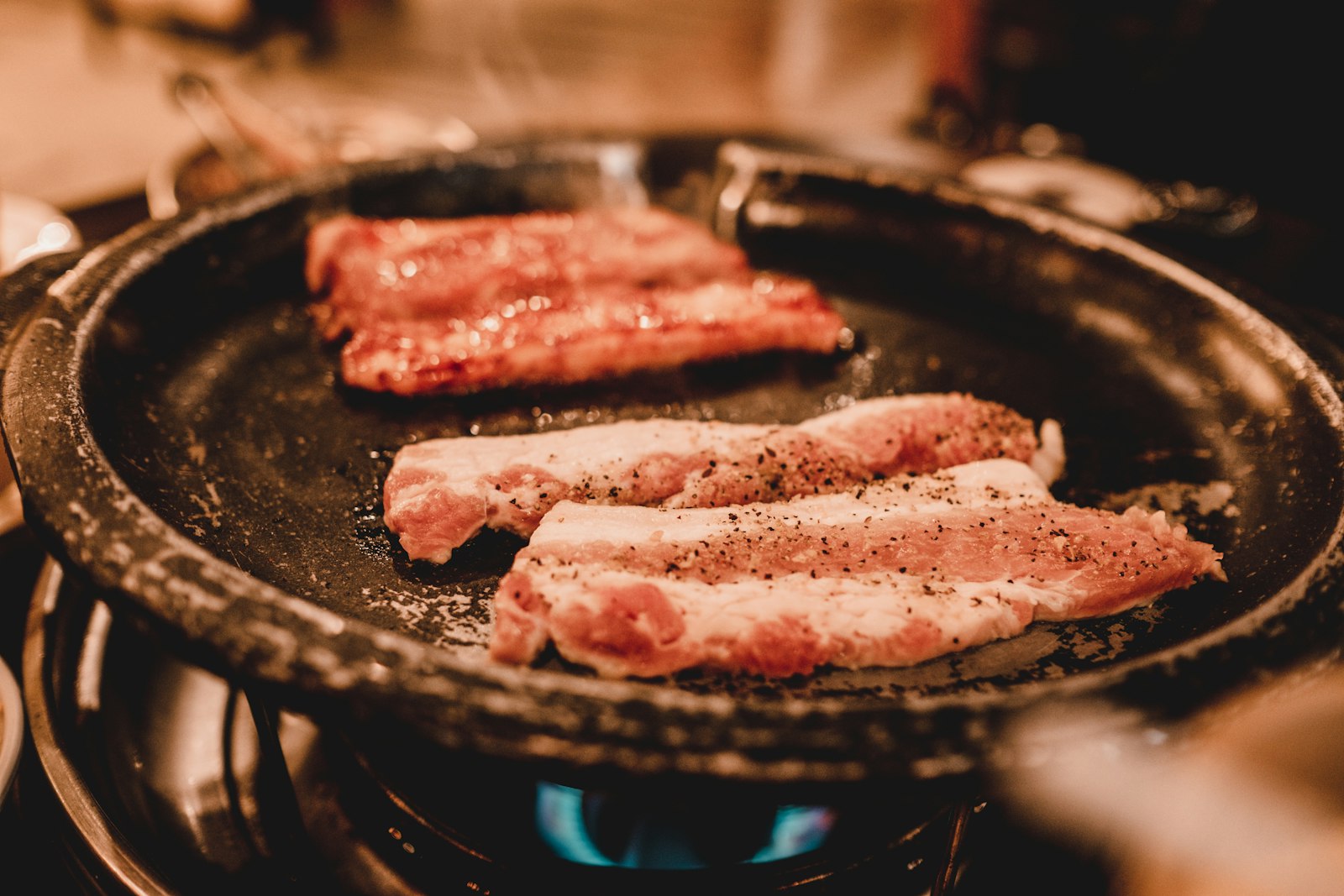
Korean barbecue in Seoul means pork more often than beef, and samgyeopsal, thick pork belly grilled at the table and wrapped in lettuce with garlic and ssamjang, is the everyday order. Geumdwaeji Sikdang, a Bib Gourmand at 149 Dasan-ro near Yaksu Station, is the address locals queue for.
According to Korean listings site DiningCode, pork belly costs KRW 19,000 for 150 g and neck cuts KRW 23,000–24,000, with a pork and kimchi stew at KRW 8,000 to finish. It opens daily from 11:30am to 11pm and takes no reservations, so go at opening or late.
Tteokbokki hotpot at Mabongnim Halmeoni Tteokbokki, Sindang-dong
Tteokbokki is rice cakes in a sweet, hot chilli sauce, and in Sindang-dong it comes as a hotpot: a flat pan loaded with rice cakes, fish cakes, ramyeon and dumplings, cooked on the table. Ma Bok-rim started selling it here in 1953, and the restaurant at 5 Dasan-ro 35-gil still mixes gochujang with chunjang, a black bean paste, for a rounder sweetness.
A set for two costs about KRW 17,000, with extras from KRW 2,000. Leave some sauce in the pan and ask for bokkeumbap, rice fried in what is left. It opens from 9am to 10:50pm and closes on the second and fourth Mondays of the month.
Songpyeon and jeon for Chuseok at Mangwon Market, Mapo
Chuseok has its own menu. Songpyeon are half-moon rice cakes steamed over pine needles; jeon are vegetables, fish or meat dipped in egg and pan-fried; japchae and yakgwa, honey and ginger biscuits, complete the table. In the days before the festival, markets fill with families buying them ready-made.
Mangwon Market in Mapo, open roughly from 9am to 9pm with stall hours varying, is cheaper and more local than Gwangjang: a hotteok, a sugar-filled pancake, costs KRW 1,000–2,000. Go before Thursday 24 September. To cook the holiday's centrepiece at home, follow our galbi-jjim recipe for Korean braised short ribs.
Royal court cuisine at Onjium, Seochon
Onjium works on the fourth floor of a cultural research institute at 49 Hyoja-ro, facing the stone wall of Gyeongbokgung Palace. Chef Cho Eun-hee, trained in royal court cooking, and chef Park Sung-bae reinterpret court and noble-house dishes around house-made ferments, and the restaurant has held one Michelin star since 2020.
Lunch costs KRW 200,000 and dinner KRW 300,000, according to Cook&Chef. It closes from Saturday to Monday and books through CatchTable, often weeks ahead.
Markets, neighbourhoods and when to go
What to eat in Seoul depends on the district, so plan your days by neighbourhood.
- Myeongdong: Hadongkwan for breakfast, Myeongdong Kyoja for lunch
- Jongno 5-ga: Gwangjang Market for bindaetteok and yukhoe, and the dakhanmari alley for dinner
- Seochon: Tosokchon and Onjium, both beside Gyeongbokgung Palace
- Sindang-dong and Yaksu: the tteokbokki alley and Geumdwaeji Sikdang, a short ride apart on Line 6
- Mangwon Market: local prices and Chuseok food, best before 24 September
- When to go: autumn, from September to November; around Chuseok (24–26 September 2026) convenience stores and chains stay open, while many family restaurants and market stalls close
Frequently asked questions
Is Seoul expensive to eat in? Not at its best addresses. A pancake at Gwangjang costs about KRW 5,000 and a bowl of gomtang or naengmyeon stays under KRW 20,000, while Onjium's dinner reaches KRW 300,000. For a city with a similar gap between street and tasting menu, read our guide to what to eat in Bangkok.
Do restaurants close during Chuseok? Many do. The Korea Tourism Organization advises that restaurants, department stores and malls often close on Chuseok Day, 25 September 2026, or for part of the holiday. Eat at the markets before 24 September and check hours by phone: deciding what to eat in Seoul that week means checking who is open.
Where is Seoul's only three-star restaurant? Mingles, in Cheongdam-dong, Gangnam, kept three Michelin stars in the 2026 guide, according to the Seoul Economic Daily. It closes on Sundays and Mondays and books through CatchTable or directly.
Where to book first
Onjium, 4th floor, 49 Hyoja-ro, Jongno-gu, the table in this guide that needs booking weeks ahead. Woo Lae Oak, 62-29 Changgyeonggung-ro, Jung-gu, for naengmyeon at 11:30am, before the line forms. Geumdwaeji Sikdang, 149 Dasan-ro, Jung-gu, where there are no bookings: join the queue at opening and settle what to eat in Seoul over a grill of pork belly.
Sources
- VisitKorea (Korea Tourism Organization) — 2026 Chuseok Holiday Travel Guide · 2026-09-14
- Cook&Chef News — Naengmyeon prices reach KRW 18,000 a bowl in Seoul · 2026-06-01
- Korea JoongAng Daily — Caviar-topped yukhoe gimbap at Gwangjang Market · 2026-06-12
- Seoul Economic Daily — Mingles retains Korea's only three-star Michelin rating · 2026-03-06