Lanzhou beef noodle soup recipe: the hand-pulled technique
A clear broth, red chilli oil and noodles stretched by hand, not cut: the five-element bowl that built Lanzhou's reputation as a breakfast city.
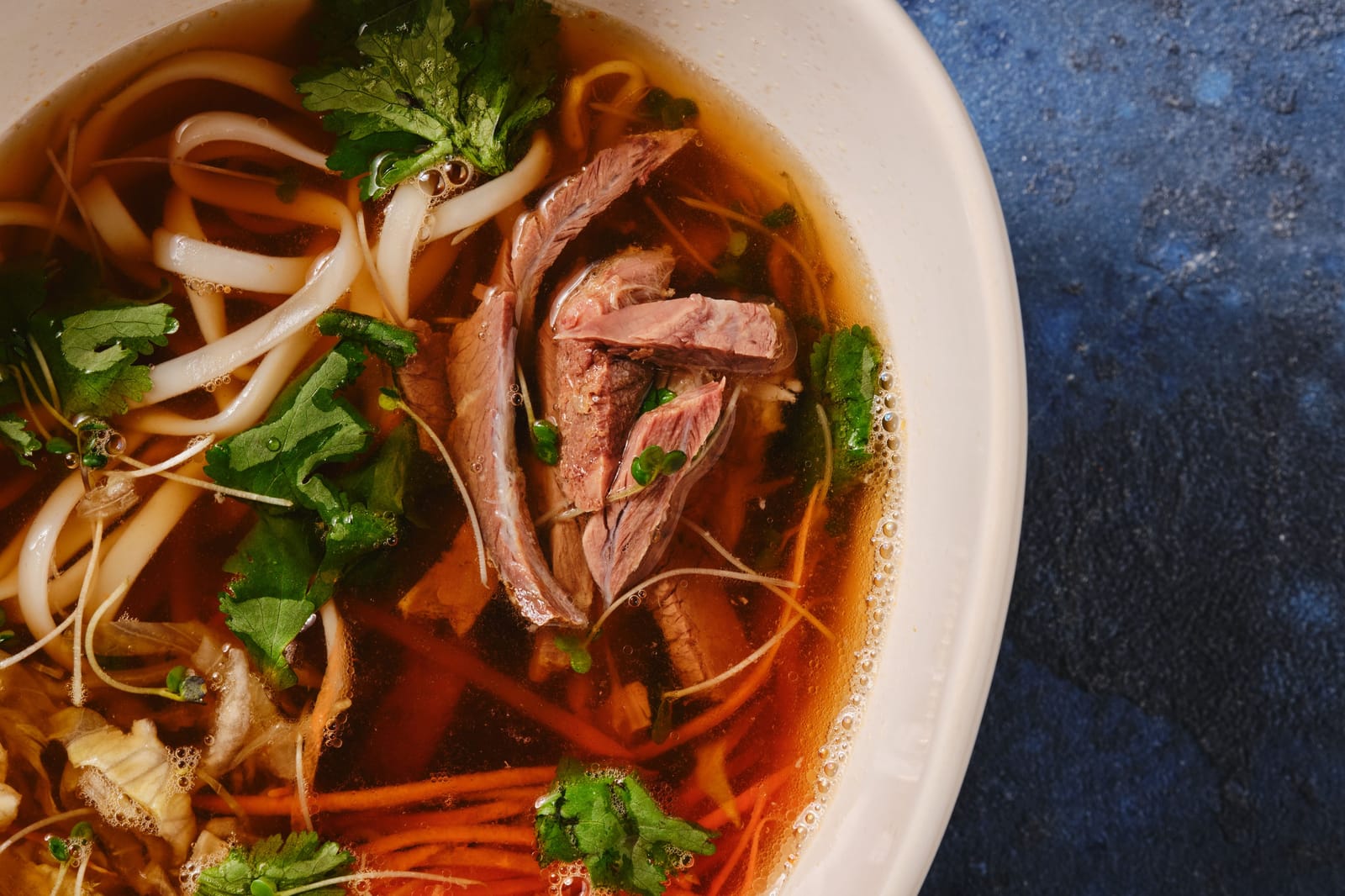
Lanzhou beef noodle soup turns on one skill: pulling a single rope of dough into noodles by hand, using nothing but a fold-and-stretch motion repeated until the strand is impossibly thin.
The dish is built on five elements Lanzhou cooks still recite as a checklist: a clear beef broth, red chilli oil, white radish, green coriander and yellow noodles. Each one doubles as a quality check, the clarity of the broth most of all.
Noodle shops in the city train apprentices for months before letting them pull a bowl for a paying customer, because a strand that is uneven in thickness cooks unevenly too, turning soft in the thin spots while the thick ones stay raw at the centre.
Five elements, one bowl, and a dough that has to be pulled, never cut.
Ingredients
- 500 g strong bread flour (at least 12% protein)
- 1 tsp fine salt
- 1/4 tsp food-grade alkaline water (peng hui), or 1/4 tsp bicarbonate of soda dissolved in 2 tbsp water
- 280 ml water, for the dough
- 2 tbsp neutral oil, for coating
- 800 g beef shin or shank, cut into large chunks
- 2 litres water, for the broth
- 1 onion, halved
- 1 thumb ginger, sliced
- 2 star anise
- 1 cinnamon stick
- 1 tsp Sichuan peppercorns
- 2 tbsp light soy sauce
- 1 tbsp Shaoxing wine
- 200 g white radish, thinly sliced
- 4 tbsp chilli oil, to serve
- 4 spring onions, finely sliced
- A handful of coriander leaves
Method
- Mix the flour and salt with the alkaline water and the 280 ml water, then bring together into a rough dough. The alkaline water firms the gluten network, which is what lets the dough stretch into long strands later without tearing.
- Knead for 10 minutes until smooth, coat in the neutral oil, then rest, covered, for at least 2 hours. The oil stops a skin forming; the long rest lets the gluten relax so the dough stretches instead of springing back.
- Brown the beef in a dry pot, then add the onion, ginger, star anise, cinnamon, Sichuan peppercorns, soy sauce, wine and the 2 litres of water. Simmer, skimming often, for 2.5 hours, until the beef is tender and the broth runs clear rather than cloudy; a rolling boil would emulsify the fat into the broth and ruin the clarity the dish depends on.
- Divide the rested dough into eight pieces and roll each into a rope. Working one at a time, hold the rope at both ends, stretch, fold in half and stretch again, repeating six or seven times until the strand is noodle-thin.
- Drop the pulled noodles into boiling water for 60-90 seconds, until they float, then lift straight into warmed bowls.
- Ladle over the hot broth with several pieces of beef, then top with radish, chilli oil, spring onion and coriander. Serve immediately, while the noodles still hold their bite.
A bowl that rewards speed, not spice
The technique travels well beyond Lanzhou's noodle halls. In Paris, chef Yanxin Yin, who trained in Xi'an and Lanzhou before joining the kitchen at Le Poisson Volant, builds her own menu on the same instinct for sharing plates over a single regional script, even where hand-pulled noodles are not on it.
Shop-bought dried wheat noodles are a fair substitute if pulling by hand feels like too much for a first attempt; look for a flat, spaghetti-width noodle rather than a thin, round one, which cooks too fast to hold the broth.
Can the noodles be pulled ahead of time? No. Rested dough keeps for hours in the fridge, but pull and cook the strands to order; once stretched, they dry out fast and lose the stretch that makes the bowl work.