Pulpo a la gallega recipe: Galicia's fair-style octopus
Galicia boils its octopus whole, cuts it with scissors onto a wooden plate, and dresses it with nothing but pimentón, salt and good olive oil.
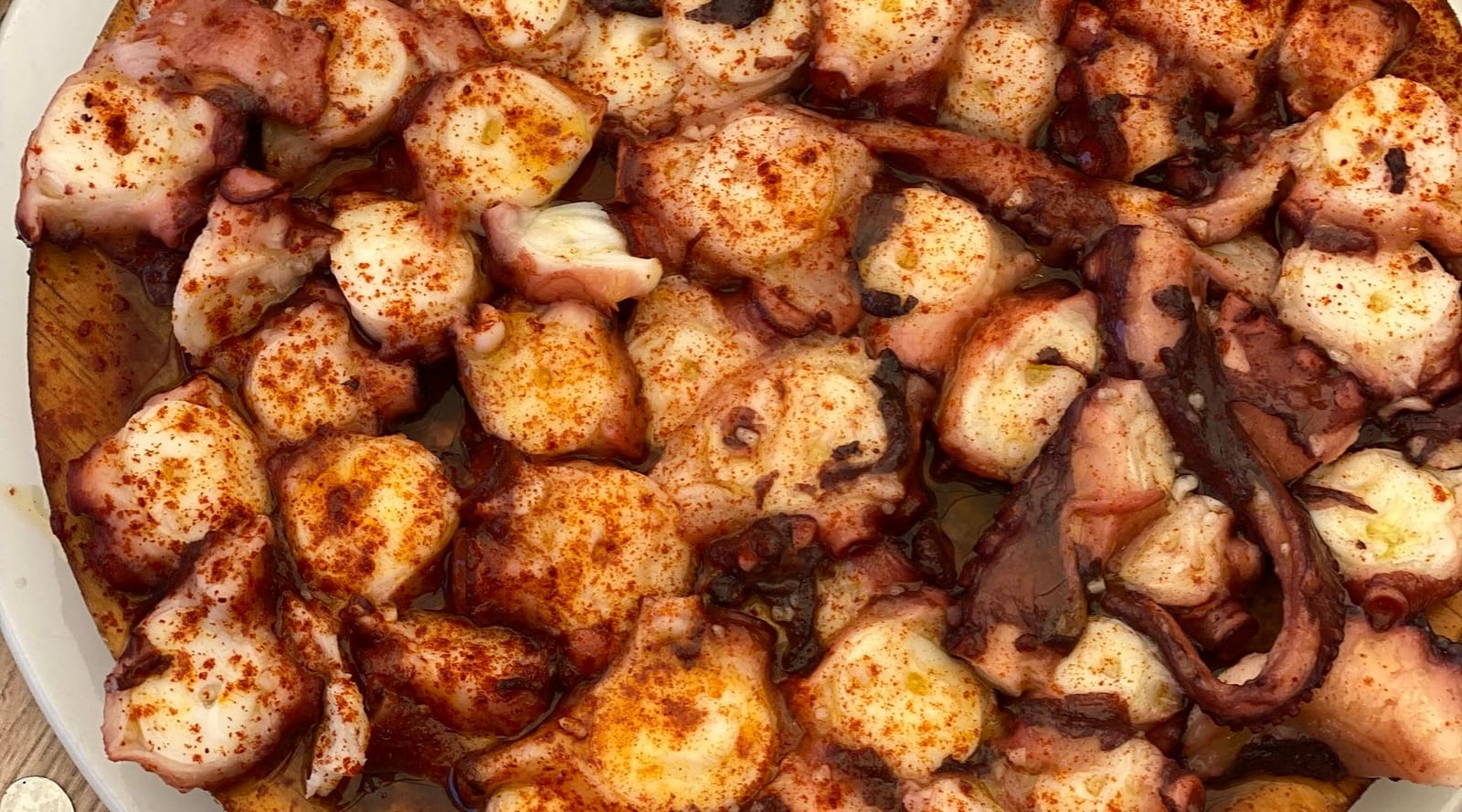
Pulpo a la gallega is Galicia's whole boiled octopus, sliced with scissors onto a wooden plate and dusted with sweet and smoky pimentón over good olive oil and coarse salt — no other seasoning needed.
The dish traces back to inland Galicia, to the fairs and pilgrim markets around Melide, some 75 kilometres from the coast. Pedlars came down from the Atlantic ports with barrels of live octopus; merchants from Extremadura came the other way with pimentón de la Vera and olive oil. The two met at the ferias, and pulpo á feira — “fair-style octopus” — took its name from that trade.
Chef José Andrés still serves a version at Mercado Little Spain in New York, tracing the same route from the Galician coast to the inland fairs onto a plate. It sits in the same lineage as other Spanish market dishes, such as our arroz a banda from Alicante: a short ingredient list built entirely around the quality of the seafood.
Paprika is not a garnish here — it's the whole point of the dish.
Ingredients
- 1 whole octopus (about 1.5 kg), cleaned
- 4 medium waxy potatoes
- 2 tsp pimentón dulce (sweet smoked paprika)
- 1 tsp pimentón picante (hot smoked paprika), optional
- Coarse sea salt
- 100 ml extra virgin olive oil
Method
- Bring a large pot of unsalted water to a rolling boil. Holding the octopus by the head, dip it into the water three times, lifting it out between dips, before submerging it fully. This curls the tentacles evenly and keeps the skin from splitting as it cooks.
- Lower the heat to a steady simmer and cook for 40-50 minutes, depending on size, until a knife slides into the thickest part of a tentacle with no resistance. A hard boil toughens the muscle; a gentle simmer doesn't.
- Turn off the heat and let the octopus rest in its cooking water for 10 minutes. It keeps cooking gently as it cools, and the texture settles.
- Meanwhile, boil the potatoes whole in their skins in salted water until tender, then peel and slice into rounds about 1cm thick. Starchy, waxy potatoes hold the oil and paprika without turning to mush.
- Lift the octopus out and cut it into rounds with kitchen scissors, not a knife, straight onto a wooden plate over the sliced potatoes. Scissors leave a ragged edge that holds more oil and paprika than a clean cut does.
- Dust generously with pimentón dulce and a smaller amount of pimentón picante, season with coarse salt, and finish with an unhurried drizzle of olive oil. Serve at once: paprika turns bitter if it sits too long on hot octopus before the oil seals it in.
What to drink with it
Galicia answers its own octopus with its own wine: a chilled glass of Albariño from Rías Baixas, crisp enough to cut through the olive oil and smoked paprika. If pulpo a la gallega opens the meal, lacón con patatas — cured pork shoulder with potatoes and more pimentón — is the dish Galicians traditionally serve after it.
Can this pulpo a la gallega recipe be made ahead? Yes — boil the octopus up to a day in advance and keep it in its cooking liquid in the fridge, then slice and dress it just before serving, since the paprika and oil need to go on while everything is still warm.