Sauerkraut recipe: how to ferment cabbage the Alsace way
White cabbage, 2 per cent salt and three to four weeks at room temperature: the lactic fermentation behind choucroute, timed for the Alsace cabbage harvest that peaks in October.
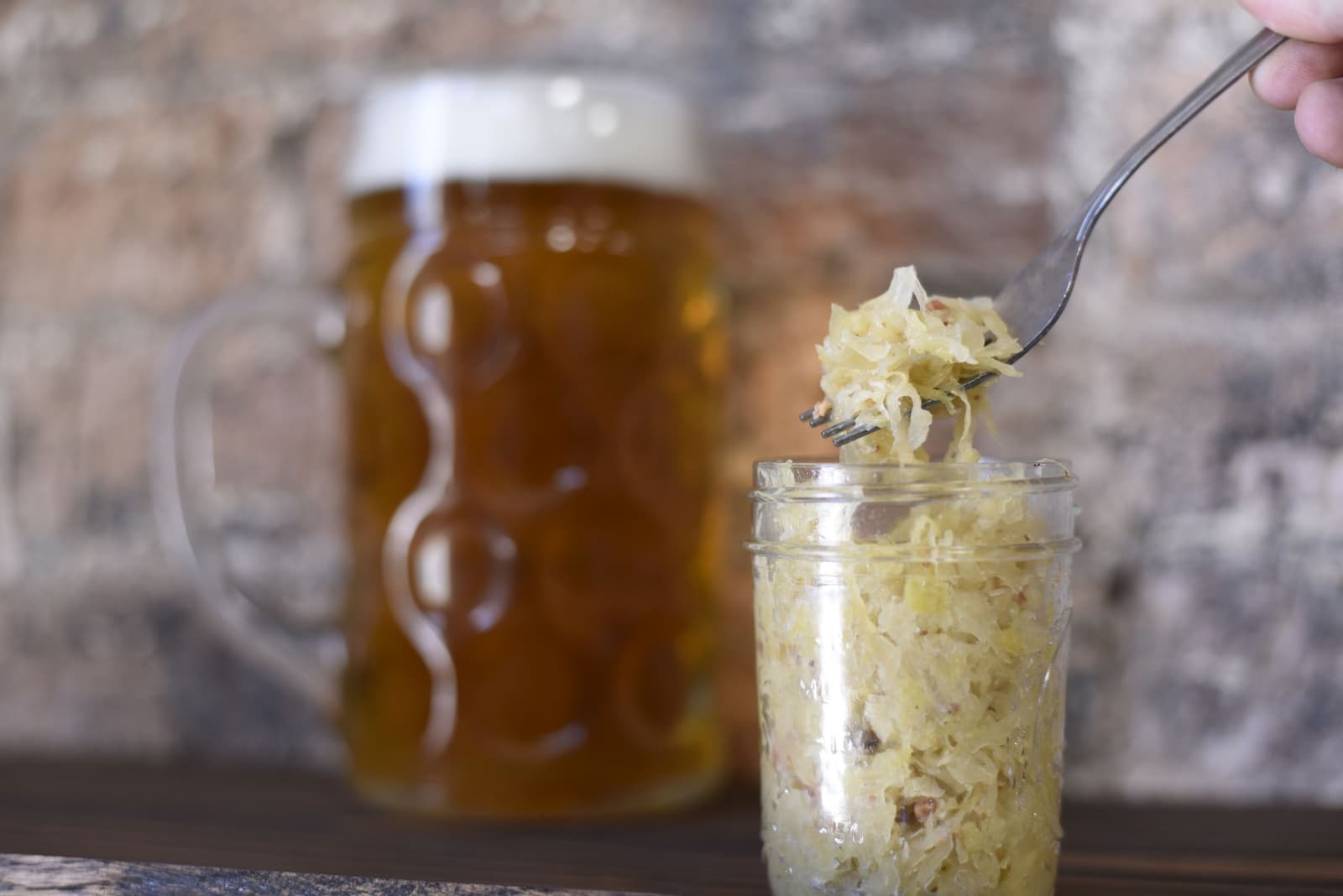
This sauerkraut recipe needs only white cabbage and salt, plus one piece of technique: salt at 2 per cent of the cabbage’s weight. That draws out enough juice to keep the shreds submerged, and under that brine lactic acid bacteria turn the cabbage sour and crisp in three to four weeks at 18 to 22 °C.
In Alsace, where Choucroute d’Alsace gained protected geographical indication in 2018, the cabbage harvest runs from August to November and peaks in October, and producers ferment for two weeks to two months depending on the weather. Start a jar now and it is ready for the first cold weeks, alongside the new wine: read how the Alsace wine harvest 2026 turned out.
Ingredients
Everything under the brine ferments; anything above it can spoil. Keep the cabbage submerged.
- 2 kg firm white cabbage, trimmed weight
- 40 g fine sea salt, without iodine or anti-caking agents
- 1 tsp caraway seeds (optional)
- 8 juniper berries, lightly crushed (optional)
- A 2-litre fermentation jar or crock, with a weight
Method
- Remove the outer leaves, keeping two whole ones aside. Quarter the heads, cut out the cores and weigh: the salt is 20 g per kilo of trimmed cabbage.
- Shred the cabbage 2 to 3 mm thick with a knife or mandoline. Even shreds release juice quickly and ferment at the same rate.
- Toss with the salt, wait 15 minutes, then squeeze firmly with your hands for 5 to 10 minutes until the cabbage is limp and wet. Salt pulls water from the cells, and that juice becomes the brine.
- Pack the cabbage into the jar in layers with the spices, pressing each layer hard to drive out air, then pour in every drop of liquid from the bowl.
- Cover with the reserved leaves and the weight. The brine must sit 2 cm above the cabbage; if it does not after 24 hours, top up with 20 g of salt dissolved in 1 litre of water.
- Cover loosely and leave at 18 to 22 °C, out of the light. Bubbles appear within two or three days as the bacteria produce carbon dioxide and lactic acid.
- Taste from day 10. When it is pleasantly sour, usually after three to four weeks, close the jar and refrigerate it.
How to cook your sauerkraut
For choucroute garnie, rinse it briefly and braise it for an hour with lard, onion, juniper and a glass of dry Alsace Riesling, then add smoked pork, sausages and potatoes.
Sauerkraut recipe FAQ
How do I know if sauerkraut has gone bad? A flat white film on the brine is usually harmless kahm yeast; skim it off. Fuzzy blue, green or black mould, slimy shreds or a rotten smell mean the batch goes in the bin.
Can I use iodised salt? Better not. Iodine and anti-caking agents can slow fermentation and cloud the brine; pure sea salt or pickling salt works best.
How long does homemade sauerkraut keep? Several months in the fridge, as long as it stays under its brine.
Sources
- Choucroute d’Alsace IGP — producers’ association (IGP since 2018, harvest August to November peaking in October, fermentation two weeks to two months) ·
- National Center for Home Food Preservation (University of Georgia) — Sauerkraut (salt ratio, 70-75 °F for 3-4 weeks, storage) ·
- Wikipedia — Sauerkraut (lactic acid fermentation, history) ·