Zwetschgendatschi recipe: Augsburg's Bavarian plum sheet cake
Augsburg's thin yeast-dough plum cake, rebuilt by Amuse Kitchen for mid-September Zwetschgen: breadcrumbs under the fruit, plums packed upright and cinnamon sugar straight from the oven.
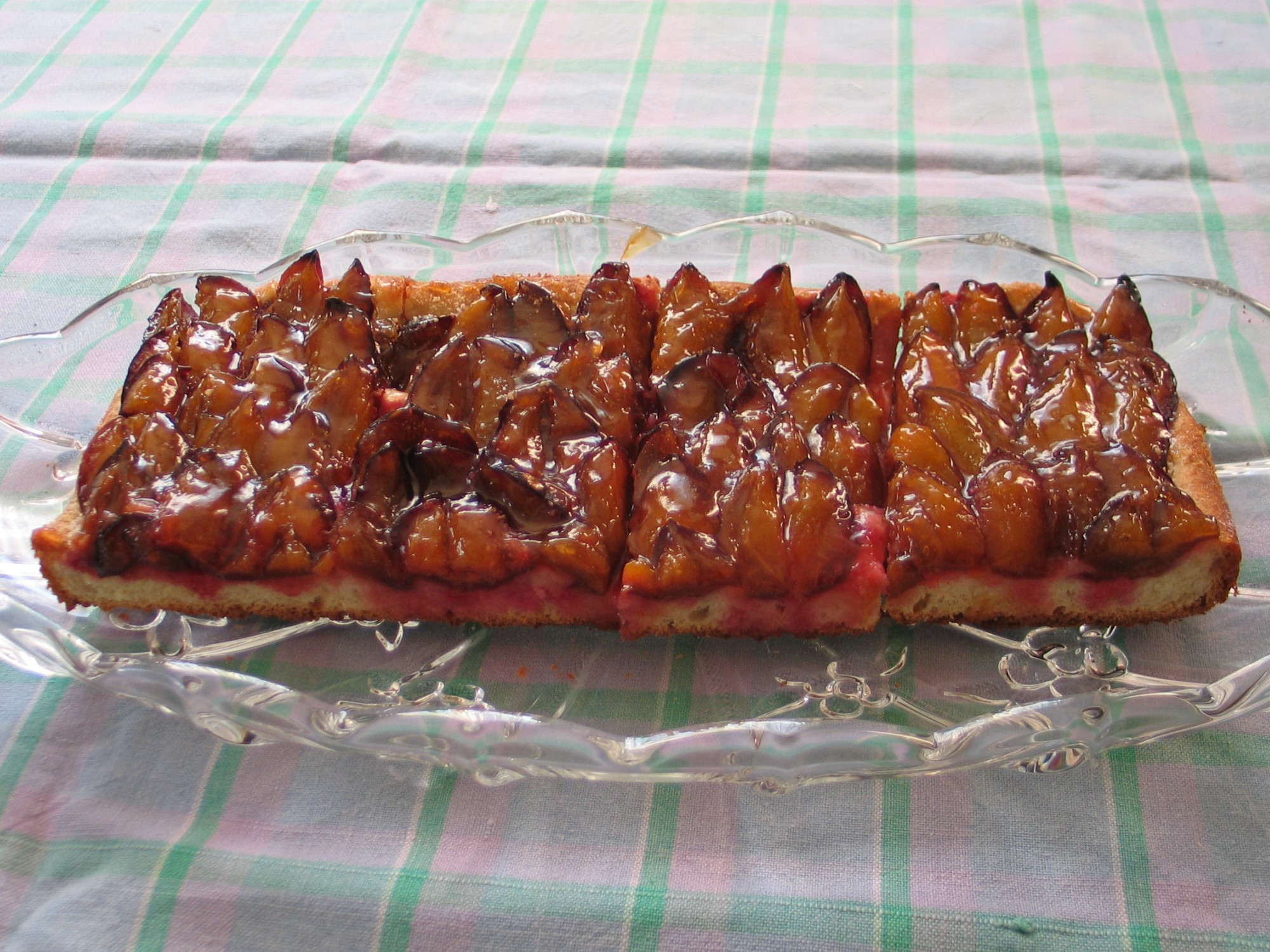
Zwetschgendatschi is the thin yeast-dough plum sheet cake of Augsburg and Bavaria, and this Zwetschgendatschi recipe stands or falls on one detail: plums packed so tightly, cut side up, that almost no dough shows.
Augsburg, nicknamed Datschiburg, claims the cake as its own. Its archive holds the earliest recipe close to today's, printed in 1830 in the Augsburgisches Kochbuch from Sophie Weiler's papers: yeast dough on a buttered, breadcrumbed tray, fresh plums, sugar, cinnamon and lemon peel.
Munich opens its 191st Oktoberfest on Saturday, but the steadier Bavarian ritual this month is a tray of Datschi. Late Zwetschgen, oval and firm, peak in mid-September, and their low juice suits a thin dough. This is an Amuse Kitchen version of the Augsburg method.
Pack the plums until the dough disappears; the oven will open the gaps for you.
Ingredients
- 375 g plain flour
- 20 g fresh yeast (or 7 g instant dried yeast)
- 170 ml whole milk, lukewarm
- 100 g caster sugar, divided
- 1 egg, at room temperature
- 60 g unsalted butter, softened, plus extra for the tray
- ½ tsp fine salt
- Grated zest of ½ unwaxed lemon
- 1.5 kg Zwetschgen (Italian prune plums)
- 2 tbsp fine dry breadcrumbs
- 1 tsp ground cinnamon
- 200 ml whipping cream, to serve
Method
- Stir the yeast and a teaspoon of the sugar into the milk and leave 10 minutes, until foamy. Keep the milk near 35 °C: above 45 °C the yeast starts to die.
- Mix the flour, 50 g of the sugar, the salt and zest, add the yeasted milk and egg, and knead 5 minutes. Knead in the butter gradually for 5 minutes more; adding fat after the gluten forms keeps the dough elastic.
- Cover and leave somewhere warm for about 1 hour, until doubled.
- Halve and stone the plums, then cut each half almost through into two wedges joined at the base. The notch lets them stand upright and overlap without tearing.
- Butter a 30 x 40 cm tray, roll the dough to 5 mm and press it into the corners. Scatter over the breadcrumbs, which absorb the first juice so the base stays crisp.
- Stand the plums in tight, overlapping rows, cut side up. They shrink in the oven, so any gap now becomes bare dough later. Rest 20 minutes while the oven heats to 190 °C (170 °C fan).
- Bake on the lower-middle shelf for 35-40 minutes, until the edges are deep golden and the juice bubbles. The low position cooks the base through beneath the wet fruit.
- Mix the remaining sugar with the cinnamon and scatter it over the hot cake, so it melts into the juice. Cool for 30 minutes so the juice sets before cutting.
Streusel, cream and the Augsburg argument
Many bakeries add streusel: rub 150 g flour, 100 g sugar and 100 g cold butter into coarse crumbs, scatter over the plums and bake 5 minutes longer. Purists prefer it plain, and the 1830 recipe is on their side.
Serve with cream whipped to soft peaks without sugar. For another German harvest bake, try the Zwiebelkuchen recipe.
Sources
- Stadt Augsburg, Stadtarchiv — Zwetschgendatschi anno 1830 · 2026-09-16
- Wikipedia — Zwetschgenkuchen · 2026-09-16
- Thomas Sixt — Zwetschgendatschi · 2026-06-04
- Oktoberfest.de — Opening hours of the Munich Oktoberfest 2026 · 2026-09-16