Zwiebelkuchen recipe, the onion tart of the harvest
A kilo of onions cooked without colour, a set custard and a yeast base rather than pastry. In the German wine villages it is eaten with new wine, standing up.
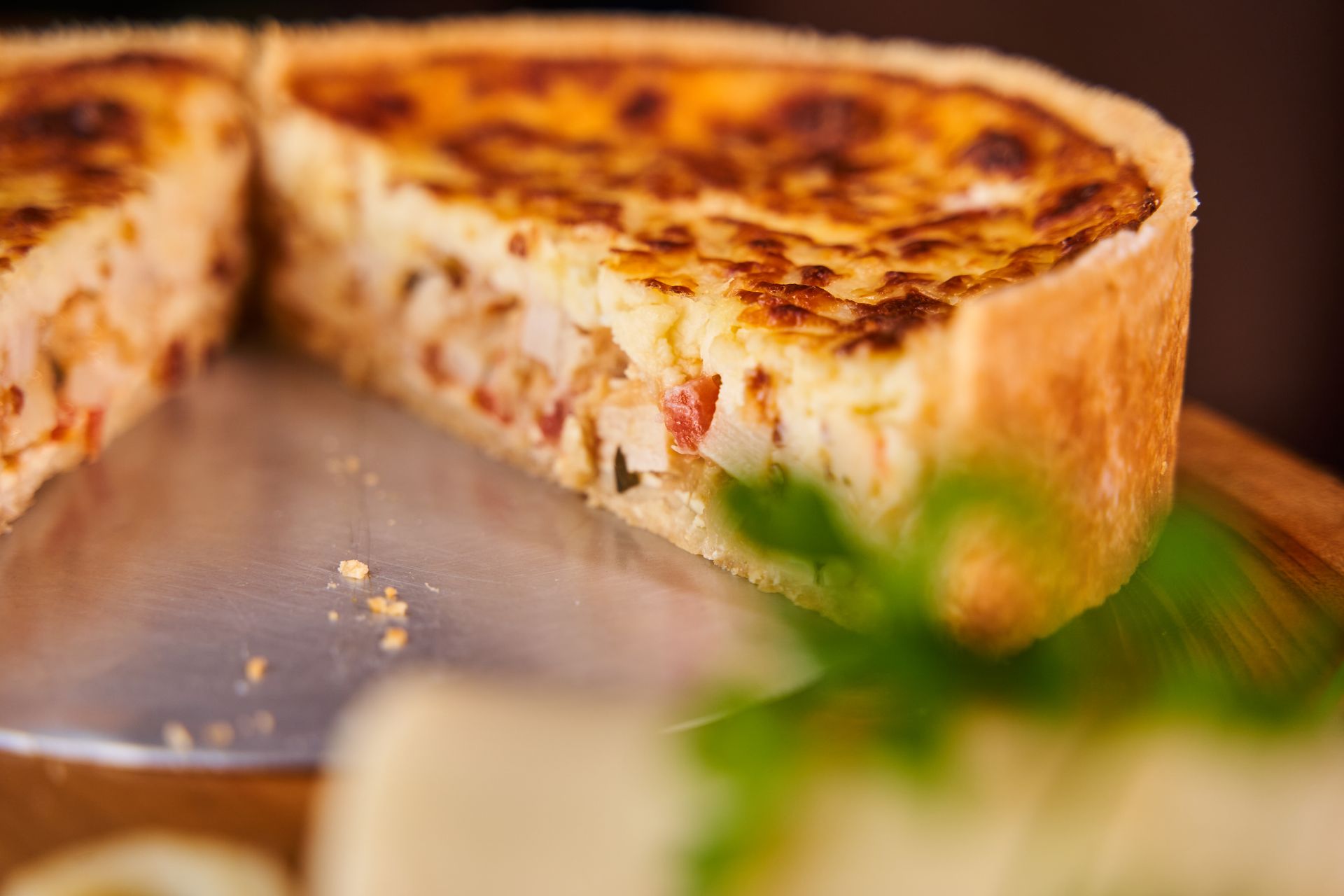
This zwiebelkuchen recipe is the onion tart of the German wine villages: a yeast base, a kilo of onions softened without browning and a custard set just short of firm.
It belongs to the weeks of the grape harvest, when Federweisser, the cloudy part-fermented new wine, appears for a month and disappears again. The pairing is not decorative. The tart is fat and sweet, the young wine is sharp and still fizzing, and each one makes the other edible in quantity.
Two things separate a good one from a wet one. The base is bread dough, not shortcrust, because it drinks the onion juices instead of going soft under them; and the onions must stay pale, since browning turns their sugar bitter under a custard.
Brown the onions and you have ruined it. Pale and sweet is the whole trick.
Ingredients
- 300 g plain flour
- 15 g fresh yeast
- 150 ml lukewarm milk
- 40 g soft butter
- 5 g salt
- 1 tsp sugar
- 1 kg onions, thinly sliced
- 150 g streaky bacon, diced
- 30 g butter, for the pan
- 200 g creme fraiche
- 2 eggs
- 1 tbsp plain flour
- 1 tsp caraway seeds
- Salt, black pepper, grated nutmeg
Method
- Warm the milk to blood heat and stir in the yeast and sugar. Add the flour, salt and soft butter, then knead for eight minutes to a smooth, slack dough. Cover and prove for 45 to 60 minutes, until doubled.
- Fry the bacon in a dry pan until the fat runs, then lift it out. Add the butter and the onions with a good pinch of salt and cook over medium-low heat for 25 to 30 minutes, until soft and sweet but still pale. Any colour at this stage reads as bitterness once the tart is baked.
- Spread the onions out and cool them to room temperature. Whisk the creme fraiche with the eggs and the tablespoon of flour, then season with salt, pepper, nutmeg and half the caraway. Hot onions would scramble the eggs, and the spoon of flour stops the custard weeping in the oven.
- Roll the dough to line a 26 to 28 cm tin with a two-centimetre rim. Prick the base, spread the onions, pour the custard over and scatter the bacon and the remaining caraway.
- Bake at 200C for 35 to 40 minutes, until the rim is deep gold and the centre still has a slight wobble. If it puffs and cracks, the oven is too hot: drop it to 180C.
- Rest for fifteen minutes before cutting. The custard sets as it cools, and a tart cut straight from the oven will run on the plate.
What to drink with it
Federweisser is the answer where you can get it, and only in September and October. It is sold still fermenting, so the bottle is never sealed tight and it does not travel; buy it near the vineyard or not at all. This year's German and French harvests came in early and small, as the French figures show, so the window is shorter than usual.
Failing that, an off-dry young Riesling or a Silvaner with some weight will do the same job. Serve the tart warm rather than hot, in squares, with nothing else on the plate.
Sources
- Amuse Kitchen · 2026-09-10
- The Connexion · 2026-09-09