Consuegra's saffron festival returns for its 64th year
The 64th Fiesta de la Rosa del Azafrán fills Cerro Calderico from 23 to 25 October, timed to the hand-picked harvest that still defines La Mancha's saffron trade.
Consuegra's saffron festival returns to Cerro Calderico from 23 to 25 October, its 64th edition timed to the week La Mancha growers cut this year's Crocus sativus by hand.
The Fiesta de la Rosa del Azafrán fills the hill between Consuegra's twelve windmills and its medieval Castillo de la Muela, about 60km southeast of Toledo. Admission is free. The programme runs an artisan market, a parade crowning the festival's Dulcinea, and the Festival Nacional de Folklore Castellano-Manchego, according to organisers.
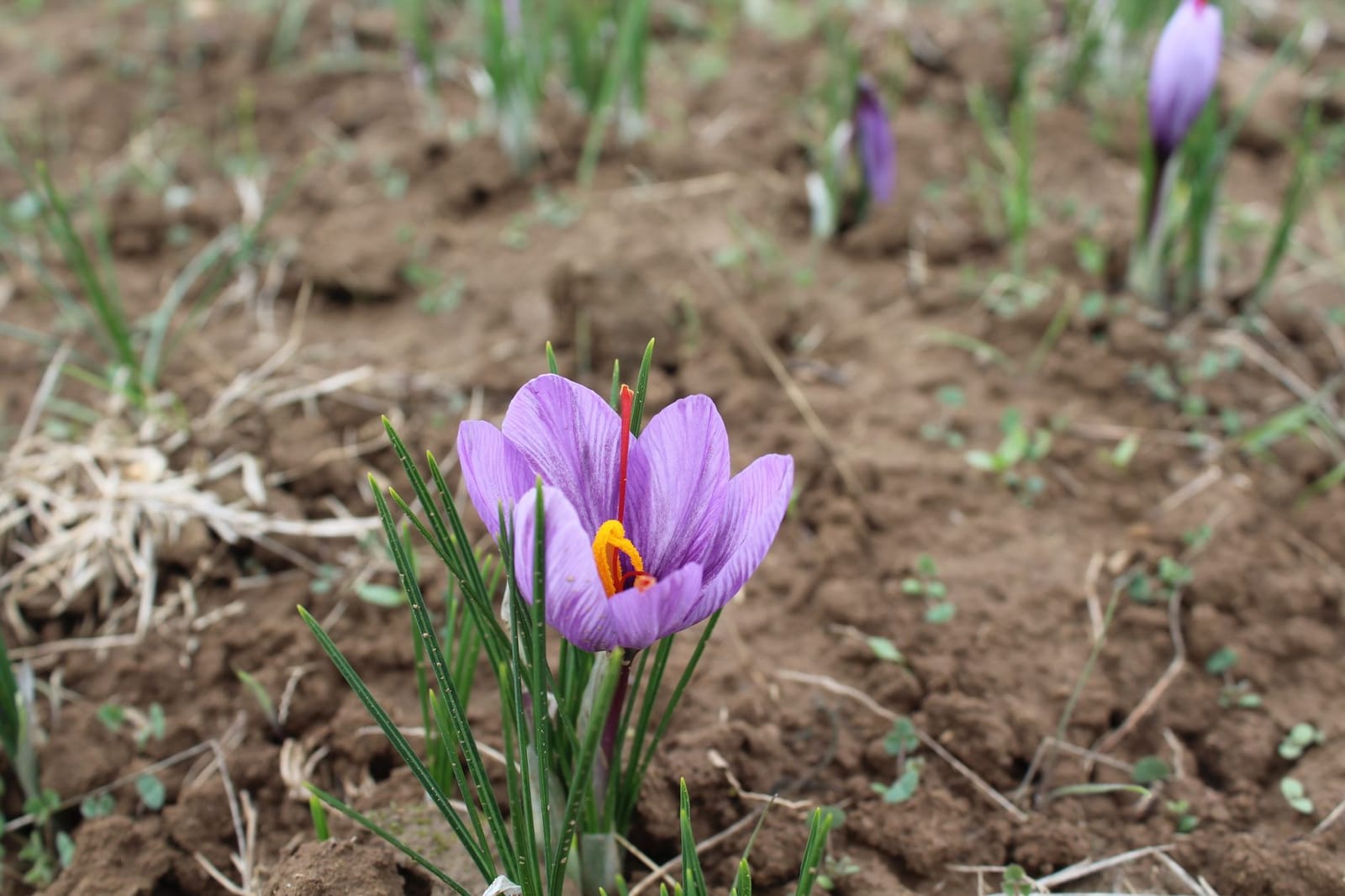
Consuegra has staged the festival since 1963. This year the town's folk-dance association received a regional culture prize from the Diputación de Toledo, and the saffron rose itself is in bloom on schedule: Crocus sativus flowers for only two to three weeks each autumn, and every bloom must be cut the morning it opens, before the sun wilts the petals.
Three stigmas, one morning, no shortcut invented yet.
Three stigmas, by hand, before noon
Across La Mancha's saffron plots, pickers rise before dawn to gather closed flowers, then carry baskets to kitchen tables for monda: separating each bloom's three red stigmas from its purple petals by hand. It takes roughly 150 flowers to yield one gram of dried spice, a ratio no machine has changed.
Festival visitors can watch monda demonstrations on Cerro Calderico, alongside tueste, the same-day toasting of stigmas over sieves and low charcoal heat that fixes their colour and aroma. Both steps still run much as they did when the Kashmir saffron fields half a world away were first planted from the same species.
A protected label against cheaper rivals
The Denominación de Origen Protegida Azafrán de La Mancha counted 253 registered growers and 16 packaging firms across 335 municipalities in four provinces in 2021, the Consejo Regulador told elDiario.es. The DOP caps packaging at 100 grams and tests samples to catch saffron grown elsewhere and sold as manchego, including Iranian saffron relabelled at the border.
Genuine La Mancha saffron retails for roughly €5 to €10 a gram, several times the price of the bulk Iranian saffron that supplies most of the world's crop, which is one reason the Consejo Regulador keeps testing. It is also why many smallholders have dropped out: the harvest is unmechanised and the hours are brutal for a market where imported threads undercut on price, even if not on origin. The same pressure on margins is visible this week in Spain's olive oil fields, where farmers are asking for a storage rule to prop up prices.
Spain once exported more saffron than oranges. This weekend, Consuegra sells it a pinch at a time, between the windmills and the castle, to whoever climbs the hill.