Italy's chestnut prices rise 46% as drought cuts the harvest
Ismea's October price data put chestnuts at €3.50 a kilo nationally, up 46 percent in a year, as Coldiretti estimates this autumn's harvest is down by about a quarter.
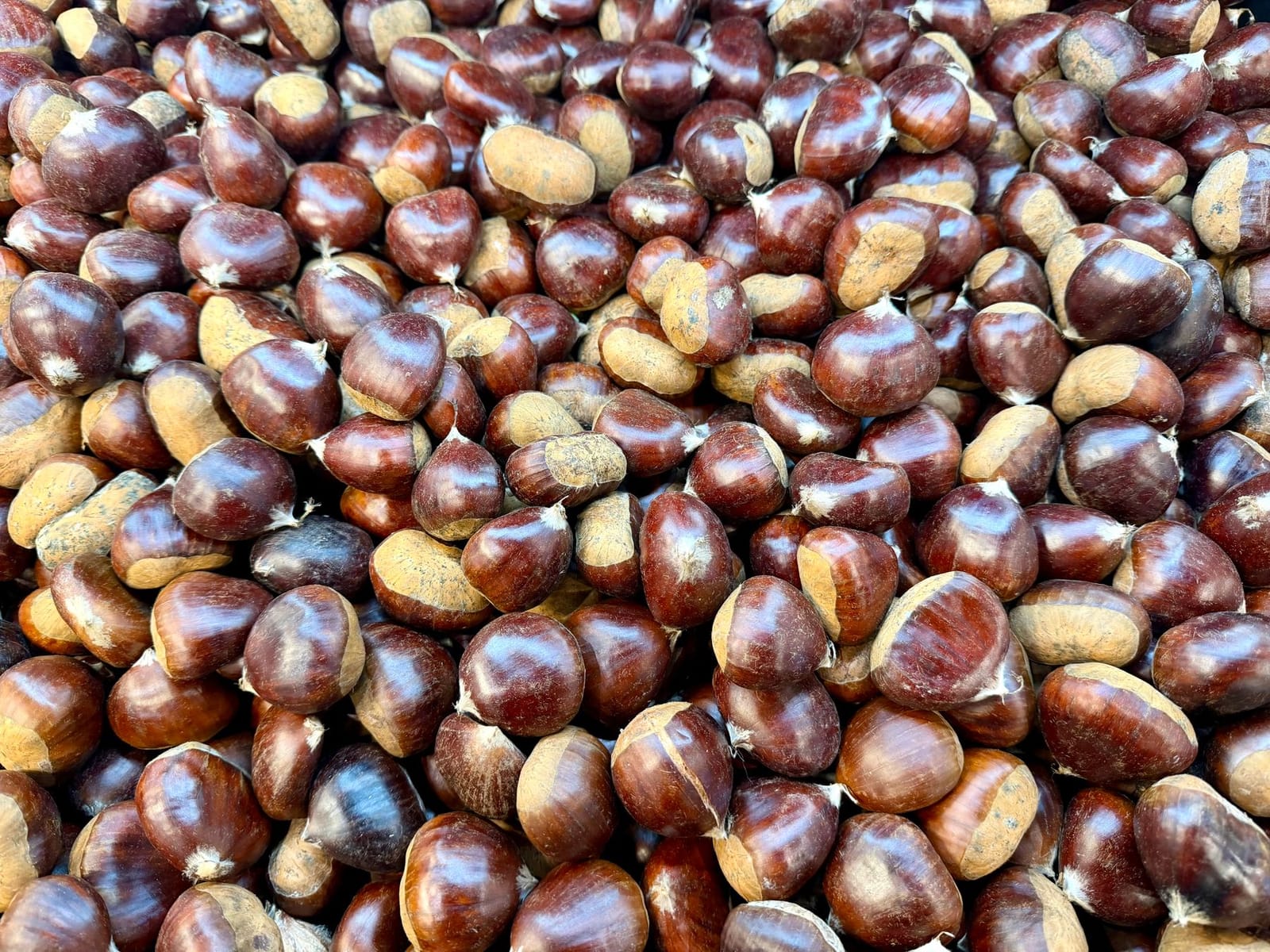
Chestnut prices in Italy have jumped 46 percent this October, after a hot, dry summer cut the harvest by roughly a quarter, according to Ismea and Coldiretti data.
The national average price reached €3.50 a kilo in the first week of October, up from about €2.13 a year earlier, Ismea's market tracking shows. Coldiretti attributes the shortfall to high summer temperatures and low rainfall, which slowed fruit development and reduced yields across the country's chestnut-growing regions. The pattern isn't confined to Italy: producers in France's Ardèche region reported a historically low harvest last month, also blaming a dry summer.
Marroni, the larger, sweeter variety prized for marrons glacés and roasting, and ordinary castagne, used more often in flour, purées and dishes like castagnaccio, are tracked separately in Italy's wholesale data. Both have moved up this year, though marroni carry the bigger premium.
A dry summer did to chestnuts what it does to every scarce harvest: it raised the price.
Arezzo prices climb highest
In Arezzo, one of Tuscany's main chestnut-trading hubs, producers and merchants report quotations reaching €6 a kilo for the best marroni, more than double last year's level in the same area. Smaller chestnuts are trading at €4 to €4.50 a kilo from merchants and around €5 wholesale; marroni fetch €5 to €5.50 from merchants and €5.50 to €6 wholesale for the largest sizes. Growers selling directly are asking around €6 a kilo.
Wholesale data from Bmti, the Italian commodities exchange, put early-season chestnuts at €4.30 to €4.50 a kilo nationally – also above last year's opening prices, even in regions where the harvest has held up better than in Tuscany.
A reversal from last year's glut
The jump marks a turnaround from 2025, when a large harvest pushed wholesale prices down and Coldiretti Toscana reported a regional output rise of around 40 percent. This year, producers describe the opposite problem: decent quality where fruit set properly, but smaller nuts and lighter yields overall.
Regional festivals have gone ahead regardless. Cassano Irpino's Sagra della Castagna, now in its 48th year, ran from 16 to 18 October in Irpinia, one of several harvest fairs that mark the season across the country each autumn.
Coldiretti's 25 percent estimate is provisional, and the figure could shift as the harvest finishes over the coming weeks. For now, chestnut sellers at autumn markets from Tuscany to Piedmont are pricing in the shortage – and buyers after this year's vacuum-packed marroni should expect to pay for the privilege.