Kew research challenges robusta's climate-resilient image
A review led by scientists at Kew finds that most robusta coffee grows where it does only thanks to heavy irrigation, undercutting its reputation as a drought-proof hedge for the trade.
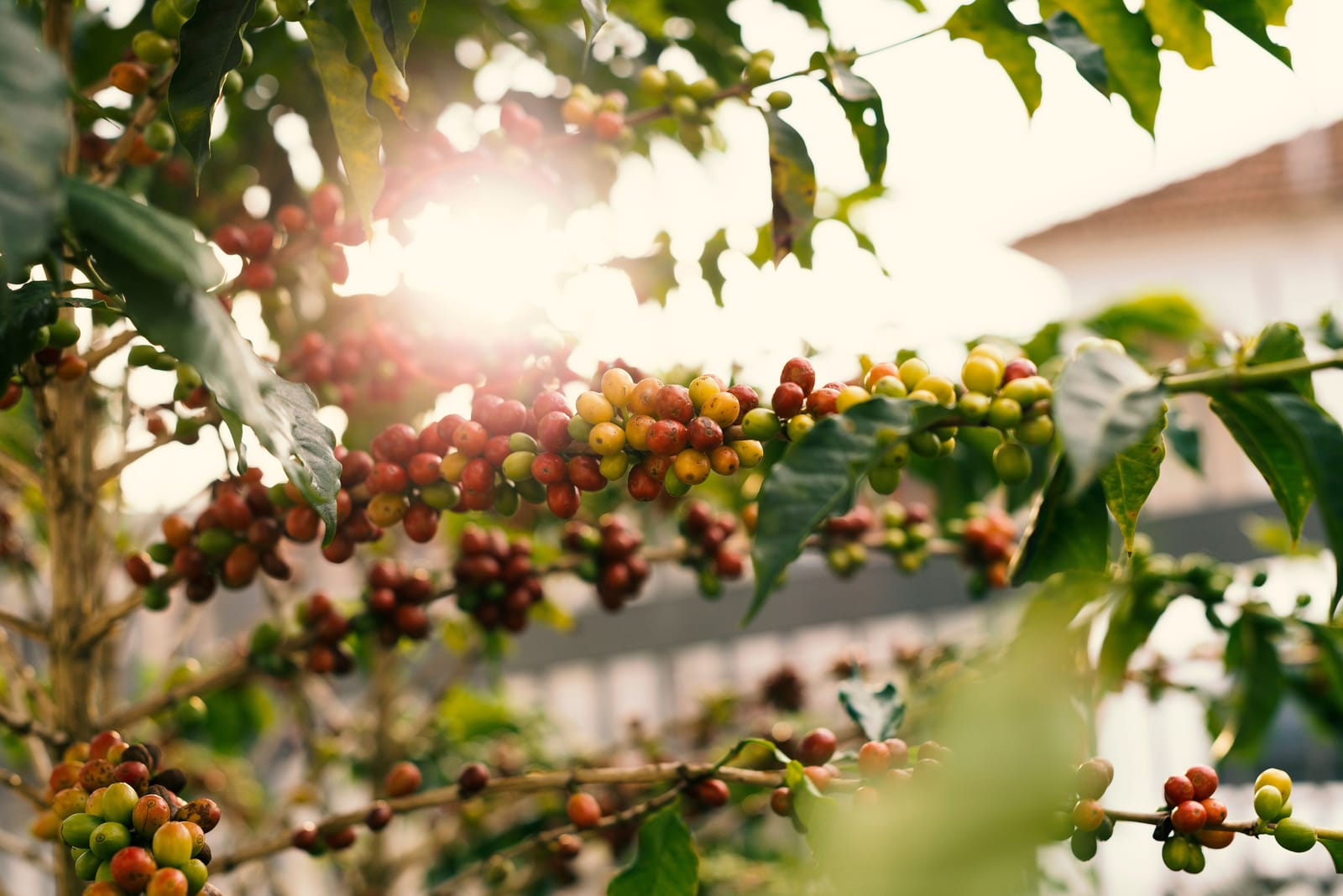
A new review led by scientists at the Royal Botanic Gardens, Kew disputes the idea that robusta coffee is a reliable climate-resilient alternative to arabica, a premise much of the trade's expansion planning rests on.
The review, published in the journal Sustainable Development, combines more than a century of existing research with a new analysis of water availability around wild robusta populations in Africa. Lead author Aaron Davis worked with Akshay Dashrath of SICC Labs in India and Justin Moat, also of Kew.
Wild robusta grows naturally in warm, tropical parts of Africa with soil moisture for most of the year, the authors found, and it was more common in places where rivers, wetlands, groundwater or high water tables supplied moisture beyond rainfall alone.
A bean sold as the climate-proof option turns out to need a hose almost everywhere it grows at scale.
The major robusta-growing regions of Vietnam, Brazil and India, by contrast, lack those natural conditions and depend heavily on irrigation. About 90% of the crop in northern Espírito Santo, Brazil's main robusta state, is irrigated, the review notes.
"Climate resiliency claims for farmed robusta are misguided," the authors state, arguing that climate-suitability models based mainly on temperature and rainfall can misread irrigated or naturally wet sites as evidence the species tolerates drought.
Irrigation hides behind the data
Robusta accounts for roughly 43% of the global coffee trade, with Brazil and Vietnam together supplying about 65% of robusta exports. The heavy irrigation, low shade cover and high synthetic fertiliser use that sustain much of that production sit awkwardly alongside ecosystem, biodiversity and low-carbon targets the same supply chains have committed to.
For buyers and sustainability programmes, the review's implication is that an irrigation-dependent crop carries water, carbon and biodiversity costs that a simple label of climate resilience has tended to obscure.
Where robusta could still expand
The authors do not call for abandoning robusta. Instead, they recommend expanding production only where water and temperature conditions match the species' natural needs, alongside changes to cultivation practices and far more detailed climate mapping to find where rain-fed robusta could genuinely grow without irrigation.
The findings land at a sensitive moment for coffee economics: arabica prices have swung sharply this year as Brazil's harvest recovers, and any reassessment of robusta's reliability feeds directly into how buyers plan sourcing when one bean or the other comes under pressure.