Pastel de nata recipe: Lisbon’s blistered custard tart
Spiralled puff pastry, a syrup-based custard and an oven at full blast: how to bake the Belém tart at home, from the 1837 monastery recipe to the charred top.
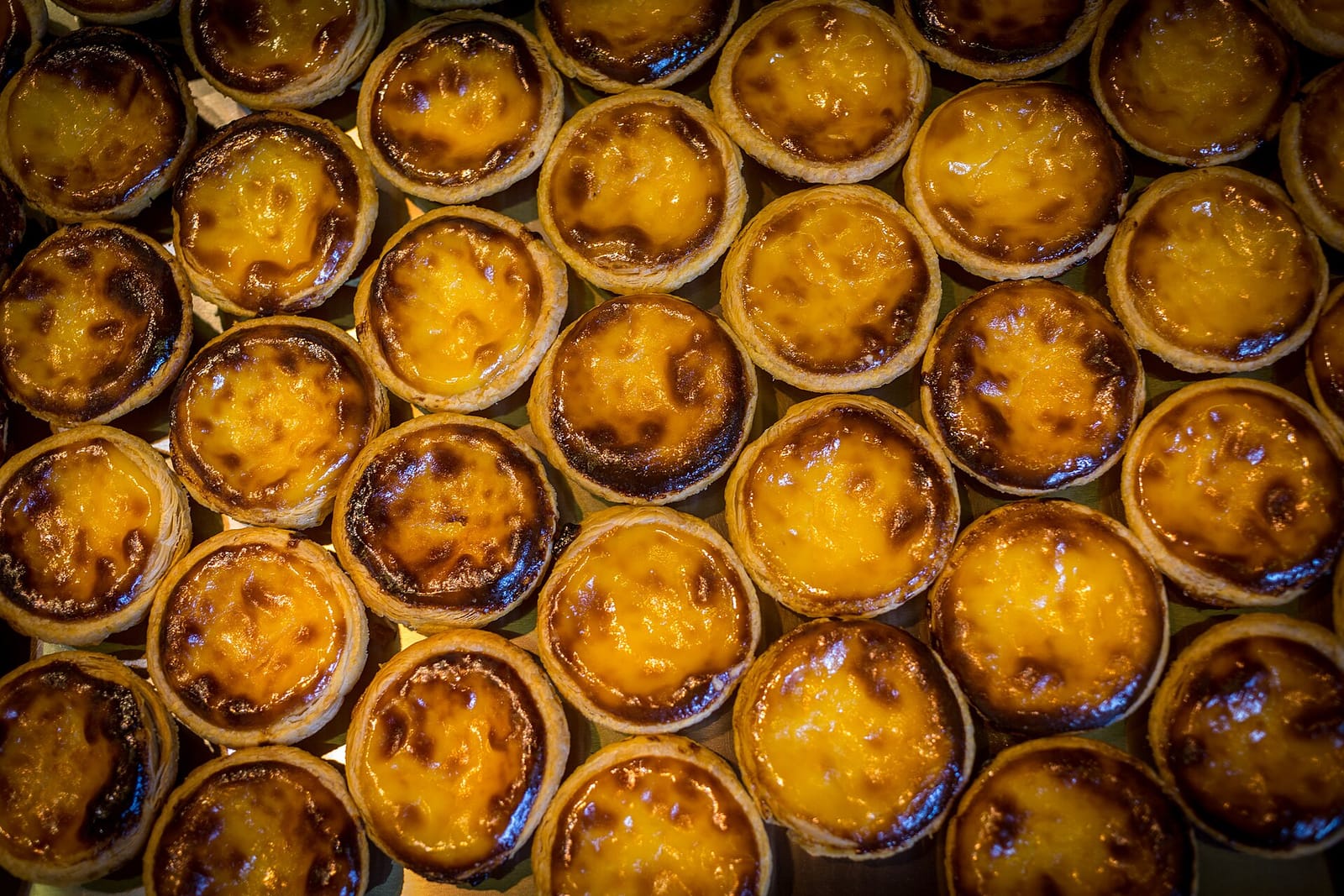
This pastel de nata recipe recreates Lisbon’s custard tart at home with one decisive technique: an oven of at least 250 °C, which blisters and chars the custard in about 12 minutes while the spiralled puff pastry turns crisp and brittle.
Monks at the Jerónimos Monastery in Belém made the tart before Portugal dissolved its religious orders in 1834; in 1837 the recipe reached the Fábrica de Pastéis de Belém, which still keeps it secret. This Amuse Kitchen pastel de nata recipe relies on a sugar syrup and a little flour, the two tricks most Portuguese bakeries share. Voted one of the Seven Wonders of Portuguese Gastronomy in 2011, the tart is sold all over the country, including on the Gaia riverfront in our guide to what to eat in Porto.
Ingredients
Heat does the work: without a blistering oven, a pastel de nata is just a custard tart.
- 320 g all-butter puff pastry, in one ready-rolled sheet
- 15 g soft butter, plus extra for the tin
- 200 g caster sugar
- 120 ml water
- 1 cinnamon stick
- 1 strip of unwaxed lemon peel, without the white pith
- 300 ml whole milk
- 30 g plain flour
- 6 large egg yolks
- Ground cinnamon and icing sugar, to serve
Method
- Heat the oven to its maximum, ideally 250 to 280 °C, with a baking tray on the top shelf, for at least 30 minutes. The custard has to scorch before it overcooks.
- Brush the pastry with the soft butter, roll it tightly from a short side into a log 4 cm across, chill for 20 minutes and cut into 12 slices. The spiral turns the layers on their side, so they flake outwards.
- Put one slice, cut side up, in each hole of a buttered 12-hole muffin tin and press it outwards with a wet thumb until the base is thin and the pastry just clears the rim. Chill.
- Boil the sugar, water, cinnamon and lemon peel without stirring for 3 minutes, to 105 °C. Sugar added as a syrup gives a glossy custard that never turns grainy.
- Whisk the flour into 60 ml of the cold milk. Boil the rest of the milk, whisk in the paste and cook for 2 minutes until thick; the starch stops the yolks curdling in the hot oven.
- Discard the cinnamon and peel and whisk the syrup into the milk in a thin stream. Cool to about 50 °C, so the yolks do not scramble, then whisk them in and strain into a jug.
- Fill the cases three-quarters full and bake on the hot tray for 10 to 14 minutes, until the pastry is deep golden and the custard shows dark blisters. Leave in the tin for 10 minutes; the custard firms as it cools.
How to serve pastéis de nata
Serve them warm, dusted with ground cinnamon and icing sugar as they are in Belém, with a bica, Lisbon’s short espresso, or with a glass of chilled tawny port after dinner.
Pastel de nata recipe FAQ
Why didn’t my custard blister? The oven was not hot enough. If yours stops at 220 °C, finish the tarts for a minute under a very hot grill.
Can I make pastéis de nata ahead? The custard keeps, covered, for two days in the fridge; fill and bake the cases just before serving. Baked tarts soften overnight, but 5 minutes at 200 °C revives them.
Can I use whole eggs instead of yolks? The custard will be firmer and paler. Only yolks give the soft, wobbly, deep-yellow centre this pastel de nata recipe is after.