What to eat in Munich: 12 dishes and where to find them
What to eat in Munich starts at a butcher's counter, not a menu: a guide to the city's sausages, dumplings and beer-garden classics, plus where its kitchens go beyond pork.
What to eat in Munich starts with beer and a butcher's counter: the city's food culture runs on Bavarian meat, bread and dairy, built to be eaten standing at a market stall or sitting for hours in a beer garden.
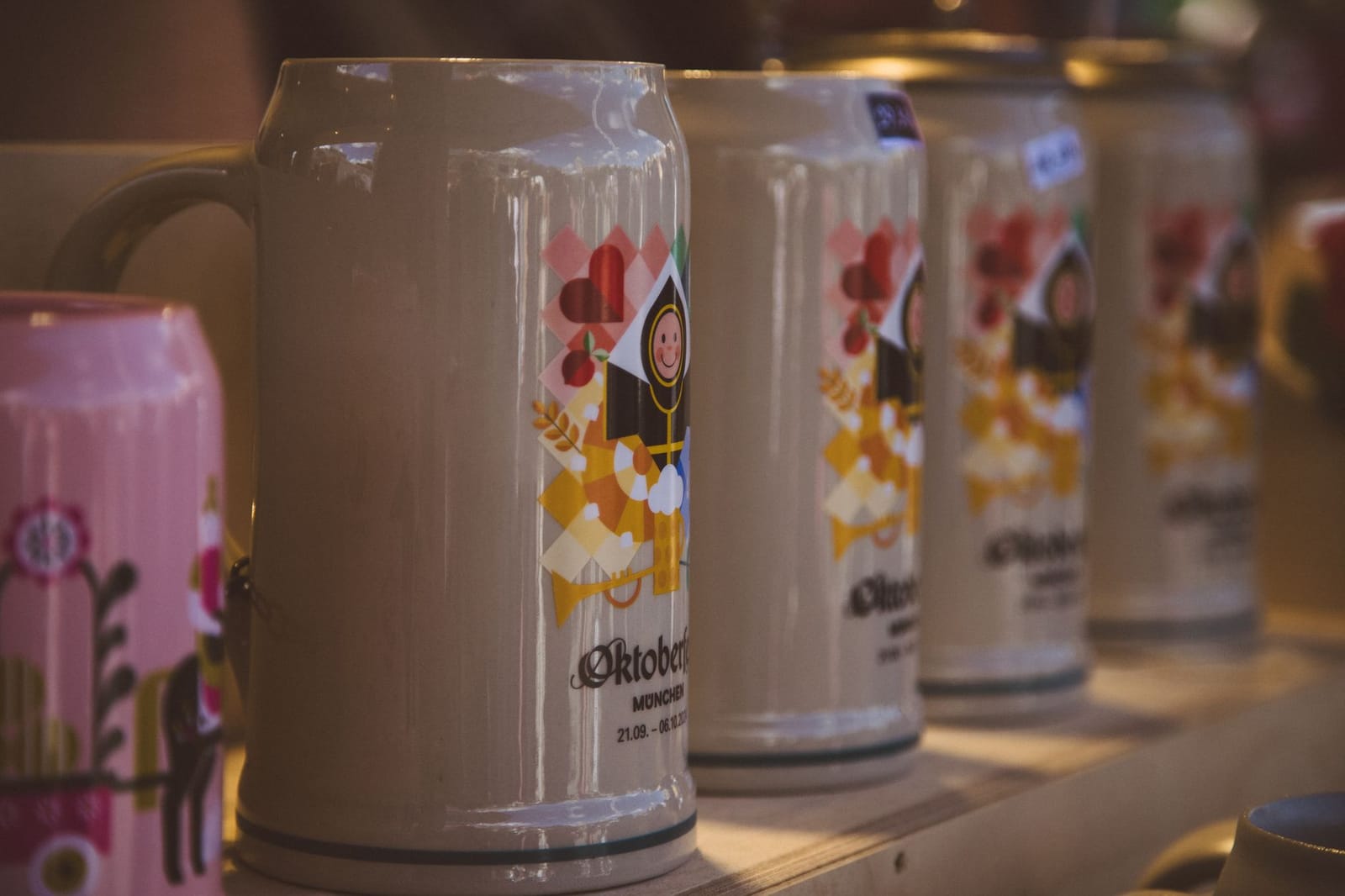
Munich's kitchen identity is Bavarian before it is German: pork, veal, root vegetables and good bread, built around the rhythms of the Viktualienmarkt, the city's permanent open-air food market a few steps from Marienplatz. Beer is not a drink on the side here; breweries including Hofbräu, Augustiner and Paulaner run their own restaurants and beer gardens, and much of the city's cooking is built to be eaten alongside a Mass, the one-litre glass stein.
Work out what to eat in Munich by starting at the market, then follow the smell of roasting pork into a beer hall; the two cover most of what the city does best.
What to eat in Munich starts at a butcher's counter, not a menu.
Weisswurst at Weisses Bräuhaus
Weisswurst is Munich's white veal-and-pork sausage, traditionally eaten before the stroke of noon, back when it was made fresh daily without preservatives. It is peeled rather than bitten, dipped in sweet mustard, and served with a pretzel and a wheat beer.
Weisses Bräuhaus, at Tal 7, has served the sausage since the 19th century and still keeps the old rule on its menu. A pair of sausages with pretzel and mustard runs around €8 to €10.
Schweinshaxe at Hofbräuhaus
Roast pork knuckle, its skin cracked to a shattering crisp over slow-cooked meat, comes with a bread or potato dumpling and dark gravy. Hofbräuhaus, at Platzl 9, is the best-known address for it, if also the most touristy.
A whole Haxe runs upward of €20 and easily feeds one hungry diner, closer to two with sides.
Obatzda and a Brezn at Viktualienmarkt
Obatzda is a spiced cheese spread, mashed from ripe Camembert or Brie with butter, paprika and onion, scooped up with a fresh pretzel (Brezn). Several of the roughly 140 stalls at Viktualienmarkt sell both.
A portion typically costs €5 to €7, and it works equally as a snack or the start of a longer beer-garden lunch.
Leberkäse from a market butcher
Despite the name, Leberkäse is neither liver nor cheese: a pink, finely ground meatloaf of beef and pork baked to a crust, sliced thick and served hot in a bread roll with mustard, as a Leberkässemmel.
Metzgerei stands around Viktualienmarkt sell it fresh from the tray for about €3 to €4, making it the city's standard quick lunch.
Knödel at a Wirtshaus table
Bread or potato dumplings, usually the size of a tennis ball, turn up as a side to roasts or, filled with bacon and herbs, as a dish of their own in butter and chives.
Any traditional Wirtshaus around the old town serves a version; they are built to soak up gravy, not to be eaten alone.
Beer and pretzels at Augustiner-Keller
Augustiner-Keller, a historic beer garden at Arnulfstraße 52 attached to Munich's oldest brewery, pours its unfiltered lager straight from wooden kegs rather than pressurised tanks. Oktoberfest draws the bigger crowds each September, but this garden runs the same culture year-round.
Pretzels, radishes and cold cuts move from table to table on trays; a Mass costs around €8, and the chestnut-shaded garden seats several thousand in summer.
Dampfnudel for dessert
A yeasted dumpling steamed in a covered pan until its base caramelises into a crisp skin, Dampfnudel arrives split open with vanilla custard or stewed plums.
It shows up less often on central menus than Weisswurst or Schweinshaxe, so look for it at traditional bakeries and Wirtshäuser outside the main tourist strip; for a Bavarian dessert to make at home, Augsburg's Zwetschgendatschi plum cake travels further than most.
A tasting menu at Tantris
For a different register entirely, Tantris, on Johann-Fichte-Straße 7, has held two Michelin stars for decades inside a low orange 1970s building that looks nothing like its food: modern French technique applied to Bavarian and European produce.
Tasting menus run into the hundreds of euros, and the newer wave of kitchens in the Glockenbachviertel, including Goethe & Gabel near Goetheplatz, has since built a less formal middle ground.
Coffee and delicatessen at Dallmayr
Dallmayr's flagship store on Dienerstraße, a few minutes from Marienplatz, has sold coffee, chocolate and delicatessen goods since 1700. Its in-house café serves the roastery's own blends alongside pastries.
The ground floor condenses Bavarian and international specialities under one roof, useful for a fast overview before heading back out to the market.
Fischbrötchen at the market's Nordsee stall
A counter-current to all the meat: a Nordsee stall inside Viktualienmarkt sells fresh and pickled fish in a bread roll, from herring to salmon, for about €4 to €5.
It is a reminder that Munich's market still caters to more than roast pork, even if pork dominates the stalls around it.
Markets, neighbourhoods and when to go
- Viktualienmarkt: open Monday to Saturday from around 8am; closed Sundays.
- Augustiner-Keller beer garden: busiest on warm evenings from May to September.
- Glockenbachviertel: the neighbourhood for newer, smaller kitchens away from the beer-hall circuit.
- Auer Dult: a seasonal street market with food stalls, held three times a year near Mariahilfplatz.
FAQ: what to eat in Munich
Is Munich expensive to eat in? A market lunch or Leberkässemmel costs under €10; a sit-down meal with beer in the old town runs €20 to €30 a head, and fine dining such as Tantris starts well above €200.
Do I need to book ahead? Beer halls and market stalls take walk-ins; Tantris and the smaller Glockenbachviertel kitchens need reservations, especially at weekends.
What's the best time of year to visit? Spring and early autumn avoid both winter cold and Oktoberfest crowds, though the festival itself, in September, is when beer-hall food culture is most visible.
Is Weisswurst really only eaten before noon? Traditionally yes, since it was once made fresh daily without preservatives; most kitchens still serve it only at breakfast and lunch.
Where to book first
Tantris, Johann-Fichte-Straße 7, for a tasting menu that argues Munich's kitchens go well beyond pork and beer.
Weisses Bräuhaus, Tal 7, for Weisswurst made and served the traditional way, before noon.
Augustiner-Keller, Arnulfstraße 52, for the beer garden at its most unreconstructed, with keg-poured lager under a chestnut canopy. Between them, these three cover what to eat in Munich without working through all the stops above.