Lemon olive oil cake recipe for new-season oil
A two-bowl Mediterranean cake built to show off the first green oil of the year, with lemon to carry the bitterness rather than hide it.
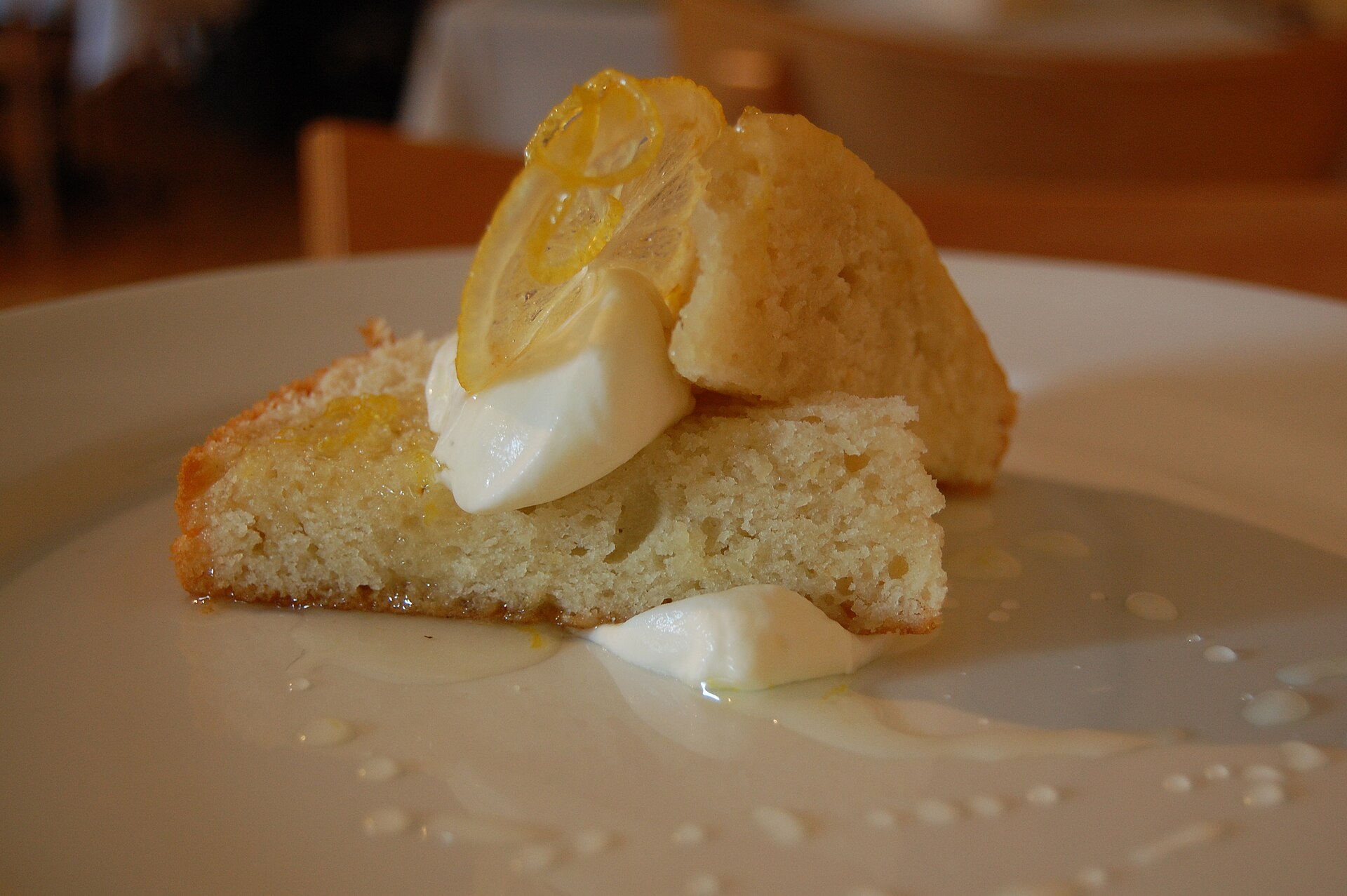
This olive oil cake recipe exists for one reason: a bottle of new-season oil, still green and peppery, tastes of almost nothing once it is hidden under butter. Here it is the only fat in the tin, and lemon is there to carry its bitterness rather than cover it.
Oil cakes run across the whole Mediterranean, from the Andalusian tortas de aceite to the Italian torta all'olio. The technical advantage is simple: olive oil stays liquid at room temperature, so the crumb is still soft three days later, where a butter sponge has gone dry and crumbly.
It is also a two-bowl job. There is no butter to cream, so the only equipment that matters is a whisk and a spatula.
Green oil tastes of nothing under butter. Here it is the only fat in the tin.
Ingredients
- 220 g plain flour
- 200 g caster sugar, plus 1 tbsp for the top
- 180 ml extra virgin olive oil, fresh and grassy
- 3 eggs, at room temperature
- 120 ml whole milk
- Zest of 2 lemons
- 60 ml lemon juice
- 2 tsp baking powder
- Half a tsp fine salt
Method
- Heat the oven to 170C fan and line the base of a 22 cm springform tin, then oil the sides. Moderate heat matters: a cake this rich in fat and sugar colours fast and will be dark outside before it is set inside.
- Whisk the eggs with the 200 g of sugar for three to four minutes, until pale and thick enough to leave a trail. That air is half the lift; the baking powder is the other half.
- Pour in the oil in a thin stream while still whisking. Added slowly it emulsifies into the eggs; tipped in at once it splits and the finished crumb turns greasy.
- Whisk in the milk, lemon juice and zest. The mixture may look loose and slightly curdled from the acid, which is normal and corrects itself with the flour.
- Sift the flour, baking powder and salt over the bowl and fold with a spatula until the flour has just disappeared. Stop there: gluten developed now makes the cake chewy instead of tender.
- Pour into the tin, scatter the tablespoon of sugar over the surface for a thin crust and bake for 40 to 45 minutes, until a skewer comes out clean and the edges pull away from the sides.
- Cool in the tin for 10 minutes, then turn out onto a rack. It is better on day two, when the crumb settles and the oil's bitterness rounds into something closer to almond.
What to serve with it
Creme fraiche or lightly whipped cream, unsweetened, and a candied lemon slice if you have one. A glass of sweet sherry works better than dessert wine, because the salt in a good oloroso meets the salt in the cake.
In winter swap the lemon for orange and add a tablespoon of fennel seeds, which pushes the cake towards the Andalusian torta. The oil is the variable that matters: the greener it is now, the more of it survives the oven. Our report on the 2026 olive oil harvest in Jaén explains when the new bottles reach the shelf.
Sources
- La Contra de Jaén (elDiario.es) · 2026-09-21
- Amuse Kitchen · 2026-09-21